


 Shkruar nga Pamfleti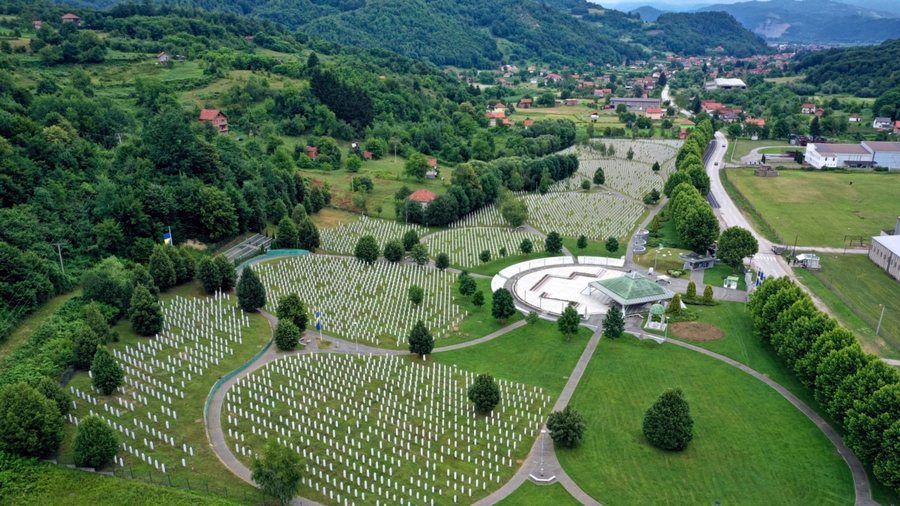
A resolution commemorating the 1995 genocide in Bosnia's Srebrenica, drafted by Germany and Rwanda, is expected to be put to a vote on May 23 at the United Nations General Assembly, amid a strong campaign of opposition from Serbia's president and leaders of Bosnian Serbs, with the support of Russia.
According to the final text of the draft resolution, July 11 is designated as the "International Day of Reflection and Remembrance of the 1995 Genocide in Srebrenica", in memory of the killing of over 8,000 Bosnian men and boys by Serb forces in the massacre that began on July 11, 1995.
On that day, the Bosnian Serbs occupied Srebrenica, which had been declared a protected area by the United Nations.
What does the draft resolution on the genocide in Srebrenica contain?
In the text of the draft resolution, which has been seen by VOA, it is said, among other things, that noting that the year 2025 will mark the thirtieth anniversary of the genocide in Srebrenica, in which at least 8,372 people lost their lives, thousands were displaced and families and communities were destroyed, the UN General Assembly:
1. Decides to designate 11 July as the International Day of Reflection and Remembrance of the 1995 Srebrenica Genocide, to be celebrated annually;
2. Unreservedly condemns any denial of the Srebrenica genocide as a historical event and calls on member states to preserve the established facts also through their educational systems, developing appropriate programs, also in commemoration (of the events) and with the aim of prevention denying and distorting them as well as preventing genocides in the future;
3. It also unreservedly condemns actions that glorify those convicted of war crimes, crimes against humanity and genocide by international courts, including those responsible for the genocide in Srebrenica;
4. Emphasizes the importance of completing the process of finding and identifying the remaining victims of the Srebrenica genocide and giving them a dignified burial, and calls for the continued prosecution of those perpetrators of the Srebrenica genocide who have not yet been brought to justice;
5. Urges all states to fully comply with their obligations under the Convention on the Prevention and Punishment of the Crime of Genocide, and customary international law on the prevention and punishment of genocide, bearing in mind the relevant decisions of the International Court of Justice;
6. Requests the Secretary-General to establish an outreach program entitled "The Srebrenica Genocide and the United Nations", beginning preparations for the commemoration of the thirtieth anniversary in 2025, and also requests the Secretary-General to bring this resolution to the attention of of all member states, organizations of the United Nations system and civil society organizations, in order to properly respect it;
7. Invites all Member States, organizations of the United Nations system, other international and regional organizations and civil society, including non-governmental organizations, academic institutions and other interested parties to observe the International Day, including celebrations and activities special in memory and honoring the victims of the 1995 genocide in Srebrenica, as well as appropriate education and public awareness activities.
In 2007, the International Court of Justice said that the acts committed in Srebrenica constituted genocide. It was the first genocide in Europe since the Nazi Holocaust in World War II, during which an estimated 6 million Jews and members of other minorities were killed.
Bosnian Serb wartime political leader Radovan Karadzic and his military commander, Ratko Mladic, were sentenced to life in prison for the Srebrenica genocide by the war crimes tribunal in the former Yugoslavia. Overall, this court as well as courts in the Balkans have sentenced close to 50 wartime Bosnian Serb officials to lengthy prison terms in connection with the Srebrenica genocide.
Serbian President Aleksandar Vucic, as well as Bosnian Serb leaders, strongly oppose the adoption of the resolution, saying it dubs all Serbs a "genocidal nation", although the draft resolution does not include such a statement.
President Vučić and his government have campaigned both at the UN and in developing countries to gain support in opposition to the resolution, which requires a simple majority to pass.
The Permanent Mission of Serbia to the UN called again for the withdrawal of the draft resolution.
"Given the unpredictable consequences of such a draft resolution on the fragile reconciliation process, opening old wounds, we once again call on the co-drafters to withdraw the text of the resolution, in the interest of all, first of all the people of Bosnia of Herzegovina but also to all members of the UN...", says a statement of the Permanent Mission of Serbia to the UN.
President Vučić, as well as the leader of the Bosnian Serbs, Milorad Dodik, have mentioned several times the possibility of paying war damages, if the resolution is approved.
Serbian leaders continue to minimize or even deny the genocide in Srebrenica, describing the killings as a serious crime, which has deeply offended relatives of the massacre victims and survivors.
the issue of the resolution was also outlined during a regular meeting of the UN Security Council on political and economic developments in Bosnia, which was held on Wednesday.
The US deputy ambassador to the UN, Robert Wood, said "(Milorad) Dodik's dangerous actions and his divisive rhetoric threaten peace and stability in the region" and "genocide denial also prevents reconciliation".
"Commemorating historical truths and accepting facts is important and moves the region forward on the road to reconciliation," said Mr. Wood, underlining that "honoring the victims of genocide reinforces the values reflected in the UN Charter."
But Russia's ambassador to the UN, Vassily Nebenzia, whose country maintains strong ties with Serbia and the Bosnian Serbs, said that presenting the resolution without the consent of all parties in Bosnia is a violation of the country's constitution and the Dayton peace accord. of 1995, which ended the war.
"We see this provocative text as a threat to peace and security in the country and the entire region," he said, accusing Germany and Rwanda of fomenting protests instead of promoting reconciliation.
Germany and Rwanda said earlier in the week that the resolution aims at unification and not division, while calling on all UN member states to support it "thus sending a strong message of remembrance and against denial of the genocide". VOA


Lini një Përgjigje