


 Shkruar nga Pamfleti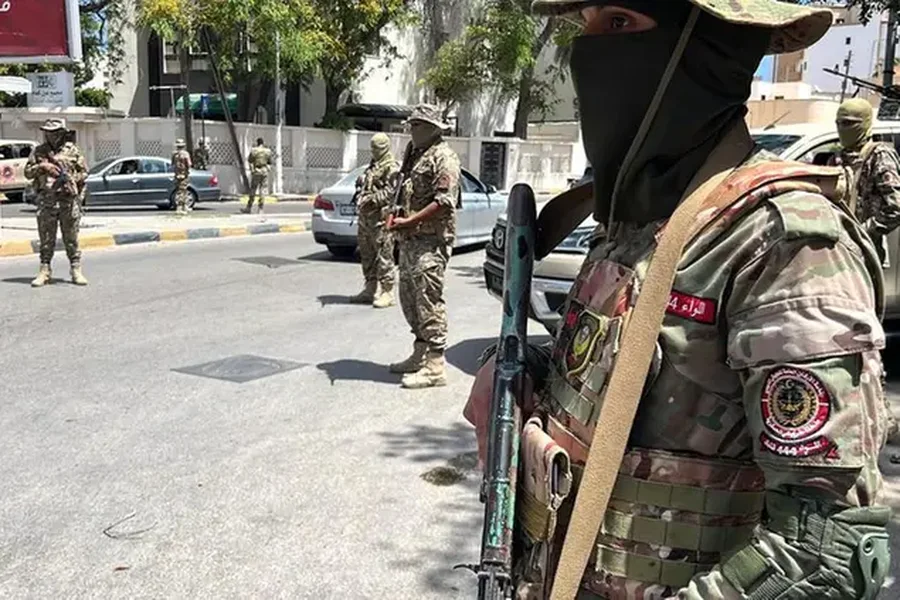
Prime Minister Dbeibeh has launched his offensive against rival militias. Among them is Rada, where the Libyan released by Italian authorities is a key figure, which has been strengthened after the killing of Gheniwa. The climate in the capital is tense and there is a risk of further outbreaks of violence in the coming days...
Power games, armed clashes, energy interests, economic agreements and hostilities that turn cyclical.
This is Libya after the death of Muammar Gaddafi: since the death of the leader of the Jamahiriya, it has not been able to stay united.
The east, west, north and south are in the hands of dozens of militias. The political transition process initiated by the United Nations has officially failed.
This is also demonstrated by the violence that has erupted in Tripoli over the last two months, clashes that are also related to the summons issued by the Libyan Attorney General for General Osama Njeem Almasri.
The head of the judicial police, released by Italian authorities despite an arrest warrant from the International Criminal Court for war crimes and crimes against humanity, is keeping a low profile. After his release, several Libyan sources told Domani that he had "returned to the good life."
It all began in mid-May with the assassination of Abdel Ghani al-Kikli, known as Gheniwa, commander of the Stability Support Apparatus, one of the most powerful militias in the capital, competing for dominance with the government forces of Dbeibeh. The Libyan security services were behind the assassination. Since that day, violence has escalated in the capital. The final death toll from the clashes is approximately 90, confirming the supremacy of government forces and Brigade 444 (a regular army and militia unit led by Mahmoud Hamza).
Libyan sources confirm that since that day, some of the Gheniwa militias have joined the Special Prevention Forces (Rada), the militia led by leader Abdul Raouf Kara, in which Almasri is a key figure. As a result, Rada, which, among other things, controls Mitiga airport, has increased its firepower and is one of the strongest groups opposing Dbeibeh.
And so, in recent weeks, the Tripoli prime minister has taken tough measures against the militia. He stripped Almasri of his authority over the judicial police and declared the group illegal. His strategy has one goal: to secure his political power. Yesterday, the prime minister canceled all transfers among the security forces and froze the salaries of some officials.
Four days ago, ahead of the diplomatic chaos involving Interior Minister Matteo Piantedosi and his European counterparts, Dbeibeh issued an ultimatum to the Rada: "no airport, port or prison will be left outside the control of the state," he said, demanding the surrender of 250 wanted militiamen. "Those who do not want war must submit to the state," he warned.
In Tripoli, militias are organizing and a counterattack is likely in the coming weeks. The UN Mission in Libya (UNSMIL) has received reports of a military buildup around the capital and has called for "the forces recently deployed in Tripoli to withdraw without delay."
"Dialogue," the mission adds, "is the only way to achieve lasting peace and stability."
But in Libya, it's hard to get everyone around the table. Even the UN hasn't been able to do it.
When Dbeibeh was appointed prime minister of the Government of National Unity (February 2021), he was followed by four special envoys.
Dbeibeh was supposed to stay in office for a little over a year to complete the political transition process.
But 4 years have passed and he has no intention of giving up. /Adapted from Pamphlet/


Lini një Përgjigje