


 Shkruar nga Pamfleti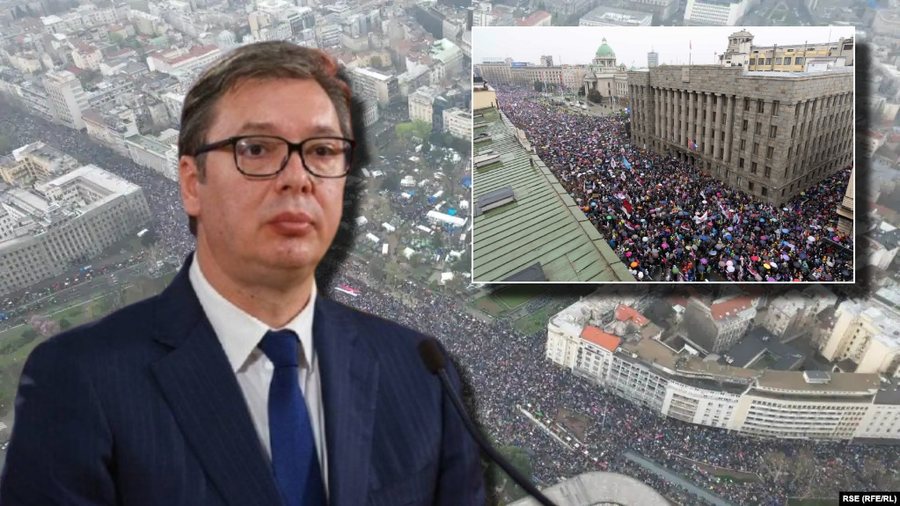
In addition to party-affiliated figures, there is speculation that the next prime minister could come from outside the political arena, with the SNS potentially considering an expert or non-partisan individual supported by the ruling coalition.
Serbia's political landscape remains uncertain following the resignation of Prime Minister Milos Vučević, while President Aleksandar Vučić announced that a search is underway for a new Prime Minister. Vučić, in a statement on March 23, revealed that the process is still in its early stages, with three or four potential candidates under consideration for the role.
Vučić stressed that consultations would only be held with parties showing "genuine interest," seeking to avoid what he described as a "circus" surrounding the selection process. As the deadline for appointing a new prime minister approaches, speculation has intensified about who will be nominated for the top job.
Among the main contenders are well-known figures within the ruling Serbian Progressive Party (SNS). Former Prime Minister Ana Brnabic, who served from 2017 to 2024, is a leading name being discussed. Brnabic, now the speaker of the National Assembly, was the favorite to retain the post after the parliamentary elections in December 2023. However, Vučić has expressed doubts about her continued leadership.
Also mentioned as possible candidates are Finance Minister Sinisa Mali, a close ally of Vučić, and Nebojša Čović, a prominent political figure within the SNS.
Marko Duric, the foreign minister, and Ivica Dacic, the current first deputy prime minister, have also been discussed as possibilities for this role.
In addition to party-affiliated figures, there is speculation that the next prime minister could come from outside the political arena, with the SNS potentially considering an expert or non-partisan individual supported by the ruling coalition.
Several reports point to potential candidates from the Serbian diaspora, with some names emerging from the United States. Among them, Branko Milanovic, an internationally renowned economist, has been mentioned by the Danas newspaper as a possible candidate. Milanovic, once a senior economist at the World Bank, has gained global fame for his research on inequality.
Other diaspora figures include Desko Nikitovic, a former consul general of Serbia in Chicago who has long worked to strengthen Serbia's ties with the US, and Ivan Trifunovic, a well-known figure in the global pharmaceutical industry.
While Milanovic's academic achievements have earned him respect in international circles, Nikitovic, who is actively engaged with the Serbian diaspora, is seen as having the best chances among the trio.
Nikitovic, born in Serbia and raised in Chicago, has been involved in Serbia's diplomatic efforts and is now the executive president of East Point Metals Ltd., a company specializing in metals trading.
In the past, he has defended Serbia's democratic processes, especially during the Yugoslav conflicts of the 1990s, cementing his position in Serbia's political sphere.
The search for a new prime minister comes amid growing political unrest in Serbia, sparked by the tragic collapse of a train station canopy in Novi Sad in November 2024, which killed 15 people. The incident has sparked protests demanding accountability for government mismanagement and an end to corruption.
Despite efforts to calm public anger, including Vučević's resignation and several arrests in connection with the disaster, the protests have continued to intensify. On March 19, Vučević formally resigned, paving the way for a possible reshuffle. Vučić has set a deadline of April 18 to appoint a new prime minister. If no appointment is made by that date, he has suggested that early parliamentary elections could be held on June 8.
The protests, which culminated in a mass demonstration on March 15, have underscored deep public dissatisfaction with the government. However, opposition parties have struggled to unite, leaving Vucic in a strong position to call early elections despite the risk of losing his parliamentary majority.
Opposition leaders have proposed the formation of a caretaker government, led by a non-partisan prime minister, to bridge the gap until new elections. However, this proposal has failed to gain significant traction, with divisions within the opposition over the best way forward. /Pamphlet adapted from Intellnews/


Lini një Përgjigje