


 Shkruar nga Janusz Bugajski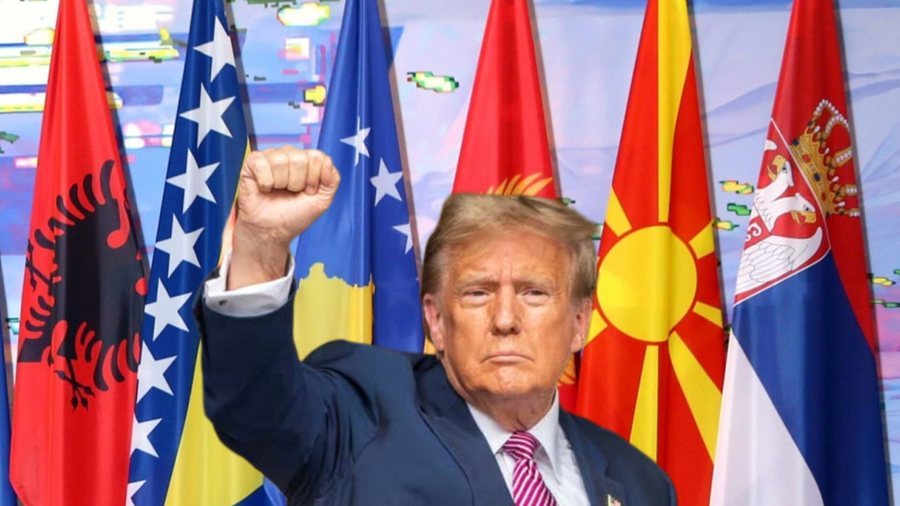
A plan for the partition of Kosovo was proposed by Trump's envoys during his first term, and this could become a major blueprint for future Balkan politics.
Although the Western Balkans will not be on the priority list of a possible Trump presidency, his isolationist and transactional policies could endanger the region's fragile peace. While President Biden has given a lot of ground to Belgrade and allowed it to trouble its neighbors, Trump is even more likely to accept Serbia's dominant role and reduce support for the sovereignty of Kosovo, Bosnia-Herzegovina and Montenegro.
During Trump's first term, the White House appointed diplomats with ties to Serbia, notably Richard Grenell, the special envoy for peace negotiations in Serbia and Kosovo. Trump's relations with Belgrade have since strengthened, as his son-in-law Jared Kushner is building a hotel complex in downtown Belgrade and will rely on a friendly Vucic administration to guarantee his investments. Serbian nationalists clearly favor a Trump victory, and Grenell has been showered with prizes from the Serbian government, which counts on him to help shape Balkan policy for Trump.
Trump is likely to favor a deal with Belgrade allowing Kosovo's northern municipalities to join Serbia, while claiming he had finally resolved the conflict. Alternatively, Trump's withdrawal of the remaining US forces in Kosovo could prompt a Serbian military intervention to occupy the territory. Serbia spends 2.3% of its gross domestic product on its military and has become the strongest armed force in the region with Russian, Chinese and Western equipment, and Vucic has prepared for such an eventuality.
A plan for the partition of Kosovo was proposed by Trump's envoys during his first term, and this could become a major blueprint for future Balkan politics. While Trump officials appear willing to cede some regions of Ukraine to Russia in exchange for a ceasefire, they could use this as a model for Kosovo and Bosnia-Herzegovina. Their naivety and disbelief in ignoring how the partition of Kosovo could provoke inter-ethnic conflicts, deportations, forced border changes and further regional wars should not be underestimated.
In such a scenario, Trump's reluctance to use US troops would make the situation even more volatile and destructive. His broader decisions about US relations with European NATO will directly affect America's military posture and rules of engagement in the Western Balkans. Although Trump has threatened to leave NATO, in practice he may simply weaken the alliance without formally withdrawing. In return for any US military involvement, Trump will expect all European countries to significantly increase their defense spending. He will also pursue a strategic reorientation away from Europe and toward the Far East, as some of his advisers see China as America's primary threat.
Although Washington will most likely maintain its nuclear umbrella over Europe, along with air bases and a navy, the remaining ground forces will be evacuated. In fact, America will no longer supply most of the fighting power on the continent. And this will have major implications for the Western Balkans, where NATO members or aspirants may no longer rely on Washington in a time of crisis. This is particularly harsh, as all NATO states in the region spend less than 2% on defense and would thus be exempt from Trump's criteria for providing military aid.
Trump is very likely to block any further NATO expansion, whether in the case of Ukraine, Georgia, Bosnia-Herzegovina or Kosovo. Moreover, his acrimonious relationship with Brussels will generate divisions between the US and the EU over Balkan policy that could be exploited by Moscow and Belgrade. The EU itself is even less likely to accept new members from the region if they are involved in growing internal and external conflicts due to waning American interest and involvement.
The EU's new High Representative for Foreign Affairs, Kaja Kallas, the former prime minister of Estonia, is a strong voice against Moscow and is likely to clash with Trump's State Department. It will also have opponents in Germany and France fearful of escalating disputes with Moscow. In essence, Trump will seek to leave Europe to the Europeans so that America no longer has to pay for or defend the continent. But without a leading American military and diplomatic presence, the EU may prove too weak and fragmented to curb Belgrade's ambitions or prevent the region from spiraling into another armed confrontation. NATO without the US remains a fragmented geopolitical player with limited military capabilities, and its cohesion will be seriously tested in the Western Balkans during a second Trump presidency./ Adapted "Pamphlet" from "TheGeopost"





Lini një Përgjigje