


 Shkruar nga Edward Luce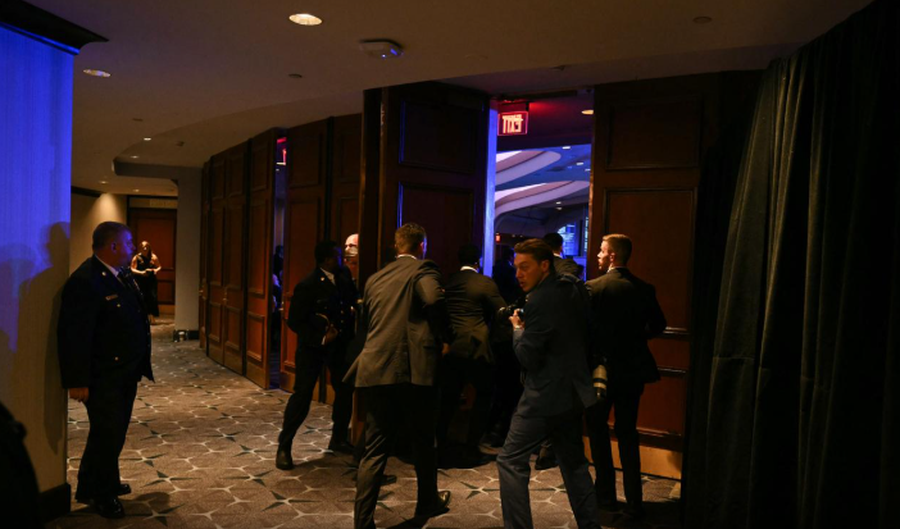
The third assassination attempt within two years testifies to an extremely tense climate in the US, but this time the lack of real danger and the drop in popularity below 40 percent make it difficult to translate the event into electoral sympathy.
Another gunman, another confrontation that feels like a second stroke of luck. Even in a country with a grim history of political violence, Donald Trump seems to attract his share of would-be assassins more than anyone else.
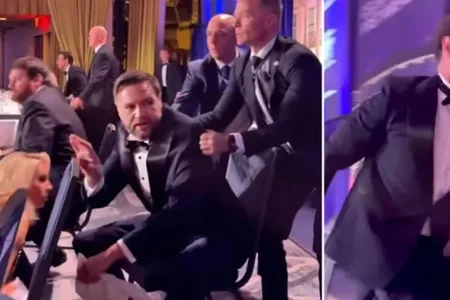
As he was hurriedly escorted to the White House, hurriedly removed from the annual media correspondents' dinner, Trump displayed an almost routine state of mind. Before a smartly dressed media audience, he declared that he had studied the history of assassinations, concluding that only the greatest figures, such as Abraham Lincoln, are targeted in this way. "I'm sorry to say it, but I feel honored for this. I've done a lot," he said.
Although mass shootings are part of the daily American reality - like last week's tragedy in Louisiana where 8 children were killed, an event that was briefly covered in the news - the last American president to be assassinated in office remains John F. Kennedy in 1963.
Saturday's incident marks the third attempt on Trump's life in less than two years. The first, in July 2024, when a bullet grazed his ear during a rally in Pennsylvania, significantly boosted his reelection chances.
The Republican convention at the time was dominated by the narrative that Trump was saved by divine intervention to serve the nation. Two months later, a second attempt at his Mar-a-Lago estate was thwarted by Secret Service agents.
This time, however, any wave of sympathy is likely to be more limited. And the key difference lies in the facts: the suspect, Cole Allen, failed to get anywhere near Trump. Although the television networks portrayed him as another “near miss,” Allen never entered the banquet hall.
Loud explosions were heard, but the president was not really in immediate danger. In Pennsylvania, the image of a bloodied Trump with his fist raised and shouting “fight, fight, fight” defined his campaign.
Saturday's incident at the Washington Hilton produced no such epic moment. Although Ronald Reagan was injured exiting the same venue in 1981 - early in an eight-year term - his surge in the polls was short-lived.
It would be surprising if Trump gets even a minimal boost from this event. Regardless, he will attempt to capitalize on the event politically. It has become fashionable in MAGA circles to claim that the American left is fueling political violence through extreme rhetoric directed at Trump and others around him.
This line was reinforced by Trump himself and his vice president, JDVance, after the murder of Charlie Kirk, a MAGA influencer, last September. Trump ordered American flags to be flown at half-staff, while several Americans lost their jobs because of posts that were considered disrespectful to the slain Kirk.
Today, Trump's poll numbers are in worse shape. Last week, his approval rating fell below 40 percent in several polls. Most significantly, only 30 percent of Americans approved of the way he was handling the economy.
This is a wake-up call for Republicans in the upcoming midterm elections. The growing unpopularity of Trump's war on Iran is driving him to this low point. Shortly before the Hilton incident, his negotiating team abandoned plans for talks in Islamabad after the Iranians refused to attend.
Ironically, the assassinations themselves have played a central role in Trump's difficulties in negotiating with Iran. His "Operation Epic Fury" began with a deadly strike on Grand Ayatollah Ali Khamenei on February 28.
Subsequent attacks that killed the heads of the Revolutionary Guard and Iran's national security chief have made it impossible to find an authoritative negotiating party. There is still confusion over who is really in charge, as the new Supreme Leader (son of the late Ayatollah Mojtaba Khamenei) is thought to be seriously injured.
In any case, it is Trump's early enthusiasm for eliminating senior Iranian figures, not the recent domestic effort against him, that is dictating his political future. "They can call us anytime they want!" Trump said of the Iranians on Saturday.
His problem is that Iran thinks time is on its side. Whether Trump will resume bombing or make concessions to bring them to the table remains difficult to predict.
The only safe prediction for this increasingly volatile president is that he will now almost certainly build his much-debated $400 million ballroom in the White House. It could even host future Correspondents' Dinners. "It can't be built fast enough!!" he wrote in the early hours of Sunday. / Pamphlet from the Financial Times




Lini një Përgjigje