


 Shkruar nga Pamfleti
Trump purges institutions of security officials and turns technology into a political weapon as US faces new cyber threats and growing global chaos
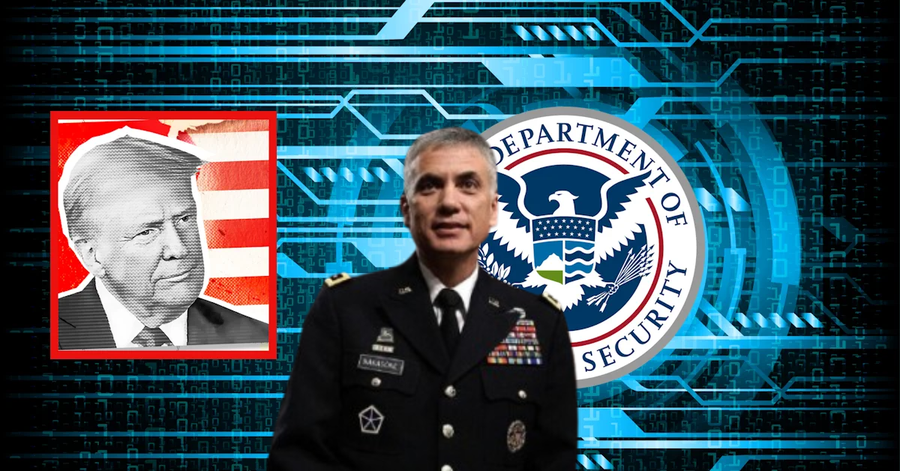
Donald Trump's new policies on the economy, diplomacy and global strategy, coupled with massive departures from the federal administration, have created an uncertain climate for the future of cybersecurity in the U.S. This became evident last week at the two largest digital security conferences in Las Vegas: Black Hat and Defcon .
“We’re not retreating, we’re moving in a new direction,” said Robert Costello, chief technology officer at the Cybersecurity and Infrastructure Security Agency (CISA). But “new direction” means firings and political purges.
Trump has begun removing officials deemed “untrustworthy” to his agenda. He ordered the revocation of the classified security clearance of former CISA director Chris Krebs. After an attack by far-right activist Laura Loomer, former CISA director Jen Easterly, who was scheduled to teach at West Point, was also stripped of an academic appointment. The message is clear: criticize, be expelled.
Former NSA chief: Technology has become political
In this tense climate, Paul Nakasone, former director of the National Security Agency and former commander of Cyber Command, took the stage at Defcon for a conversation with the conference's founder, Jeff Moss. The topic was clearly political: artificial intelligence, cybercrime, and strategic alliances.
“In this world, technology has become political. Every one of us is conflicted,” Moss said. Nakasone gave a concrete example: in January, Trump unveiled the “Stargate” project for artificial intelligence, backed by billionaires like Oracle’s Larry Ellison, SoftBank’s Masayoshi Son and OpenAI’s Sam Altman. “Two days later, the giant AI platform from China, DeepSeek, came out. Strange coincidence,” he said wryly.
Nakasone also highlighted the generational gap between the US government and the private technology sector. "When I met engineers in Silicon Valley, Texas or Boston, I was twice their age. When I came back to Washington, I was the youngest at the table. This is a serious problem for the nation," he said.
The Exploding Threat: Ransomware
One of Nakasone's biggest concerns was the ransomware attack, a form of digital blackmail that has brought American companies, hospitals and institutions to their knees. "We're not making progress. We have to think differently to deal with this," he warned.
Can America remain neutral?
The discussion took a more political turn when Moss asked: "How can you remain neutral in a world where wars and conflicts are increasing? Ukraine, Israel, Russia, Iran, and America itself are at the center of crises. Who can remain impartial?"
Nakasone acknowledged that the world is entering a dangerous period. "The years 2025 and 2026 will be decisive. Next year when we meet here again, I don't think we will be able to say that we are still neutral. It will be extremely difficult," he said.



Lini një Përgjigje