


 Shkruar nga Alexander J.Motyl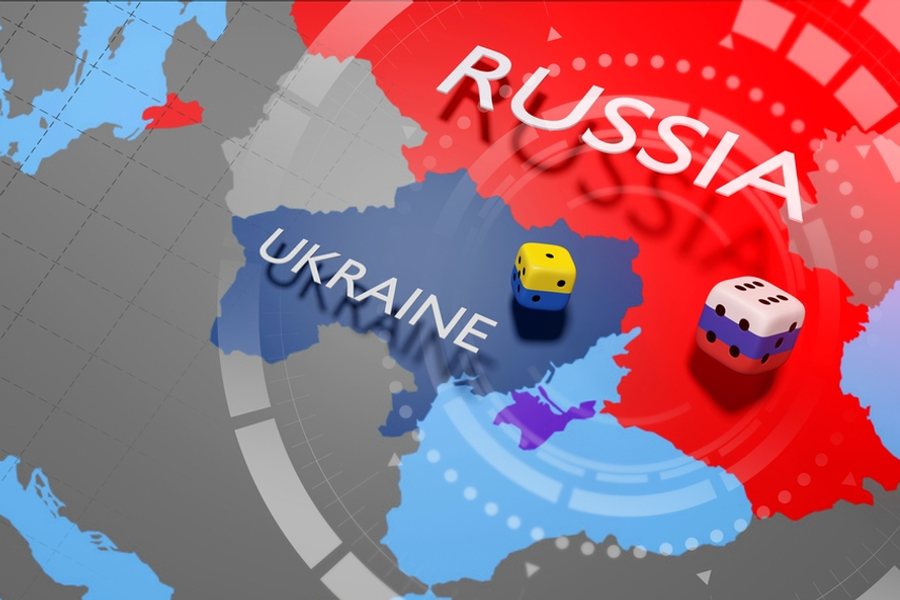
Now that the United States has approved a new $61 billion aid package for Ukraine, many analysts are asking the White House to finally define what its goals are in this war.
If losing Ukraine is not an option, and a stalemate will only continue the carnage indefinitely, then the only remaining option is losing Russia.
But what exactly would the latter mean? Basically, there are 2 scenarios that would constitute a Ukrainian victory and a Russian defeat. The White House must choose one of the options and pursue it vigorously. This requires political will and determination, as neither scenario requires any genius to imagine or implement.
The first scenario, the complete defeat of Russia, would involve the withdrawal of its armed forces on the battle lines, the withdrawal and surrender of all territory that Russia has occupied since 2014, including the entire Donbass region and Crimea. But if that happens, Russian President Vladimir Putin would be discredited and most likely ousted from power.
Under those conditions, the Russians would want, and even be forced to seek peace talks. Such a major defeat would be based on increased supplies from the West of all the weapons and ammunition Ukraine needs to defend itself against Russian missiles and drones and to repel Russian forces.
This is technically possible, but only if Western leaders are willing to act with drive and vision, and convince their citizens that small sacrifices today will bring more benefits tomorrow. The consequences of such a defeat would be beneficial for Ukrainians, Russians and the rest of the world.
Ukraine would survive as a state. Meanwhile, Russia would finally escape a genocidal, warmongering dictator who has sent hundreds of thousands of young Russians to their deaths. A return to something resembling normalcy may begin here. The world can breathe a sigh of relief at the collapse of Russia's expansionist machine.
On the other hand, the minority minorities in the country may be encouraged by the fall of the regime to start the secession process, as the army would be too demotivated to intervene. The example of the collapse of the Soviet Union shows us that the dissolution of the Russian Federation can be peaceful, but only if, as is likely to happen, Putin's more pragmatic successors will accept reality.
The second scenario, the liberation of all Ukrainian territories that Russia has occupied since 2022, would disappoint the Ukrainians, but would still mean a defeat for Moscow. Achieving this goal would require much more Western military aid to Ukraine.
But since the sums would be smaller than in the first scenario, it would be easier for Western leaders to convince their voters to make the necessary sacrifices. Under this scenario, Putin is unlikely to survive politically, but there would be less chance that his successors would feel motivated to radically change course.
A full-scale defeat would be a major trauma that could bring about a rethinking of Russia's domestic and foreign priorities. A partial defeat, meanwhile, is likely to encourage Putin's successors to make only minor changes, while maintaining most of his imperial ambitions.
In all likelihood, they would see defeat as only a temporary setback, allowing them to reorganize, rearm, and resume attacks. In both scenarios, there are certain things that are immutable. Continued Western aid to Ukraine is imperative for at least one of these to happen.
A significant increase in political will in the West is also necessary. Both goals can be achieved if the West so desires. Putin is likely to fall in both scenarios because he has made the war his main project, tying his legitimacy, popularity and survival to its successful conclusion.
Finally, the possibility of Russia using nuclear weapons is low in both scenarios. By seriously arming Ukraine, the West would signal to the Kremlin that a nuclear attack would surely be met with a devastating conventional counterattack that no sane Russian leader would want to face.
The main difference lies in the results in and for Russia. A full-scale defeat in Ukraine would open up the prospect of the future emergence of a quasi-democratic Russia, which in its weakened state could fall victim to some independence movement.
Ideally, Russia's new leaders would be enlightened enough to understand that democracy is preferable to empire, and that granting autonomy to disaffected regions is far more effective than brutally suppressing their demands. Since in this scenario Putin and his closest successors are likely to disappear from the scene, it is very likely that such a path will be chosen.
The second scenario, a partial withdrawal of the Russian army, seems at first glance less dangerous for Russia. Actually it is not like that. The Russian regime would probably remain very authoritarian and its imperialist aspirations will remain. The war with Ukraine would not end; but it would only be postponed until later.
The worst-case scenario for Russia would be a partial defeat that would again encourage non-Russian minorities to seek independence from Moscow. With the Russian army intact and its leaders committed to the empire, civil war could break out, a disastrous prospect for Russia and all its neighbors.
And what happens if none of these options are pursued, and the West remains committed to the scenario of continued stalemate on the battlefield? Ukrainians and other Russians will die. Ukrainian and Russian infrastructure will continue to be destroyed.
Millions of Ukrainians and Russians will emigrate to Europe, and sooner or later the war will surely spread to the Baltic states, Moldova, Poland and other countries near the border with Russia. A stalemate is therefore the worst-case scenario, short of an outright Russian victory. Because if he ruins and subdues Ukraine, Putin would march into Estonia, Latvia, Lithuania, Poland, Moldova and Kazakhstan. Maybe consecutively, but maybe simultaneously.
And if NATO fails to fight back, the result would be a Russian colossus and the possible death of democracy. If the alliance reacts, the result would be World War III. Considering all of the above, it seems that defeating Russia and risking its peaceful dismemberment may be preferable to the Apocalypse./ Adapted Pamphlet from "The Hill"
Note: Alexander J. Motyl, professor of political science at Rutgers University-Newark, USA



Lini një Përgjigje