


 Shkruar nga Andrew Chakhoyan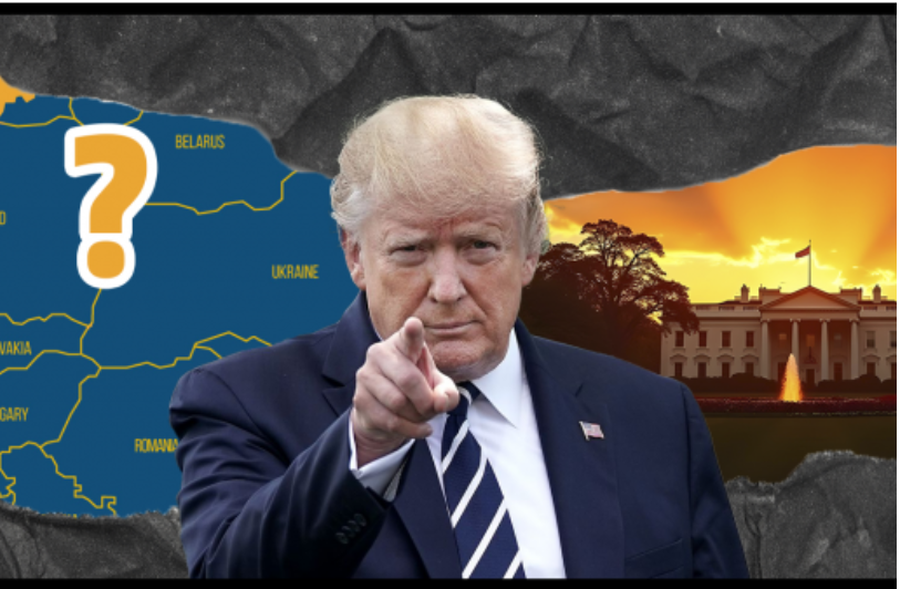
The ongoing and escalating massacre of Ukrainian civilians depends on two prerequisites: Moscow's determination to destroy Ukraine and the tacit permission it receives from America and Europe...
On Monday, a Russian missile destroyed a residential building in Kiev, leaving at least six civilians dead and over a dozen injured, including women and children pulled from the rubble in the early hours of the morning. “This is what happens when the US pulls back air defenses because it doesn’t want to upset the killers in the Kremlin,” Yaroslav Trofimov, a Ukrainian-born American journalist, wrote in a post on X.
Russia committed these war crimes, but the reluctance of the 'Free World' has allowed the murderous aggression to go unpunished for decades. The cost of empty threats from Washington, Berlin and Paris is measured in the lives lost in Kiev, Kharkiv and Odessa. If this does not weigh on our collective Western conscience, then we are not simply deluded. We are complicit.
"While all eyes are on the Middle East, people are dying in Kiev as Russia bombs Ukraine every day," EU chief diplomat Kaja Kallas observed grimly.
Between Israel's first strike on Tehran's military leadership and US B-2 bombers dropping bombs on bunkers at nuclear power plants, Moscow hit Kiev with its deadliest attack since 2022: 472 airstrikes overnight, including 280 Shahed drones. Thirty civilians were killed, 170 were wounded, and two were wounded.
A recent UN report finds that “97% of civilian casualties have occurred in areas under the control of the Ukrainian government.” This means that Russia is deliberately, systematically and relentlessly targeting civilians. No amount of thought or prayer will bring back to life 4-month-old Tymofii Haidarzhin, who never managed to say his first word.
When America backs down, issuing threats to Moscow that it will not carry out and promises to Ukraine that it will not keep, this kind of weakness destroys all prospects for peace and prolongs the slaughter, tarnishing our national honor. “Vladimir, stop it,” Donald Trump said in April: steely words followed by soft deeds.
Even those who like to hide under the "it's not our war" rock should understand that this is not just repeated incoherence, it is the erosion of American credibility at the speed of light. And when our enemies no longer trust our words, they cease to respect American power.
The US president signaled frustration with Russia’s warmongering on April 24. He then immediately refused to support secondary sanctions from Congress. Reports suggest the administration is quietly trying to water down a bipartisan bill aimed at curbing Russia’s oil profits and has now blocked European efforts to tighten the G7 price cap. Russia targets civilians deliberately, systematically and relentlessly.
Then came the infamous “two week” deadlines. On April 24, May 19, and again on May 28, Trump repeated the same empty threat.
And surprisingly, just 14 days after the final ultimatum, instead of Moscow facing consequences, Trump's Secretary of Defense, Pete Hegseth, revealed plans to cut US military aid to Ukraine in the next defense budget.
Fear us - otherwise we will retreat. Is this really the message America wants to send?
To add insult to injury, on June 12, the State Department issued a low-key press release celebrating “Russia Day.” While Ukrainians buried their dead, Washington congratulated the country that carried out the killing. At the G7, Trump was effectively lobbying for Putin’s rehabilitation, complaining about Russia’s exclusion from the G8, as if invading a sovereign neighbor were a minor diplomatic setback. One could almost hear the laughter and champagne corks popping in the Kremlin.
This is not about party. It is about a pattern. In 2012, President Obama drew a bright red line in Syria. Assad crossed it, and America was in a daze. But let’s be honest, this era-defining foreign policy misstep did not happen in a vacuum. In 2008, Russian tanks crossed a sovereign border and invaded Georgian territory. The White House responded with empty, empty statements, completely out of keeping with the urgency of the moment. A territory was effectively annexed, and a precedent was set. Moscow learned that any overt act of aggression would be met with deep concern, not deep-seated attacks. In 2014, Russia’s war on Ukraine began.
Fortunately, there is another model of combining rhetoric with determination instead of regret. Ronald Reagan did not bluff. He pursued his goal methodically, consistently, and purposefully.
He called the Soviet Union an “evil empire.” Not as a slogan, but as a signal. Then he rebuilt America’s military, strengthened our alliances, and confronted Soviet aggression wherever it appeared, from Poland to Afghanistan to Libya. Reagan didn’t take a stand. He didn’t just issue threats, he made them real. And he taught a lesson that today’s leaders seem to have forgotten: deterrence is capability plus credibility.
This is the difference. Peace through strength is not a common doctrine. It is a doctrine based on history. And when powerful nations abandon it, the inevitable result is dishonor through weakness.
The next time the US president draws a red line or tweets a threat, he better have something to say. / Adapted from Kyivindependent Pamphlet/




Lini një Përgjigje