


 Shkruar nga Pamfleti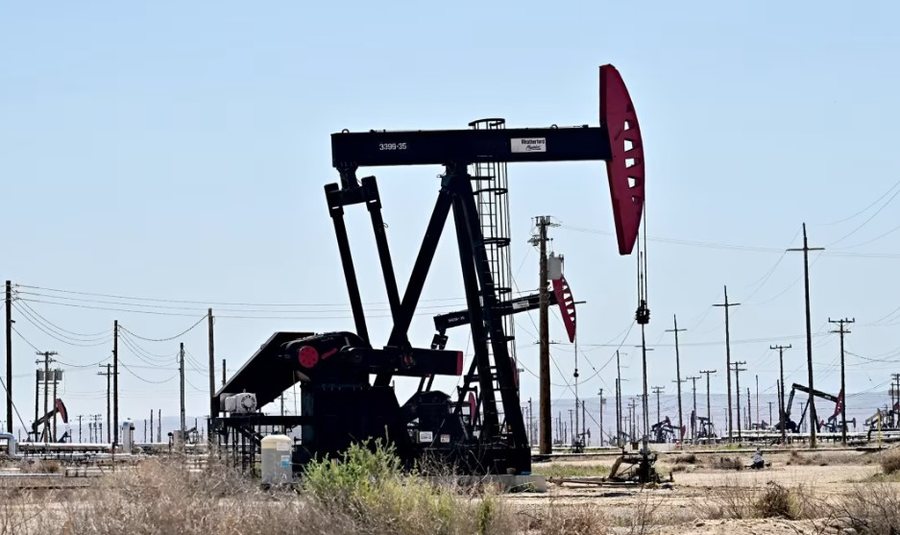
President Donald Trump announced the ceasefire on Monday evening, though just hours later Israel accused Iran of violating the terms of the deal and vowed to launch new strikes on Tehran. Iran denied the accusations.
U.S. stocks were up. The Dow was trading more than 515 points, or 1.21%, higher at midday. The S&P 500 was up 1.12%, while the tech-heavy Nasdaq rose 1.5%.
The S&P 500 was trading less than 1% away from an all-time record. The Nasdaq was 1.3% away from its all-time record.
In Asia, stock indexes closed higher. Hong Kong's Hang Seng Index ended the day up 2%, while mainland China's Shanghai Composite rose 1.2%.
Meanwhile, in Europe, the benchmark STOXX Europe 600 index, which also includes companies listed in the United Kingdom, closed higher by 1.11%.
"There will probably be bumps along the way, but the market is signaling that this conflict is over," Robert Yawger, a commodities specialist at Mizuho Securities, told CNN on Tuesday.
“Markets breathed a sigh of relief after Trump announced a ceasefire, but the celebration may not last long,” said Lukman Otunuga, senior analyst at FXTM, in a note to investors. “If tensions resurface or the ceasefire is violated, we could see a rapid return of risk aversion – which would increase demand for ‘safe havens’ like gold and put pressure on global equities.”
Oil prices fall sharply on news of ceasefire
On Tuesday, oil prices fell sharply, returning to levels recorded before the outbreak of the conflict between Iran and Israel, as investors welcomed news of a ceasefire - however fragile - between the two countries.
Brent crude, the global benchmark for oil prices, was trading 5.8% lower in the afternoon at $66.44 a barrel. West Texas Intermediate (WTI), the U.S. benchmark, was also down 5.8% at $64.50 a barrel.
These levels are comparable to closing prices before Israel launched an unprecedented attack on Iran's nuclear facilities on June 13.
This attack triggered a 12-day conflict, during which both sides exchanged a barrage of rockets into each other's territories, including direct military involvement by Israel's biggest ally, the United States.
Oil supply relief
The ceasefire makes a disruption to global oil supplies less likely. Many investors had been concerned that Iran could close the Strait of Hormuz, a critical waterway that carries about a quarter of the world's oil supply, according to data from the International Energy Agency.
This scenario – which could cause an immediate increase in oil prices – now seems less likely.
Goldman Sachs had estimated that oil prices could exceed $100 per barrel if there was a "prolonged blockade" of the strait.
If the ceasefire holds, Brent crude could stabilize "near $70 a barrel, while clarity on a US-Iran deal is awaited," said Mukesh Sahdev, global head of commodity markets at Rystad Energy.
“The prospect of severe economic collapse from a potential blockade is likely to have motivated both sides to accept the ceasefire, if it is truly sincere,” he wrote in an analysis.
While oil prices rose sharply after the outbreak of the Iran-Israel conflict, reaching a five-month high last week, they plunged on Monday after limited and targeted strikes by Iran on US bases in Qatar.
U.S. crude fell 7.2% to close at $68.51 a barrel — the biggest daily drop since early April and one of the worst days in three years. Brent closed at $71.48 a barrel, also down 7.2%, the biggest drop since August 2022. / CNN








Lini një Përgjigje