


 Shkruar nga Pamfleti
On Sunday, Hungarians will have to choose between two narratives, between Russia and Europe, between a pull towards national identity and faith in the future, between bitterness and hope.
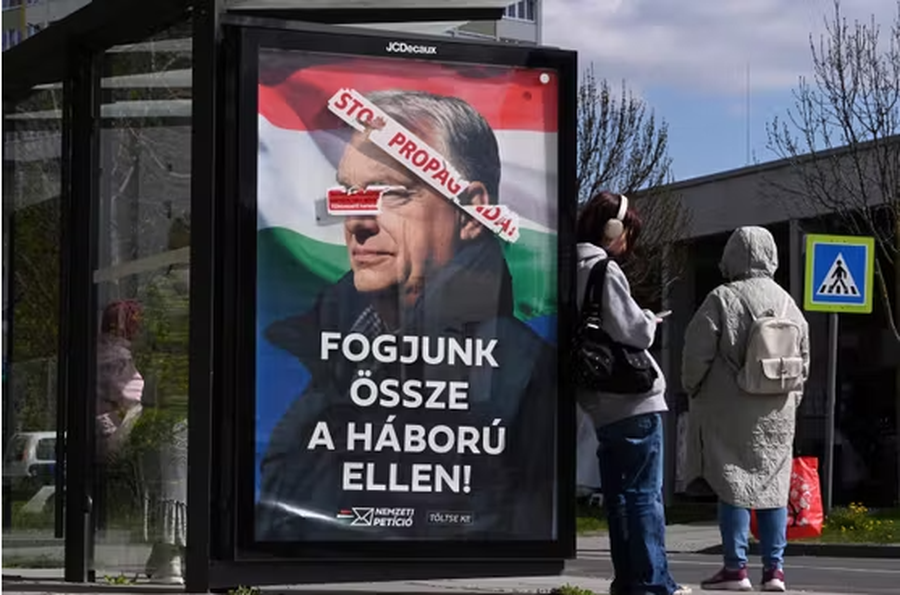
After nearly sixteen years in power in Hungary, Viktor Orban is preparing to face an extremely difficult parliamentary election on Sunday, April 12. At 62, the nationalist prime minister is trailing in the polls his conservative and pro-European opponent, Péter Magyar, 45. Having worked so hard in Europe to sideline traditional parties and favor his far-right allies, Mr. Orban is now feeling the pressure of public opinion among Hungarians himself.
In Viktor Orban’s Hungary, on the eve of parliamentary elections, an atmosphere of the end of an era prevails.
This discontent stems mainly from inflation that has exceeded 40% since 2022 and a sluggish economy, hampered both by the suspension of 18 billion euros in European funds and by endemic corruption that discourages foreign investors and discourages Hungarian entrepreneurship. Having already lost the support of liberal voters in Budapest, Mr. Orban has also alienated small business owners and middle managers, who have long formed the core of the electorate of his party, Fidesz.
Faced with the discontent of an electorate that had long appreciated his fiscal policies, the outgoing prime minister took a desperate risk, campaigning on pro-Russian messages and portraying Ukraine and its president, Volodymyr Zelensky, as Hungary’s main enemy. Aimed at stoking fears of war and exploiting long-standing anti-Ukrainian sentiment within Hungarian society, this strategy has proven ineffective.
Signs of fatigue
While Hungarians are highly skeptical about Kiev’s support, they do not believe that Ukraine poses a serious threat to their country, contrary to what the government’s propaganda machine suggested throughout the campaign. Moreover, they dislike Russia, as any politician who began his career calling for the withdrawal of Soviet tanks from Hungary in 1989 should know.
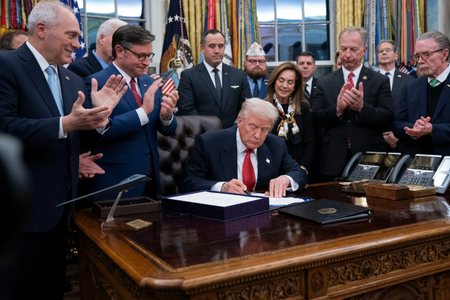
Showing signs of fatigue against a much younger and more dynamic opponent, Mr. Orban has finally begun to unsettle a population that desperately wants to avoid leaving the European Union, even as it may be swayed by messages blaming Brussels for all of Hungary’s problems. On Sunday, we will know whether the overt intervention of US President Donald Trump, who went so far as to send his Vice President, JD Vance, to attend a campaign rally on April 7, has been able to buck this trend.
In European history, Hungarians are certainly among the peoples convinced of a special destiny and who like to have their voices heard. It is no coincidence that the great wave of far-right that has flourished in Europe and beyond since the migrant crisis of 2015 was born in this country, gripped by the fear of its own downfall. But Hungary is also the heir to another tradition, that of the "merry hut in the socialist camp", which made the Magyars pioneers in the fall of communism in 1989.
On Sunday, Hungarians will have to choose between these two narratives, between Russia and Europe, between a pull towards national identity and faith in the future, between bitterness and hope. At a time when democracy is under severe attack, even in the United States, they should be proud that the spotlight is once again on Budapest to draw lessons from an election whose dangers extend far beyond Hungary./ Adapted from Le Monde





Lini një Përgjigje