


 Shkruar nga Pamfleti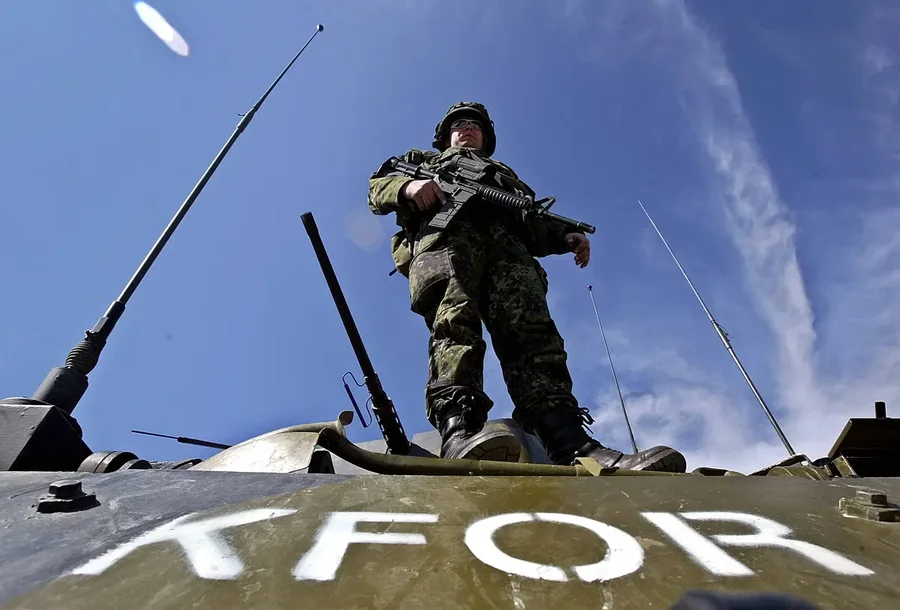
Kosovo 1999 showed how peace is made, Gaza 2025 is showing how it fails
Just 10 days after being brokered by US President Donald Trump, the 20-point peace deal in Gaza appears to be headed for failure. Instead of laying down their arms and withdrawing from the political scene, Hamas militants have resurfaced, executing Palestinian rivals and retaking control of areas where the Israeli army has withdrawn. Israel accuses Hamas of attacks on its soldiers, while Hamas says the IDF is continuing its aerial bombardment. Both sides are right. Meanwhile, Israel refuses to reopen the Rafah border crossing, as required by the deal.
The fundamental problem is that neither Hamas nor the Israeli government were happy with the agreement, which they were forced to sign through international pressure. Given that both sides have stated from the outset that they have no intention of implementing key terms, the question is not "why are they breaking the agreement" but "how is it possible that they can throw it away so easily?"
To understand this, we only need to look at a model that has worked before: the KFOR peacekeeping mission in Kosovo, created in 1999 and still continuing today.
It is no coincidence that Trump’s 20-point plan included post-war structures similar to those proposed by former British Prime Minister Tony Blair, who played a key role in NATO’s intervention in Kosovo to stop ethnic cleansing by Milosevic’s Yugoslav Army. What followed, the deployment of the multinational KFOR force and a UN interim administration, is perhaps the most appropriate model for Gaza today.
Unlike regular UN missions, NATO began preparations for a ground intervention in Kosovo long before a ceasefire was reached. In June 1999, just two days after the end of the bombing and the adoption of the resolution on KFOR, troops entered Kosovo. The first forces were special forces, ready for any scenario.
Of course, there is no complete equality between the cases: Netanyahu is not Milosevic, the IDF is not the JNA, and Hamas is not the KLA. But there are clear parallels: small populations, deep-rooted ethnic and religious conflicts, claims of ethnic cleansing, and a fragile peace, threatened by revenge and the return of forces to power.
In Kosovo, too, the KLA initially refused to surrender its weapons, despite its alliance with NATO. Disarmament efforts were also contested by Serbia and Russia. But without the immediate presence of 50,000 KFOR troops, the situation would have deteriorated further.
Unlike that preparation, the peacekeeping element of Trump’s Gaza deal remains on paper, with planning that began too late. Instead of organizing a credible international mission, Trump wasted months on irresponsible ideas to transform Gaza into a Mediterranean “Las Vegas,” emptied of Palestinians, a fantasy that appealed to Israeli extremists but was promptly rejected by Arab leaders.
Only in September did a more serious approach begin, after Netanyahu embarrassed Trump by bombing Qatar. But by then it was too late to build a peacekeeping force that would intervene immediately.
A new international force for Gaza, authorized by the UN but not led by it – led by Egypt and including troops from Muslim countries such as Azerbaijan and Indonesia – is being discussed today. This format follows the lessons of KFOR: choose troops from countries that enjoy the trust of the local population and provide them with a clear mandate, sufficient weapons and strong rules of engagement.
Trump had neither Blair’s preparation nor his strategic vision. He applied the “art of the deal” to a conflict that required the art of implementation. This is not to say that the ceasefire has completely failed, but if Egypt is to truly deploy a force in Gaza, it must learn from the experience of Kosovo, and act decisively to fill the security vacuum. Rafah is the place to start. And time is running out. /Adapted from “Pamfleti” by “Bloomberg”





Lini një Përgjigje