


 Shkruar nga Andreas Kluth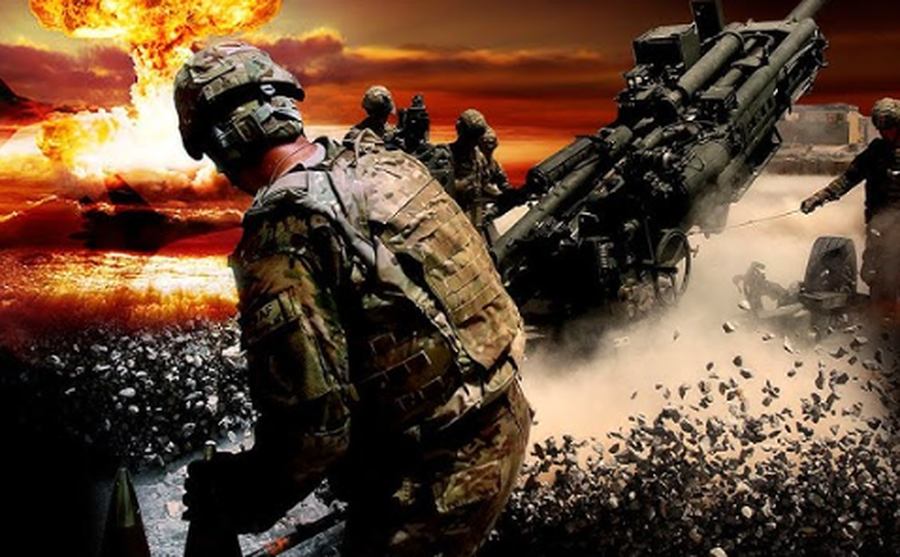
The war of the future may not start with tanks or planes, but with invisible strikes in orbit. Satellites, which today keep communication, transportation and the global economy afloat, have become the most sensitive and strategic targets. Whoever controls space, in a major conflict, could dictate the fate of everything on Earth...
In press conferences following US attacks - which have become almost routine these days - senior military officials never fail to mention the Space Force and its "guardians", as members of this
service are called.
And not without reason. Because every time America intervenes militarily, whether in Venezuela or by striking Iran, one of the first steps is to neutralize the "eyes and ears"
of the adversary.
This means striking at space-dependent systems: satellites and technology directly related to ground operations. However, neither Venezuela nor Iran are real technological rivals in this area.
The question that worries the most advanced strategists today is another: what would a major clash with a power like Russia or China, or in the worst-case scenario, with both simultaneously, look like?
To better understand this reality, I recently spoke, confidentially, with sources in Washington and Colorado Springs, where Peterson Space Base is located.
One idea emerges clearly from these conversations: the first explosions of a major global war are likely to occur in space, in parallel with coordinated cyberattacks. The debate is not whether this will happen, but how.
And above all, the question arises: is America vulnerable to a space “Pearl Harbor?” Today, all major military powers - especially the US, China and Russia - use space for espionage, mapping and target tracking.
This forces them to have not only defensive capabilities, but also plans to disable an adversary's satellites. In its simplest form, this is done through electromagnetic interference - something that happens frequently, although rarely made public.
At more aggressive levels, lasers, missiles, or even satellites that approach to physically harm others are used. Some systems are even more sophisticated. The US is closely following Russian “Matryoshka” satellites, which can break open and launch other objects, potentially kinetic weapons, into orbit.
Meanwhile, rapid innovation has sparked a veritable arms race in low Earth orbit. America's rivals are testing maneuvers that resemble "dogfights" in space, lasting for days. At speeds reaching around 28,000 km/h, any collision could have catastrophic consequences.
In this area, the United States does not necessarily enjoy the lead it once had. But America is changing its approach. From a few very expensive satellites, it is moving towards a large network of cheaper and more distributed satellites. This is a strategy aimed at greater resistance to attacks.
One of the most worrying scenarios involves the possibility of Russia placing nuclear weapons in space. According to US intelligence agencies, this poses one of the most serious threats to global orbital infrastructure.
Such an explosion would not directly kill people on Earth, but it would generate an electromagnetic pulse that would destroy satellite electronics and make the surrounding space dangerous due to radiation.
Even without nuclear weapons, space is already filled with an estimated 130 million pieces of debris. A chain reaction - known as Kessler Syndrome - could paralyze the use of orbit for decades.
And if something like that were to happen, the consequences would be immediate. Without satellites, the global economy would grind to a halt. Communications, transportation, trade - everything would collapse.
Ironically, the US and its allies are more dependent on space, while Russia is less so. This may explain why Moscow would be tempted to strike first in space, to avoid a loss on the ground. In such a scenario, the world could return overnight to a pre-industrial reality.
For this reason, the wisest strategy today is not how to win such a war, but how to prevent it.
This is done by recalling the old logic of Mutually Assured Destruction (MAD): a terrifying balance, but one that has so far avoided catastrophe. / Adapted from "Pamphlet" by "Bloomberg"






Lini një Përgjigje