


 Shkruar nga Pamfleti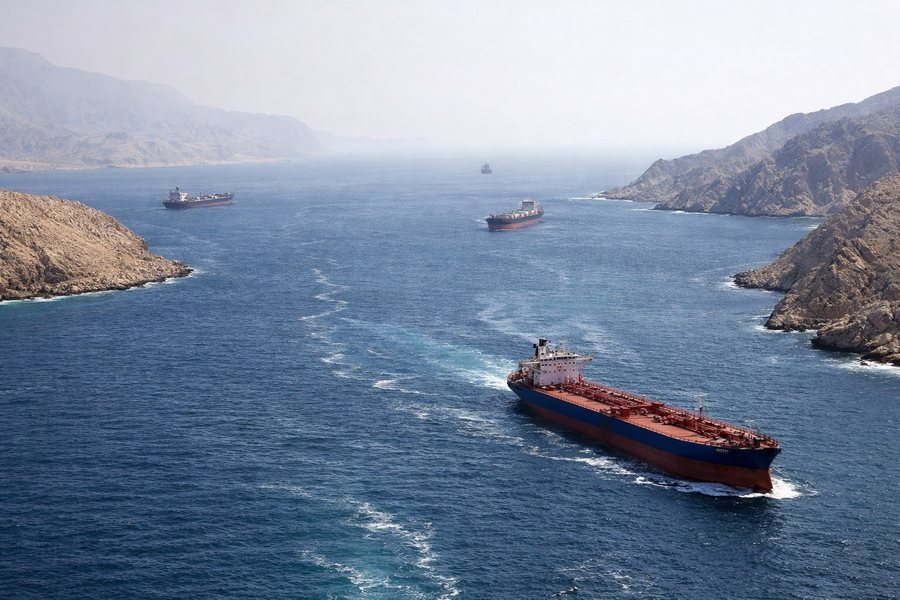
About 1,000 ships are currently waiting to pass through the Strait of Hormuz, one of the most strategic maritime corridors for global energy trade. Among them are about 200 oil tankers, which transport important supplies for international markets.
The situation has also affected energy markets, with oil prices rising sharply and fuel costs rising in many countries around the world, as the Iranian military continues to maintain strong control over this strategic sea route.
According to reports from the area, Iranian forces have issued repeated threats to ships attempting to pass through or even approach the entrance to the strait.
A journalist in the region reported seeing a ship burning on the horizon for several hours a few days ago. There was no confirmation whether the ship was attacked by Iranian forces, but given similar incidents in recent weeks, such a scenario is considered likely.
Iran has said it will not allow American or US-affiliated ships to pass through the Strait of Hormuz, while other ships could theoretically pass through. However, ships without US ties have also reportedly been targeted.

Recently, a Thai-flagged ship attempting to transit the strait was hit by a ballistic missile. The missiles hit the ship and about 20 crew members were rescued by the Omani Navy.
Maritime authorities say three crew members remain missing at sea. The incident has further raised concerns about the safety of shipping in this key area for the global oil trade.






Lini një Përgjigje