


 Shkruar nga Pamfleti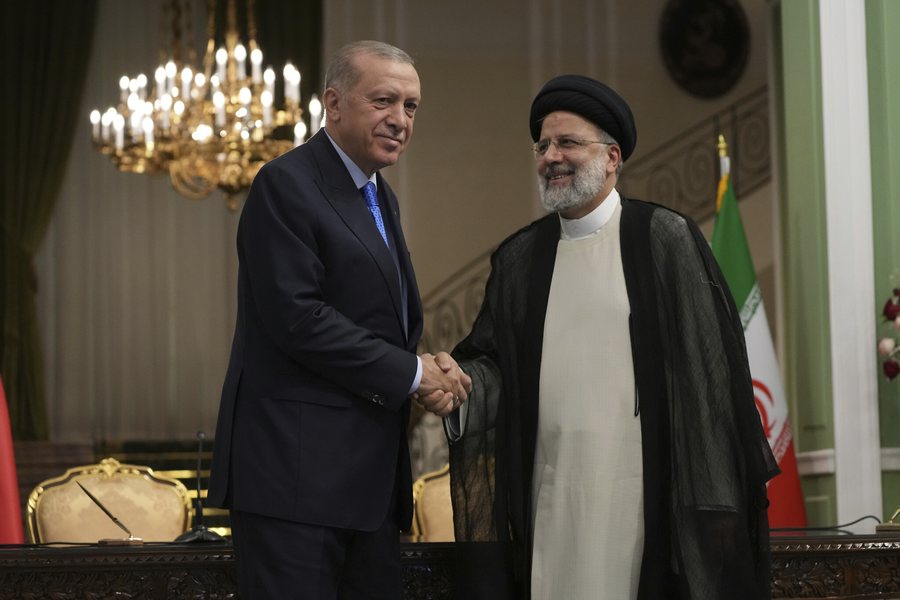
Iranian President Ebrahim Raisi made his first official visit to Turkey today, hoping to document past differences and create a strong joint response to Israel's actions in Gaza.
Turkish President Recep Tayyip Erdogan has emerged as one of the Muslim world's most vocal critics of Israel's attack on Gaza.
He has called Israel a "terrorist state" and called Iran-backed Hamas "a liberation group." Erdogan has also suggested the trial of Israeli politicians and military commanders at the International Criminal Court in The Hague.
But past meetings between Muslim and Arab leaders, including talks this month in Riyadh, have failed to find common ground on what immediate economic and political steps should be taken.
Analysts believe Raisi will pressure Turkey to go beyond the rhetoric and cut off its thriving trade and energy ties with Israel.
"Iran expects Turkey to end its direct and indirect trade with Israel," Hakki Uygur, director of the Istanbul Center for Iranian Studies, told AFP.
Turkey, on the other hand, has maintained a position that cares about the separation of political and commercial issues.
Rais's visit comes as efforts are focused on extending a ceasefire that has seen dozens of Israeli hostages released in exchange for the release of more than 100 Palestinian prisoners.
Iran and Turkey share a 535-kilometer (330-mile) border and a complex history of close economic ties and opposing views on regional disputes.
Turkey backed rebel efforts to oust Iran- and Russia-backed president Bashar al-Assad during Syria's civil war.
Ankara's support for Azerbaijan's two victorious wars against Armenian separatists in Nagorno-Karabakh also caused deep concern in Iran.
Tehran fears that Baku's resurgence in the Caucasus region could fuel the separatist ambitions of Iran's large ethnic Azerbaijani minority.
Iran is also concerned about a proposed trade route running along its northern border between Azerbaijan and Turkey that could potentially complicate its access to Armenia.
"The most important conflict between Turkey and Iran was over the Caucasus and Karabakh," said Ankara-based Iran expert Arif Keskin.
"With the Gaza conflict, this issue was pushed to the background, but it still remains there as an important issue," Keskin told AFP.
The Turkish presidency said Erdogan discussed finding "a common stance against Israel's brutality" over the phone with Rais on Sunday.
Analysts believe Iran is trying to calibrate the extent to which it uses groups such as Hamas and Hezbollah in Lebanon to pressure Israel and the United States.
"Iran has been wary of intervening in the ongoing Middle East crisis and is likely to avoid any action that could escalate the conflict," the Eurasia Group said in a report.
"Since Iran does not have full control over its allies, there is a risk that unintended actions could provoke US retaliation and escalate the conflict," the statement said.
Erdogan has also expressed continued concern about the spread of the war.
"Iran and Turkey will continue to work in unity to make the temporary ceasefire permanent and achieve permanent peace," Erdogan's office said after his call with Raisi.



Lini një Përgjigje