


 Shkruar nga Pamfleti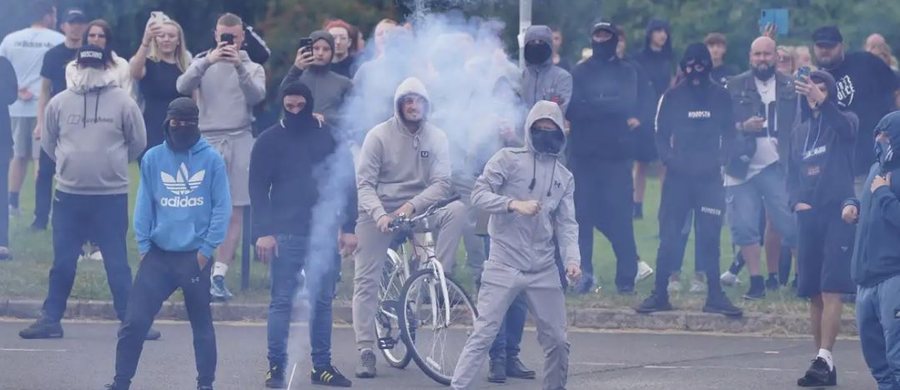
It all started with a fake news. In Southport, a 17-year-old attacked several people in a ballet school - three children died. Soon the information spread on the network that the doras was a young Muslim asylum seeker who had arrived last year by boat through the English Channel. But this information was false. Defendant Doras was born in the United Kingdom as a child of immigrants.
The false information was spread online prompting many people to protest in the streets in several cities for days. How could this happen? In an investigation the BBC has traced the source of the information, where it was first published. The false information was published on a news portal: Channel3Now. This site specializes in crime topics. In a statement to the BBC, a member of management admitted that the release of information about the Southport glove was an inadvertent error. An employee of the portal said, that the enterprise is commercial, it aims to publish as many events as possible. Connection with Russia BBC has not been able to verify.
Online disinformation with offline consequences
A false information that fits the world view of many people who spread it on the net. On Telegram, on X (formerly Twitter) with concrete consequences: "What we experienced here is that a fake news spread on the network inciting violence and riots offline," says Sander van der Linden, professor of psychology at Cambridge University and expert on fake-news. False information spreads quickly because anyone can publish it online. "The information is without evidence, unverified. These publications can go viral," says van der Linden. "Media concerns have fact checkers, editors, producers, they all verify. While these platforms have no control mechanisms."
Media power is shifting to Internet corporations
Last week, even the British newspaper "The Sun" paid attention to this topic. The headline read: "Anti-social media" - a pun on the concept of social media. A stone thrower was also printed next to the title. The subtitle was: "How Facebook and others fuel violence on our streets." The headline also draws attention because this is a newspaper belonging to Rupert Murdoch's media empire, which is highlighting the turnaround. It is no longer the tabloids, the sensational daily newspapers, that set the tone in UK politics, but the big internet corporations. Elon Musk, owner of the X platform, last week repeatedly attacked British Prime Minister Keir Starmer. A civil war is inevitable, he wrote.
Musk accused Starmer, for example, of taking a completely different stance toward "white protesters" instead of confronting immigrants. But for this he did not give any evidence. Far-right British politicians used this argument – even without providing evidence. X boss Musk allowed right-wing far-right activist Tommy Robinson, who has 900,000 followers and tweets right-wing content and misinformation inciting violent protesters, back on the X platform.
Efforts to regulate these platforms by the state are in their infancy in the UK. Hannah Rose, an expert on extremism at the Institute for Strategic Dialogue, cites this as an example of the Online Safety Act: “This law should force platforms to take down illegal content. Whoever does not do this should be fined. But the regulation is still in its initial phase." How effective this law is, it is still unclear. It will depend on the position of the state regulatory structure. /DW/



Lini një Përgjigje