


 Shkruar nga Paul Taylor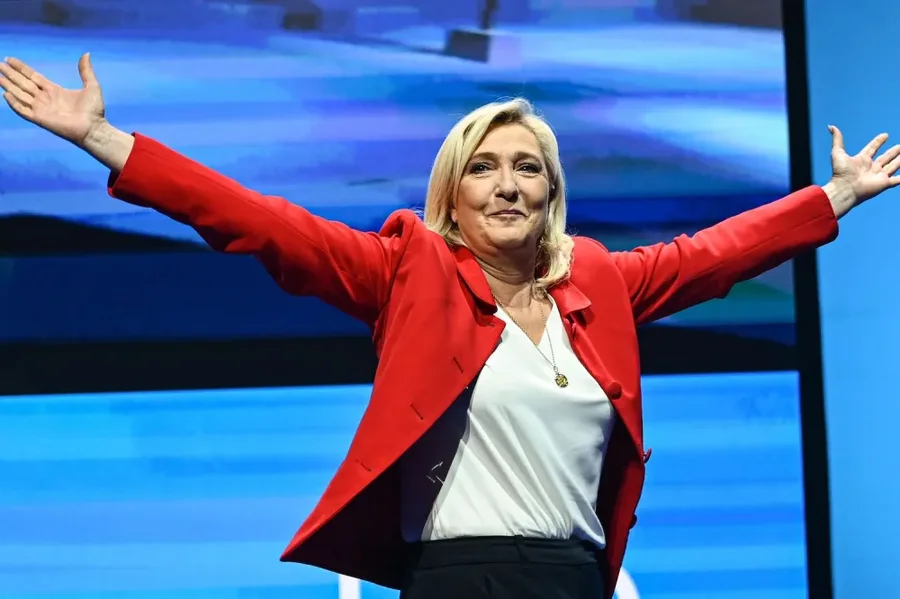
In a financial crisis and unpopular reforms, Prime Minister François Bayrou looks set to fail. Will he take Macron with him?
Rançois Bayrou may have thought it was a smart move to call a parliamentary vote of confidence in his minority government ahead of a national protest planned for September 10 and the start of a tense parliamentary season.
Determined not to suffer the same fate as his predecessor, who was ousted by parliament last December, the French prime minister appears to have opted for political hara-kiri instead. His almost certain ouster is expected to turn the simmering political deadlock into a simmering regime crisis.
The constitution of France’s Fifth Republic, drafted by General Charles de Gaulle in 1958 to create a strong executive and a pliable legislature, has ceased to provide stable government. Without a change in the system, France faces prolonged political paralysis. Meanwhile, it appears incapable of resolving a chronic fiscal crisis that is beginning to roil financial markets. Finance Minister Éric Lombard last week refused to rule out the need to seek an IMF bailout before quickly backing down when investors spooked.
If, as expected, the veteran centrist prime minister falls, President Emmanuel Macron has no chance to stabilize the state, approve a budget to curb the ballooning deficit and preserve his liberal legacy of supply-side economics and pension reform.
Macron could name a new prime minister, but there is no sign that France’s political parties are willing to compromise on a workable budget. He could dissolve parliament again and call a general election, but that would probably not produce a more decisive result than the snap election he called last year.
The president had sought “clarification” from voters after far-right populists won a landslide victory in the European Parliament elections. Instead of clarification, the legislative vote plunged the country into greater confusion, producing a three-way split between roughly equal blocs — a left-wing alliance dominated by Jean-Luc Mélenchon’s radical France Unyielding (LFI), Macron’s centrist and center-right supporters, and Marine Le Pen’s National Rally (RN).
Macron, unable to run again after his second five-year presidential term, which could run until the spring of 2027, has ruled out another option: resigning from office and calling for early presidential elections. How could the charismatic president, still only 47, get himself into such a mess?
He and Bayrou seem to have misjudged both public mood and parliamentary arithmetic. They calculated that either the RN or the center-left Socialist Party would keep the government in office, since each had good reasons to avoid another election, the former because Le Pen would be disqualified from running due to a fraud conviction, the latter because she risked losing many seats.
But neither wants to act as a lifeboat for an unpopular prime minister who proposed scrapping two official holidays and freezing public spending next year to narrow the fiscal gap.
Bayrou put France’s growing debt at risk so he could convince the public and the political class of the need for drastic measures. Capitalizing on public anger over these proposals, an anonymous group called Bloquons tout (Let’s Block Everything) has called for strikes and demonstrations to bring the country to a standstill next Wednesday, seeking to revive the spirit of the leaderless movement.
Although some of these calls appear to be coming from far-right social media accounts, Mélenchon has joined the blockade campaign in the hope of forcing Macron out. So far, the atmosphere seems grim and distrustful rather than insurgent. It is not clear whether unionized public sector workers have the stamina to support a strike campaign.
The Socialists are trying to project themselves as a constructive alternative to Bayrou or early elections. The party leader, Olivier Faure, says the president should appoint a Socialist prime minister to implement a “counter-budget” that includes a wealth tax on the wealthy, a suspension of the retirement age increase approved in 2023, a reduction in welfare taxes and smaller cuts to public spending than Bayrou had envisioned. Macron is determined not to do that, but he has asked his centrists to reach out to the Socialists to persuade them to join or support a government.
Centrist leaders are urging the president to avoid new elections, in which the Republican Party would likely further increase its lead at their expense. But French parties have neither the German and Dutch political culture of carefully negotiating a compromise program for a legislature, nor the Italian tradition of supporting a technocratic government for a limited time to carry out unpopular but necessary reforms.
A prolonged political crisis will only fuel support for the anti-immigrant nationalist right and further discredit the mainstream parties. With the echo of social media and a growing American-style media that opposes crime, immigration and Islam, Le Pen and her new boyfriend Jordan Bardella seem ever closer to victory and taking power. / Adapted from “Pamphlet” by “The Guardian”.




Lini një Përgjigje