


 Shkruar nga Massimo Nava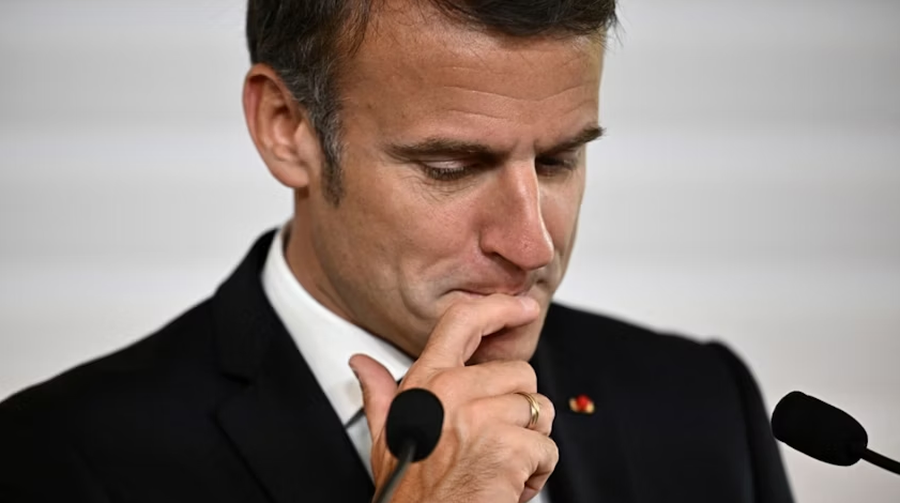
Emmanuel Macron's decision to reopen dialogue with Russia could significantly change the current scenario...
Perhaps the French are more cunning, or simply more diplomatic, knowing that diplomacy serves to communicate with enemies and opponents and overcome differences. The alternative is, in fact, the continuation of the war. The fact remains that Emmanuel Macron's decision to reopen dialogue with Russia could significantly change the current scenario. It is enough to reread the half-sentences coming out of the Elysee Palace to understand the meaning of this action. "Our objective is to consolidate the unity of Ukrainians, Europeans and Americans on a clear and legible basis. Dialogue with Russia is inevitable in the context of negotiations. When things crystallize, it is necessary to open all options."
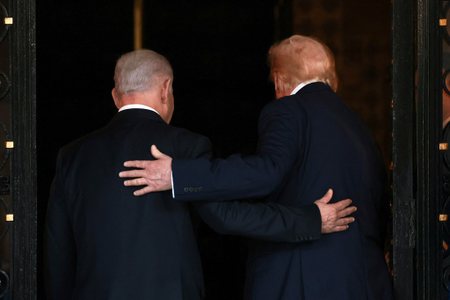
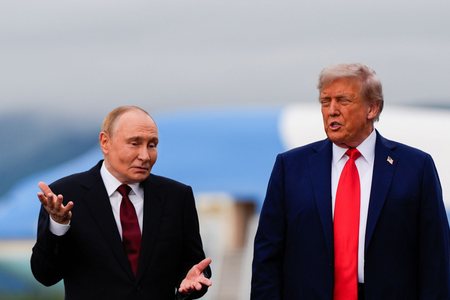
In short, avoiding a stalemate and, at the same time, preventing a situation where today, and especially tomorrow, Trump will be the only one talking to Putin. The Kremlin took advantage of the position of the Elysee Palace, even exploiting it, to highlight the divisions within the European front, divisions that exist and it would be naive to pretend that they do not exist.
After all, the mountain of bombastic promises (NATO membership), broken commitments (confiscation of Russian funds) and shattered dreams (Kiev's victory) have given birth to the little mouse of a 90 billion euro loan over two years, divided between the twenty-seven. But the EU's "great effort" for Ukraine, logically, will only serve to pay a few salaries and a little ammunition to get through the winter. Essentially, it will prolong the agony of a people surviving under Putin's bombs. Peace is still far away; agreements will be made by Washington and Moscow, at a price lowered by Kiev's hopes. That is why Macron is trying to change the worst-case scenario.
It is therefore important to see things from a French perspective, while remaining within the realm of hypotheses. Macron acknowledged that the EU is deadlocked on the issue of Russian assets and that Chancellor Friedrich Merz's Teutonic activism has deepened divisions between European capitals. Caught between maximalist pro-Ukraine positions and softer stances towards Russia, Europe, unanimously condemned by its institutional contract, risks losing relevance unless the initiative of a leader shakes things up.
Faced with an out-of-control public debt and a protracted political crisis whose outcome is still uncertain, the Elysee Palace has limited room for maneuver, which suggests a more pragmatic and cautious approach, including further spending on Ukraine. Diplomatic activism and the willingness, in the future, to provide its own troops to guard the demilitarized zone currently under discussion are another matter entirely.
At this point in the conflict, Macron believes that it is no longer in anyone’s interest to continue with the narrative of defending Ukraine at all costs and severing relations with Russia, a severance of relations that has already brought huge economic costs to EU countries, resulting in the breakdown of trade relations and energy corridors. In other words, given the divisions and hesitations of the Europeans, there is a serious risk of being left in the lurch while the Russians and Americans make peace at the expense of the Ukrainians. Looking ahead, the price could be higher if the Americans, in agreement with Moscow, manage reconstruction and the mining and agri-food sectors. Existing contacts and contracts speak for themselves.
France has a seat on the UN Security Council and is the only nuclear power among the twenty-seven countries. This political advantage offers the French president a certain room for maneuver and initiative, aiming to put Europe back on the map. If, as during the Vietnam War, the path to peace were to pass through Paris again, a page of this history would be written by Macron, extremely weak and contested at home, but still a key player on the international stage.
Of course, reopening the dialogue with Putin does not mean withdrawing support for Ukraine, but rather acknowledging, after so many sacrifices, the extent of this support still possible. The timeline for Ukraine’s reconstruction and normalization with Russia will take a generation, but starting to discuss it pragmatically is already a step forward! And also an act of sober courage./ Adapted from “Pamphlet” by “Corriere Della Sera”


Franca lavire e ruseve ka qene qe pas renies se Napoleonit.