


 Shkruar nga Adalgisa Marrocco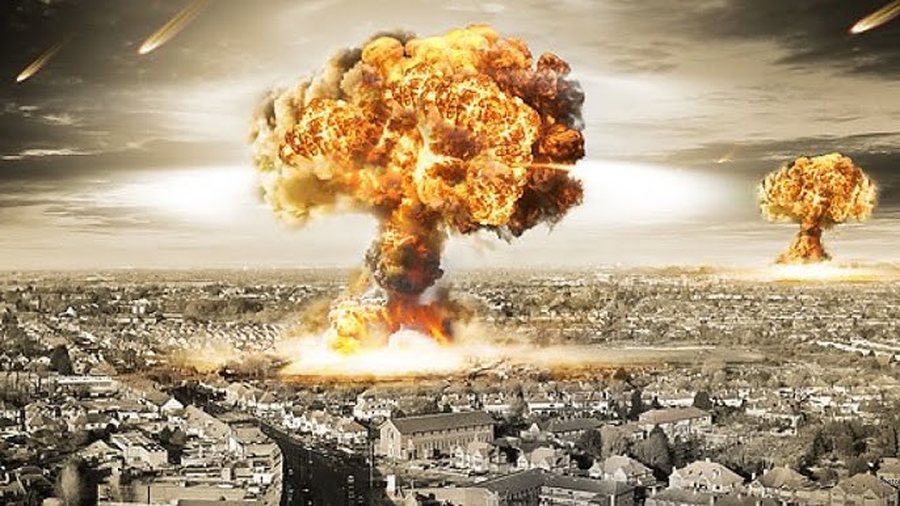
But many experts believe that a world conflict is already underway, and why in different forms.
His latest novel is titled "Escalation", just published in Italy by Mondadori. The events are set in London in 1914, on the eve of the First World War. " From that moment on, the world has never been the same ," Robert Harris told Huffpost.
Great English writer, says with regret that he can only make a comparison between the Europe of yesterday and that of today: different but equally deep fragilities, which risk plunging us into chaos....
How do the facts shown in your novel resonate with today's developments?
Writing about historical events offers a tremendous narrative range, as the past is often nothing more than a reflection of the present. Through the history of distant eras, writers can explore human dynamics and issues that transcend the boundaries of time, appearing as universal.
What happened in the summer of 1914, is and will remain in the collective subconscious of both the English and all Europeans, because it marked the end of one world and the beginning of another.
What lessons can we learn from that historical period to face today's global crisis?
The European project was born with the aim of making a new world conflict impossible. This would be achieved through economic interconnection between states and curbing nationalism. In this sense, to date Europe has achieved important results.
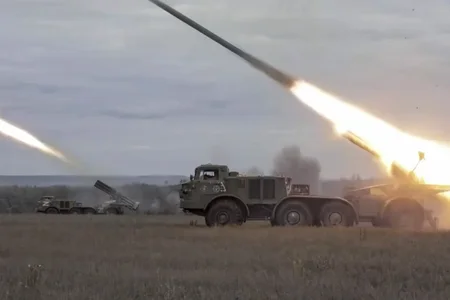
But today, threats such as the war in Ukraine or the growing polarization in the United States, reinforced by the re-election of Donald Trump, have put this balance under great pressure. We face challenges reminiscent of 1914, when the world deluded itself into thinking it was immune from war.
Indeed, it quickly descended into chaos. Unfortunately, there is no simple solution to today's crisis. The fact is that now, especially after the election of Trump for a second term, we must be very serious, carefully observe the situation, and act to avoid the worst.
So today you see tensions so strong that they can be compared to those of the beginning of the 20th century, which led to the first major world conflict. A very scary comparison...
I hope not, but it is essential to be vigilant. In July 1914, the so-called international protective alliances, designed to prevent conflict, actually hastened the coming of war.
Today NATO, also a defensive alliance, could potentially trigger similar dynamics, especially given the situation in Ukraine. In fact, any accident can have unpredictable consequences that can lead to a global war.
However, there is a fundamental difference: the presence of nuclear weapons, which act as a deterrent mechanism. At the moment, we are at the level of a conventional conflict, characterized by technologies such as drones and cyber warfare.
But many experts believe that a world conflict is already underway, and why in different forms. It will be crucial to understand whether these tools will be able to prevent further escalation, or on the contrary will reinforce them.
In your novel, you also deal extensively with the connections between personal scandals and international politics. What can we learn from this?
Scandals are part of human nature, so they will continue to exist. However, each era interprets them differently. In my novel, I deal with a historical scandal. In 1911, British Prime Minister Herbert Asquith announced a very strict law against the disclosure of state secrets.
But 3 years later, it was he himself who shared confidential information with his new girlfriend. At the time, that story was covered, partly because there was no media like there is today. Today, such an episode would cause a real storm, even through movements like #MeToo, and it would be impossible to hide such behavior. The contradiction between what the government preaches and what it practices is a constant of history.
Meanwhile, a film based on another of your novels, Conclave, has been released, which talks about another type of power, that of the Catholic Church. Why did you want to explore it, and what fascinated you about this world?
The idea came to me as I was watching Pope Francis walk out onto the balcony of St. Peter's, surrounded by cardinals and officials watching the crowd's reaction. I thought it might be a scene from 2,000 years ago: the Roman Senate awaiting the proclamation of the new emperor.
From that moment I began to study the mechanisms of the Conclave, and I discovered that papal elections are the most extraordinary in the world. It consists of very few voters, isolated, locked in a room, until they make a decision. The conclave is a unique blend of politics and spirituality.
Those who impressed me the most were the cardinals: men of great charisma, spiritual representatives of millions of people, but also political figures of international importance. I believe that modern political parties have much to learn from the system by which the Catholic Church elects its leaders.
Finally, what do you think of the new British Prime Minister, Keir Starmer?
I believe that in the last election, people decided to punish the Conservative Party severely. However, Starmer finds himself in a very delicate position: despite a sensitive majority, he lacks strong popular support, and this could be a serious problem.
He is trying to pass some unpopular measures early in his term, perhaps hoping voters will forget about them by the next election. Personally, I consider him a serious and competent person, but his communication style is a bit cold, almost robotic.
He lacks that kind of originality that some leaders on the right have and know how to convey. This could penalize him in an international context characterized by the rise of anti-establishment leaders. His commitment and work ethic are indisputable, but turning them into popular consensus will not be an easy challenge./ Adapted "Pamphlet" from "Huffington Post Italia"


Lini një Përgjigje