


 Shkruar nga Pamfleti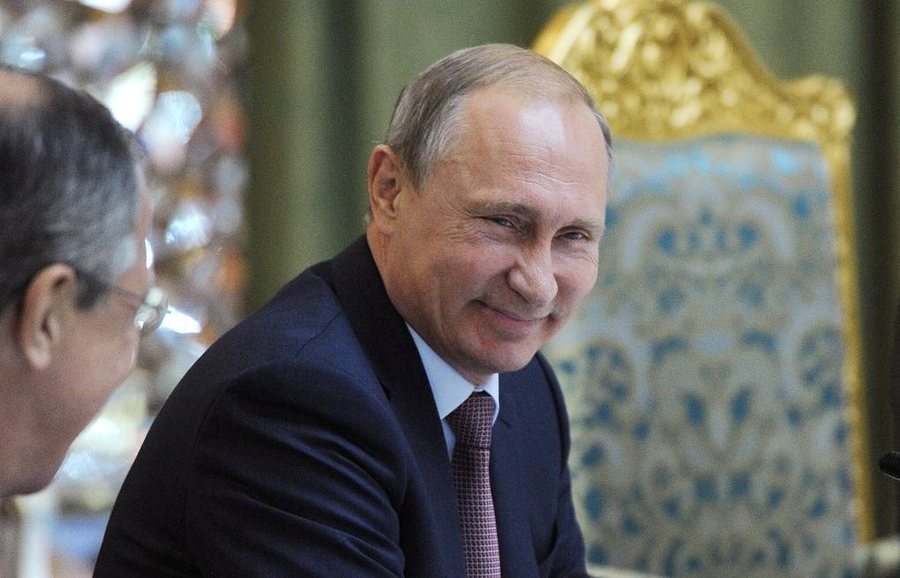
With the battle lines stable, the economy doing well, for now, and the West distracted, despite the long-term risks, Putin is likely to be counting his blessings more than at any stage since the early days of the war .
Six weeks ago, an anonymous Russian source claimed that Vladimir Putin was suffering from depression. Another source wrote last month that he was indeed dead and had been replaced by a sozi.
Of course, there is no evidence for any of these stories. On the contrary, what can be said with full conviction is that Putin has reason to be happy this year-end.
On the battlefield, the Ukrainian counter-offensive appears to have run out of steam, and the "mud season" makes it difficult to make any further serious advances until the spring. Russian losses have been serious, more than double those of the Ukrainians, but their defenses held and they proved capable of adapting to the new capabilities offered by Western technology. Indeed, they are increasingly deploying drones and advanced electronic warfare capabilities in response.
While it may sound surprising why Putin could be happy without any real progress, it is clear that the Russians were shocked at the beginning of the year and feared that Ukrainian forces might be able to break through their defensive lines. Given that his real strategy is to try to prolong and exhaust Western interest in Ukraine, a non-loss equals a win in his book.
Off the battlefield, neither side has been able to avoid shell rationing, but the Russians appear to be in a better position than Ukraine and the West for at least the next year.
Western efforts to increase production are stalling. Last Tuesday, German Defense Minister Boris Pistorius admitted that the EU will not meet its goal of giving Ukraine one million artillery shells and missiles by March. Meanwhile, Russia's defense-industrial complex is on a war footing, with unemployment at a record low of 3 percent while factories are working two or three shifts.
The problems of Ukraine
While their morale still appears high, Ukrainian forces are exhausted and, despite efforts to minimize casualties, have suffered greater casualties than the Russians in proportion to the total national population. The coming year will see ever wider and tighter mobilization to fuel the war.
A recent spat between Ukrainian President Zelensky and his military commander, General Valery Zaluzhny, over the latter's characterization of the war as a "stalemate" has also been taken in Moscow as a signal of what one Russian scholar described as a growing split within the Ukrainian government as Zelenskiy's men turn against the only public figure anywhere close to popular."
A confused West
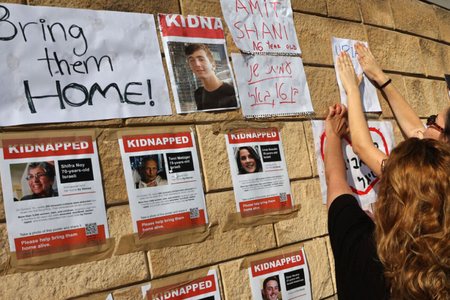
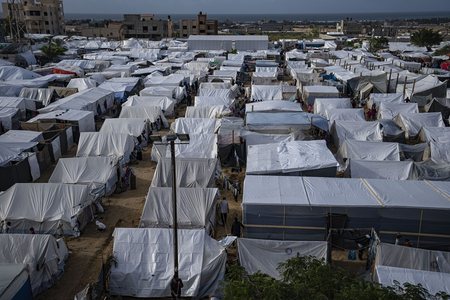
In addition, events in the Middle East have given Putin the crisis he was waiting for. It is not without political costs for Putin, particularly his relationship with Israel, but the extent to which this is now consuming Western political bandwidth and media attention is encouraging the Kremlin to believe it will lead to a reduction in aid and attention. dedicated. Ukraine. Although it is too early to admit that this is true, the sight of US military supplies arriving in Israel has encouraged the Russians.
Italian Prime Minister Giorgia Meloni's mistake in admitting to a pair of Russian pranksters that Western leaders are experiencing fatigue in Ukraine, squabbles in the US over continued US aid and recent reports that US intelligence now believes the Nord Stream 2 gas pipeline was sabotaged by a group pro-Ukraine, are all being interpreted in Moscow as evidence that many in the West are looking for an excuse to reduce their support for Ukraine.
Should Zelensky negotiate with Putin?
Ukraine's army chief says the war is at a stalemate. Meanwhile, Western attention is shifting to the Israel-Gaza conflict. So is a military victory off the table and should President Zelensky begin negotiations with President Putin?
As the Russian leader waits for the right moment to announce his presidential bid for next year's election, with the liberal opposition safely exiled or imprisoned, his ultra-nationalist critics currently appeased by apparent success in Ukraine and with Defense Minister Sergei Shoigu's recent visit to Beijing apparently having consolidated that alliance, Putin is likely to feel confident about the international situation.
Clouds on the horizon
That said, there are still clouds on the horizon for the Kremlin. By now, the conflict in the Middle East may be dominating the headlines, but there is no real sense of Western appeal. Indeed, the potential for a Trump presidency has many in Washington advocating speeding up aid to Kiev as much as they can. Although some advanced systems, such as the F-16 fighter jet, will still take months to deploy in any number, by the time Ukraine resumes offensive operations in the spring, it will likely have a plethora of new and improved systems. refilled.
Putin's re-election in March may be assured, but there is potential for unrest precisely because of the degree of election rigging likely required to give the Kremlin the overwhelming vote of confidence (with 75 to 80 in favor percent of votes). Besides, as one Ukrainian official warned: "We will plan some nasty surprises for the Kremlin around election time."
Reasons why Putin is happy
Putin's people, however, are known for briefing him in the most upbeat way possible. Over the past 21 months, good news about Putin has been hard to come by. There were flashes. When Zelensky categorically denied NATO claims in November last year that a stray missile that hit a Polish village was Ukrainian, or when the first allegations of a Ukrainian role in the Nord Stream 2 affair emerged in March, there were hopes of short that this could cause a rift between Kiev and the West. When the International Monetary Fund published its forecast in April that the Russian economy would grow and not contract this year, it was splashed all over the Russian press. When the city of Bakhmut finally fell after nearly five months of grueling fighting, it was hailed as a military triumph.
However, most of these successes proved to be temporary or not as significant as suggested. Moreover, they represented progress in only one aspect of the overall conflict. With the battle lines stable, the economy doing well, for now, and the West distracted, despite the long-term risks, Putin is likely to be counting his blessings more than at any stage since the early days of the war ./ Adapted "Pamphlet" from "The Times"


Lini një Përgjigje