


 Shkruar nga Pamfleti
A look back at the pre-war period shows how Western intelligence was misrepresented, even in Kiev, and provides a stark warning for the future.
Nobody believed that Vladimir Putin would invade Ukraine. Four years later, has Europe learned from the failures of 2022?
I went back in time to uncover the untold story of how Western intelligence was misrepresented, even in Kiev. The conclusion carries a stark warning for the future.
Tuesday marked the fourth anniversary of Vladimir Putin's full-scale invasion of Ukraine, and at this time of year it is hard not to recall the morning of February 24, 2022, when the fate of Ukraine and the history of Europe were irrevocably changed by the decision of the man in the Kremlin.
At around 9pm the night before, I received a message from a colleague at another news outlet. It was a clear warning from an intelligence source that the war would begin that night. We discussed it with the Guardian’s Ukraine team and international editors. My colleague Emma Graham-Harrison, who was on a night train from Kiev to the frontline city of Mariupol, decided to get off in the middle of the night and ask for a seat on the first train back to Kiev. It turned out to be a wise decision: Mariupol quickly came under siege and became the scene of some of the worst massacres of the war. Emma stayed in Kiev, part of our team reporting on the initial Russian assault on the capital.
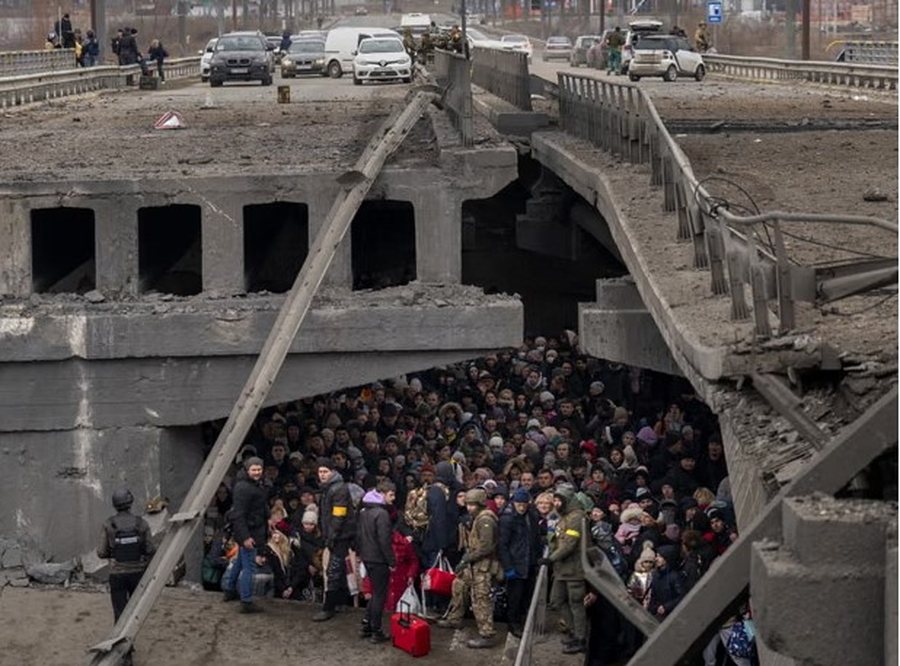
Four years later, millions of Ukrainians have been forced to adapt to the harsh reality of living in a war zone. They witnessed the withdrawal of Russian forces from Kiev and the atrocities left behind, the euphoria of the liberation of Kherson and other cities, which quickly turned into the long war of attrition we see today. On this fourth anniversary, many worry that Donald Trump’s negotiations may go nowhere and that the war could drag on for months or years.
In those early days, the war was a new world, scary and unpredictable. Memories of the chaos at the Kiev train station, as thousands of people tried to leave amid fears that the Russians would soon arrive, will stay with me forever. I also often think of the apartment of a taxi driver from Kiev who worked with us for several weeks. On the second night of the war, we took refuge in his house south of Kiev, together with his wife and three children. When I returned a few days later, the apartment was silent and empty: his family had fled to Poland, one of millions of Ukrainian families separated by the war.
Edhe imazhe të tjera më kanë mbetur në mendje: si supermarketi luksoz ku shkuam për furnizime në ditën e tretë të luftës, i mbushur me mango dhe fruta dragoi që dukeshin të pavend në kontekstin e ri – kujtime të një bote që ishte copëtuar nga sulmi i Putinit.
Në javët para pushtimit, isha ndër ata që shfaqnin skepticizëm për një sulm ndaj Kievit – mendoja se një veprim ushtarak rus në lindje të Ukrainës ishte më i mundshëm. Supozoja se shërbimet ruse të inteligjencës do t’i jepnin Putinit informacion të mjaftueshëm për të kuptuar se, edhe nëse një sulm fillestar ndaj Kievit do të kishte sukses, mbajtja e Ukrainës apo imponimi i një lideri pro-rus nuk do të funksiononte. Volodymyr Zelensky kishte të njëjtin qëndrim: edhe kur Londra dhe Uashingtoni paralajmëronin publikisht se lufta po afrohej, shumica e burimeve të mia ukrainase e konsideronin këtë si të pabazë.
Por sapo nisi pushtimi, ajo periudhë para luftës u zbeh në kujtesë: Zelensky u shndërrua në një lider heroik në kohë lufte dhe Evropa, të paktën fillimisht, ishte më e bashkuar se kurrë për t’u përballur me kërcënimin rus. Rezistenca ukrainase rezultoi e mjaftueshme për t’i zmbrapsur rusët nga periferia e Kievit dhe, edhe pse perspektivat për paqe janë të zymta, fakti që vendi vazhdon të ekzistojë përbën një arritje të madhe për Ukrainën.
Me kalimin e luftës, në mendjen time qëndronte dëshira për t’u rikthyer te ato momente para luftës për të kuptuar çfarë ndodhi prapa skenave. Si ishte e mundur që SHBA-ja dhe Mbretëria e Bashkuar ishin kaq të sigurta për atë që po vinte dhe pse askush tjetër nuk i besoi? Pse Zelensky i hodhi poshtë me kaq vendosmëri paralajmërimet amerikane? Pse francezët dhe gjermanët gjithashtu i injoruan paralajmërimet, duke bërë që kreu i shërbimit gjerman të inteligjencës, BND, të mbetej i bllokuar në Kiev mëngjesin e pushtimit? Si ndodhi që ne dinim mjaftueshëm për ta zbritur Emmën nga treni i natës, ndërsa ministri ukrainas i Mbrojtjes duket se shkoi për të fjetur pa pritur një sulm?
Rreth një vit më parë, nisa të pyes çdo zyrtar që kishte qenë në pozicione të larta në atë kohë, në Ukrainë, Evropë apo SHBA, dhe shpejt kuptova se ekzistonte një histori e rëndësishme që ende nuk ishte bërë publike, për lojërat e inteligjencës që zhvilloheshin prapa skenave në ata muaj.
Its reconstruction involved over 100 interviews in several countries, including with senior intelligence officials and most of the Ukrainian security elite of 2022. The resulting article is perhaps the most researched I have written in my 13 years at the Guardian. If you haven’t read it yet, I urge you to do so. Such journalism is in the public interest, but it takes time and is only possible because the Guardian is funded by readers, who guarantee editorial independence and freedom from commercial influence. If you don’t already support us, please consider a one-off contribution or a small monthly donation, so that we can do more of this work. /Adapted from The Guardian /



Lini një Përgjigje