


 Shkruar nga Pamfleti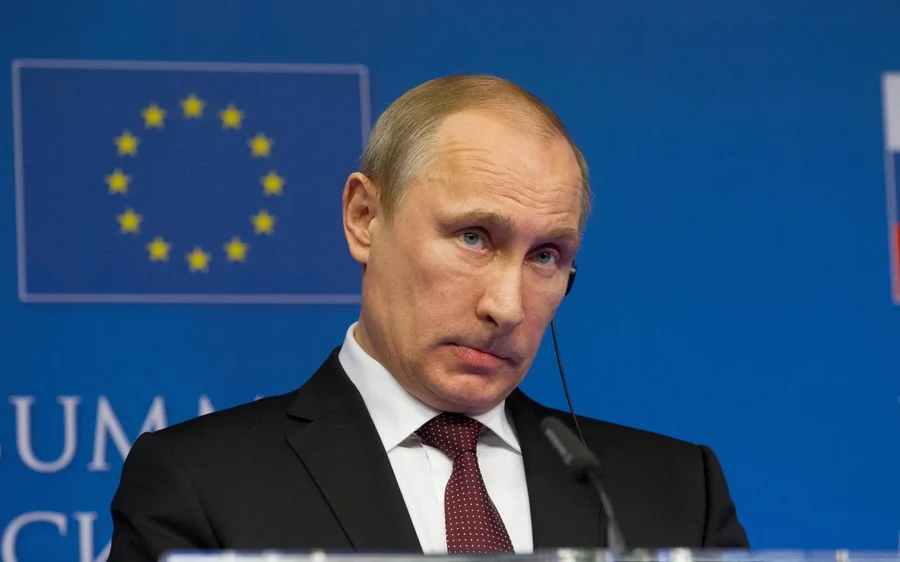
Today is a symbolic date, which helps to better understand the war in Ukraine and, above all, to overthrow the narrative of Russia's invincibility, also fueled by Donald Trump. A full 1,415 days have passed since the beginning of the invasion ordered by Vladimir Putin, exactly the same duration as World War II for the Soviet Union.
The German attack on the Soviet Union began on June 22, 1941, and ended on May 7, 1945, with the unconditional surrender of the Third Reich. Within that time frame, the Red Army fought its way to the gates of Moscow, then, after the Battle of Stalingrad, went on the offensive, captured Berlin, and took control of all of Eastern Europe, from Bulgaria to the Baltic Republics.
Where is the war in Ukraine today?
Today the Kremlin tries to evoke those historic successes by talking about a “new patriotic war,” a term that has replaced the more technical definition of “special military operation.” But the comparison with the reality on the ground is merciless.
In nearly four years of fighting, Russia has captured Mariupol and the Azov Sea coast, as well as some lowland areas of the Zaporizhzhia and Kherson regions. However, even the initial objective of “liberating” Donbass has not been achieved. Ukrainian forces continue to hold out in the last strongholds of Donetsk, and the fall of Pokrovsk, announced by the Russian president on December 1, has not yet materialized.
A harsh comparison in numbers
The data speaks for itself. In the initial spring 2022 offensive, Russian troops occupied about 119,000 square kilometers of Ukrainian territory. Kiev’s counteroffensive by December had recaptured over 74,000 square kilometers. After a largely defensive 2023, Russia resumed its advance in 2024, capturing 4,168 square kilometers, and another 4,700 the following year. The total balance is 53,868 square kilometers – roughly the area of Lombardy, Piedmont, and Liguria combined.
In the same time period, Stalin's Army lost and regained 1.6 million square kilometers of Soviet territory and then expelled German forces from 1.1 million square kilometers of Eastern Europe.
Casualty Balance: Yesterday and Today
The Soviet victory over Nazism came at a colossal human cost: some 27 million dead, of whom nearly 18 million were civilians. This translates to about 10 victims for every square kilometer, or about three fallen soldiers per square kilometer, if you count only military losses.
Today, estimates of Russian losses in Ukraine range from 250,000 to 350,000 soldiers killed. That's between five and seven killed for every square kilometer of Ukraine taken, an indication of the extreme brutality of the fighting, with a lethality rate that observers say has increased in recent months.
The Kremlin's difficulties
These figures do not have full statistical value, because the nature of the two conflicts is very different. The total war of 1939–1945, which devastated the European continent, is fortunately not being repeated, although the number of destroyed cities and villages in Donbass continues to grow.
However, the parallelism of 1,415 days highlights Russia's difficulties on the ground, despite occupying a much smaller, less populated and less wealthy country. And it is not only Western military aid that has stopped Moscow's advance - American aid has been cut off since last June - but above all Ukraine's determination and organization.
What hasn't Putin done yet?
In this comparison, one key factor must be taken into account: Russia has not committed all of its human and economic resources. Putin has not declared a general mobilization. The front is mostly volunteers, and about 30,000 people are recruited each month, attracted by very high salaries and benefit packages.
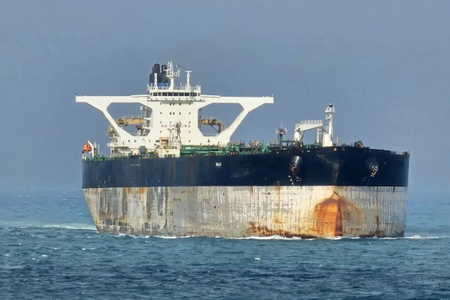
Raw material exports have kept the arms industry alive, without cutting public spending in other sectors or raising taxes. This has helped the Kremlin maintain, so far, the internal consensus. But the new year is expected to be problematic: the fall in oil prices, American measures against Russian oil smuggling, the rise in state debt and the cost of the army are weighing on finances, to the point that new taxes have been imposed for the first time.
A war that must be stopped
The suffering of Ukraine is visible to all. Bombardments of the power grid have turned winter into a nightmare, while the human toll, according to the BBC, some 140,000 soldiers killed, is wiping out an entire generation.
After 1,415 days, this massacre needs to stop. But, so far, no one has found the formula for a "just peace."/ La Reppublica



Lini një Përgjigje