


 Shkruar nga Pamfleti
By diminishing the president's political superpowers, his reckless campaign could make him more dangerous.
Never bet against Donald Trump. No politician defies the laws of political gravity like he, who after his supporters stormed the Capitol on January 6, 2021, managed to win re-election in 2024 with a higher percentage of the vote. However, it is difficult to imagine a crisis more suited to interrupt the trajectory of his presidency than his hasty and ill-considered war with Iran. Even a short war would change the course of his second term. A conflict that lasts for months could bring him down completely.
The reason is that confronting Iran weakens Trump’s three political superpowers: his ability to impose his reality, his ruthless use of pressure, and his control over the Republican Party . Even without Iran, these advantages were expected to fade after the midterm elections. Wars accelerate change.
First , the clash between Trump and reality. In politics, the president has shown an extraordinary ability to distort the facts, and he insists that he has already triumphed in Iran. But the war shows a different truth. The Iranian regime cannot win in the classical sense. Yet, despite the massive destruction of infrastructure and the elimination of several top leaders, including security chief Ali Larijani, the regime continues to hold out, and some 400 kilograms of weapons-grade uranium still remains intact.
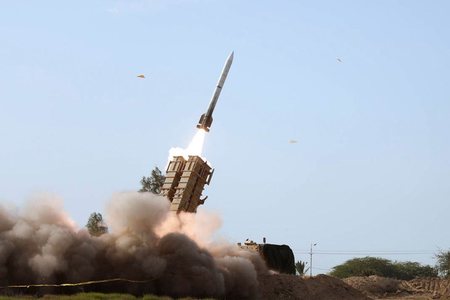
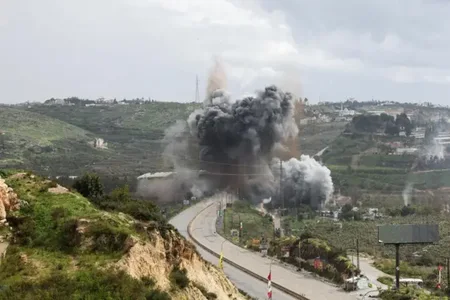
Meanwhile, Iran is waging a parallel war against the global energy industry. Attacks on shipping in the Strait of Hormuz and on the infrastructure of neighboring countries are directly affecting markets. The price of Brent oil rose above $110 a barrel on March 18, following a missile attack on a gas hub in Qatar, giving Tehran a signal that its strategy is working.
Time may be on Iran's side. The US and Israel could be left without important targets for air strikes or have their defenses depleted, while Iran appears to still have plenty of drones. The longer traffic in the strait is restricted, the more oil prices will rise and the more damage to the global economy.
Trump's second superpower is pressure. But leaders in other countries are learning how to resist it. When he asked allies to help open the strait, warning of consequences for NATO, they refused. He then changed his mind, claiming he didn't need help.
On the other hand, Iran is putting pressure on Trump using its own tools. It has signaled that it will allow safe passage for friendly ships, using access as a bargaining chip. Even if Trump demands an end to the war, Iran could continue its attacks. If the strait remains closed until the end of April, oil prices could reach $150 a barrel.
Under these conditions, Iran may demand more than a return to the pre-war situation: lifting sanctions, withdrawing US bases, or limiting Israel's role. If the US economy faces recession and markets fall, it remains unclear whether Trump will escalate the situation or back down.
This is related to the third power : control over the Republican Party. Trump was elected on promises to avoid wars and inflation. So far, 13 American soldiers have lost their lives and an escalation would bring new risks. Fuel prices have increased significantly compared to the beginning of his mandate.
Republican support for the war remains strong, but it is weakening. Some prominent figures in the MAGA movement are speaking of “treason.” Behind the scenes, many Republicans are unhappy with the way the president has handled the crisis.
The party risks losing control of the House of Representatives in the upcoming elections and could lose the Senate as well. A deep defeat would further weaken the president and his political influence.
If the war drags on and oil prices remain high, Trump could seek a way out of the conflict and success elsewhere. But he does not have complete control over the situation. Even if the fighting stops, it will take weeks or months for markets and supplies to return to normal, and the risk of new tensions will remain.
Trump's politics rely on the image of a winner. If he is perceived as a loser, he may react more aggressively.
He has more room for maneuver in foreign policy: he could review relations with NATO, reduce support for Ukraine, put pressure on Latin American countries, or demand more contributions from allies in Asia. Even without immediate results, these actions could weaken American alliances.
Domestically, he could clash with the media, the central bank, and political opponents, as well as toughen immigration policies. There is also the possibility of interfering in the political climate for the upcoming elections.
It is difficult to see a clear winner for Trump in this conflict. If he loses, the consequences could be unpredictable. / Adapted from “Pamphlet” by “The Economist”


Lini një Përgjigje