


 Shkruar nga Pamfleti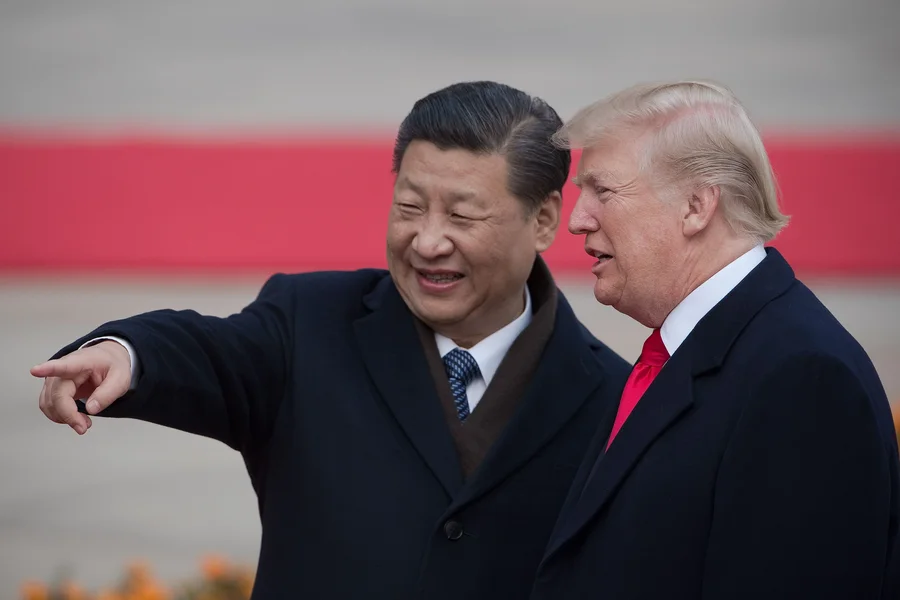
China wants to appear reasonable in the face of a crazy American president, sending a message to the rest of the world, especially Europeans who share Beijing's concerns...
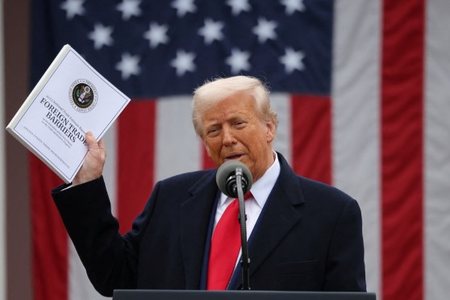
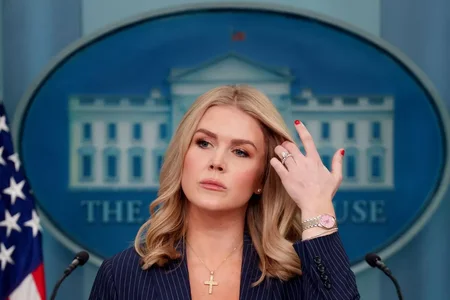
President Donald Trump has imposed an additional 84% tariff on all Chinese imports, White House press secretary Caroline Leavitt announced today. That means all goods from the country will be subject to a tariff of at least 104%.
Despite the threats, China is unlikely to bow to the US president's ultimatum – risking a major escalation and risking the destruction of the global economy.
So, US President Donald Trump's tariff escalation is reaching its most dramatic escalation with China. And since we are talking about the two superpowers of the 21st century, the trade war is taking the form of a geostrategic rivalry - with all the risks that come with that.
Beijing was the first to retaliate after Trump imposed an additional 34% tariff on Chinese goods. In less than 24 hours, China responded in kind: a 34% increase on all American products entering its territory. Trump, in turn, threatened to impose an additional 50% tariff on China if Beijing does not drop its retaliation by Tuesday evening. (It goes into effect tomorrow)
This is not a small issue. Last year, China exported $439 billion worth of goods to the United States, three times the $143 billion the United States exported to China. What is at stake is not just the sheer amount of money, but essential goods that fuel both economies, including strategic minerals. In short, the stakes could not be higher.
China's response and resilience
It is hard to imagine China giving in to Donald Trump's ultimatum. In fact, Beijing vowed Tuesday morning to "fight to the end." Both sides are playing for credibility in this showdown. The Chinese Communist Party cannot afford to appear to be giving in; it is a matter of the stature of its leader, Xi Jinping, both within China and on the global stage, where Beijing is positioning itself as an alternative to the United States.
In recent days, China's political leadership has emphasized that the share of products sent to the United States has fallen from 19% to just over 14% of China's total exports between 2018 and 2024. It also stated that some of the ingredients or minerals imported into the US from China cannot be easily replaced on the international market. The People's Daily newspaper wrote that the Party was prepared to face the tariffs. "We are strong and resilient," the newspaper wrote.
Global impact and what happens next
In fact, this confidence is a facade intended to prevent public panic. The proof lies in the ruthless censorship of any criticism of the Chinese government's strategy. A Chinese economist who criticized Beijing's retaliation, calling it as "stupid" as the US move, saw his research center immediately closed by the authorities and his posts quickly deleted. This is not a sign of confidence.
Xi Jinping has been anticipating this confrontation for weeks. He rallied China's private sector, including Chinese businessman and philanthropist Jack Ma, who rose to the challenge.
Above all, China wants to appear reasonable in the face of a crazy American president, sending a message to the rest of the world, especially Europeans who share Beijing's concerns.
In fact, within this crisis, there is a political opportunity for China, as long as it can withstand economic pressure and, most importantly, not succumb to Donald Trump's demands. / Adapted from "Pamphlet" by "World Crunch"


Lini një Përgjigje