


 Shkruar nga Pamfleti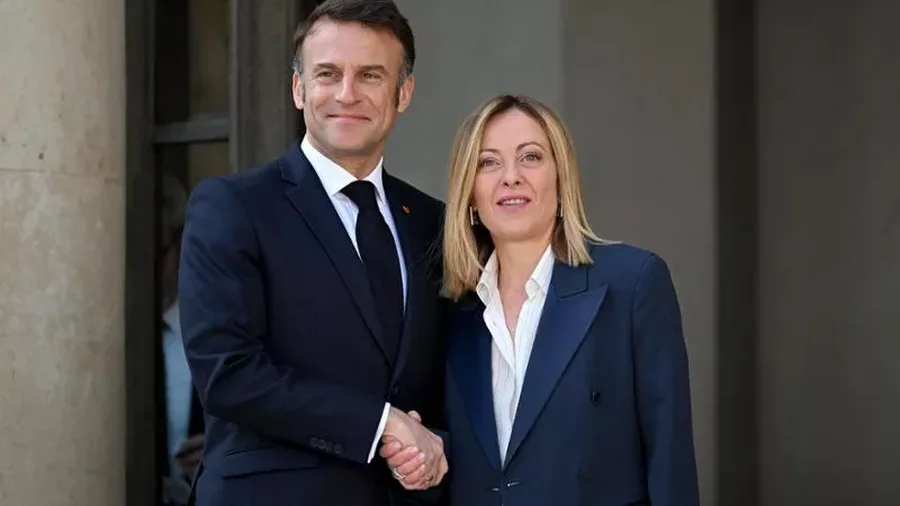
Within days, the two European leaders found themselves defeated, and certainly tested, in their respective efforts at mediation with Washington.
First Emmanuel Macron, then Giorgia Meloni. Within a few days, the two European leaders found themselves defeated and certainly put to the test, in their respective attempts at mediation with Washington. The French president saw his European plan for a ceasefire in Ukraine disappear, which was shelved within minutes by Donald Trump during a phone call with allies. The Italian prime minister, on the other hand, found herself exposed after trying to establish a dialogue with the White House on the trade front, putting Ursula von der Leyen and JD Vance at the same table. A dialogue now put in crisis by the new threat of increased obligations towards Europe.
A double blow, strong that reinforces an awareness in Paris as well as in Rome: faced with the unpredictability of the American president, a convergence between European capitals is needed. In the name of a higher interest. With "necessary" realism. So, after weeks of clashes, Macron and Meloni have returned to talks. There was a telephone contact between the two leaders that was defined as "positive" by their respective entourages. Which certainly does not erase some deep divergences between France and Italy, but marks a pragmatic turning point in the method.
Both know that time is running out. And that, in order not to ruin any prospect of negotiations on Ukraine, two decisive moves are needed: to get Russia out and to keep Donald Trump at the negotiating table.
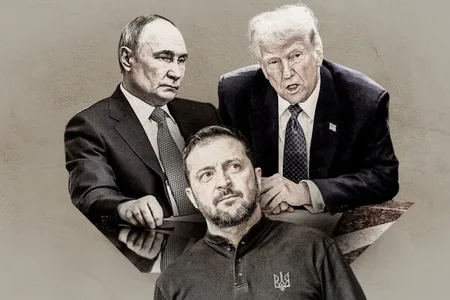
The US president's phone call with allies on Tuesday, immediately after his meeting with Vladimir Putin, had the effect of a cold shower. In Paris, as in Rome, the alarm has been sounded: American mediation is in danger of falling apart. There is a real fear in all European chancelleries that Trump, increasingly frustrated by the lack of results on the Ukrainian file, could abandon the diplomatic game, reinforcing his narrative of "a war between Europeans".
Therefore, Macron and Meloni have decided to reconnect. The tone of the conversation, French sources report, was "constructive". The two leaders shared a common point: Moscow cannot dictate the time, conditions and format of the negotiations. The common goal is to demonstrate that the impasse is not the fault of the West, but of the Kremlin. And push Putin to come out of the limbo. For Meloni, one justification is particularly valid: the situation is so critical that "it makes no sense to separate".
The hypothesis of a summit in the Vatican, launched by Trump as a suggestion after the phone call with Putin and supported with commitment by Rome, now seems outdated, but for Meloni it remains an important political point. Palazzo Chigi claims to have relaunched the idea, helping to uncover another Russian cover-up. With the Vatican's failure, Turkish mediation remains on the table. Recep Tayyip Erdogan continues to present himself as a reliable interlocutor, taking advantage of the open channels with Moscow. But it is Switzerland, relaunched by Macron and supported by Berlin and London, that represents the most concrete path today. Meloni supports it, always in line with the principle that at this time there is a higher interest. And that the alternatives, starting with American non-engagement, are much worse for European countries.
But the Swiss track is uphill. "Putin is wasting his time," says a source involved in the coordination between the Europeans. Therefore, we are working on a technical meeting, limited to humanitarian issues: the fate of deported Ukrainian children, the exchange of prisoners, the security of the Zaporizhzhia power plant, the finding and identification of the bodies.
In these files, Vatican diplomacy continues to play an active role, keeping confidential channels open with both Kiev and Moscow. And it is not excluded that the Vatican, although it will not be the direct host of the talks, could act as a discreet bridge on some of the most sensitive issues. For Rome, this is also a way to remain within the perimeter of the negotiations and to contain French protagonism. Macron does not want to be accused of dividing Europe at a time when this should matter more. Both leaders know that American mediation in Ukraine is increasingly fragile. And if it is closed, it will be a loss for everyone. / Adapted “Pamphlet” from “la Republica”


Lini një Përgjigje