


 Shkruar nga Goffredo Buccini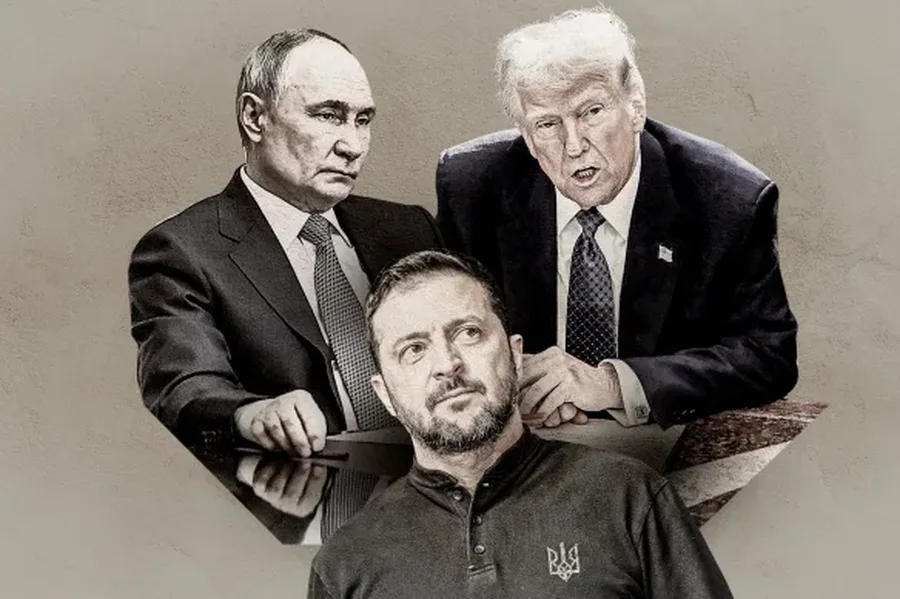
Putin does not want to harm his most important ally, Donald Trump.
The truth, it is said, is in the details. A behind-the-scenes look at the failed mid-May negotiations in Istanbul reveals the true nature of the Russian delegation at the negotiating table. The Russian team was led by Vladimir Medinsky, not coincidentally the same chief negotiator for Istanbul 2022 who proposed tough terms disguised as a deal. According to Anne Applebaum in The Atlantic, Medinsky went so far as to mock a member of the Ukrainian delegation who was mourning the death of his nephew in the fighting.
"Perhaps some of those present here will lose loved ones ," he said cynically.
Not exactly the beginning of a truce.
After the failure of Istanbul, hopes for talks in the Vatican were raised, with a promising approximation: the logistical readiness of the Holy See, Zelensky’s openness and the support of the Europeans, promoted by Giorgia Meloni. This idea was rejected by Sergey Lavrov, Putin’s foreign minister, claiming that discussion between Orthodox countries on Catholic soil would be “inelegant”. In reality, Russia does not see Ukrainians as free citizens of another nation, but as its rebellious subjects. Their aim is to punish Zelensky, who is accused of “believing that American support would last forever”. But why does Russia keep circulating the illusion of dialogue, with false openings and real closures that produce only empty talk? One possible answer is that this is a tactic that serves two main purposes.
First: Putin, despite the propaganda spread by his supporters, has never had a real intention to end the conflict. To win, he needs time. Russian troops are advancing, but slowly, at a high cost: about 800,000 dead and wounded in three years. Those who say that “we are where we were three years ago” are seriously mistaken. Without the Ukrainian resistance and Western weapons, Kiev would have long been ruled by a puppet regime and Putin would have been knocking on the borders of the European Union. After dreaming of a triumphal march to “denazify” Ukraine, Putin has prepared for a long war. He has reshaped the national rhetoric, even resurrecting the figure of Stalin with statues in the metro, bypassing sanctions and transforming the economy for military purposes, favoring the military-industrial complex with higher wages and preferential treatment. For his regime, peace may be more dangerous than war, due to exaggerated expectations and the difficulties in managing hundreds of thousands of veterans returning to a tired society.
Second: Putin doesn’t want to hurt his most important ally, Donald Trump. The American president has always admired Putin’s leadership. As a businessman, his casinos were financed with Russian money, and his real estate businesses were supported by Russians who were favorable even in the most difficult moments. When Trump was first elected in 2016, the Russian Duma erupted in applause, and Dmitry Peskov, the Kremlin spokesman, declared: “Putin and Trump share the same foreign policy principles. It’s phenomenal how close they are to each other!” Nationalist Boris Chernyshev went further, paraphrasing Obama in 2008: “ Yes, we did it! ”
These are, of course, assumptions based on the recollections and questionable testimonies of repentant Russian spies. Russiagate ended with little result, and all of that is now history. However, if Trump’s policies conflict with American national interest, giving an unfair advantage to Russian neo-imperialism – which potentially remains an enemy of the US – then the specters of these connections could return to haunt the White House, endangering Trump ahead of the midterm elections.
Putin, therefore, has an interest in not damaging the credibility of the one who, in a few weeks, has given him so much: the public humiliation of his enemy Zelensky; the cessation of intelligence sharing with Ukraine (temporarily restored); the halting of USAID aid to Kiev; the cessation of funding for Russian media in exile; the restoration of diplomatic relations; the reluctance to call the invasion of Ukraine “illegal”; the possibility of new businesses after sanctions; and the destruction of the idea of the West with the prospect of a broad military withdrawal. Now Trump has talked about withdrawing from this “European war” that bothers him. And Putin, through Lavrov, has revived the idea of a “second round of talks” and a “memorandum.” A constant game of stop and go, just to give Trump the opportunity to say: “I convinced my friend Vladimir!”
Meanwhile, we Europeans are alone. “Good friend Vladimir” has begun to deploy troops on the Finnish border, bringing shivers with memories of Russian “exercises” before the invasion of Ukraine. Kiev’s troops are currently our best army and the guarantee that we still have a little time ahead. But, as Mattarella said, “no one should sleep.” Contingencies make history. Just as the Maastricht Treaty responded to the end of the Cold War with monetary union, a new treaty, including Great Britain, should lead to a defense union with a political direction. For such a project, which integrates and supports Ukraine, the means exist: the idea of confiscating 300 billion euros of frozen Russian assets in the EU is gaining more and more support. If we have the courage and vision, Trump and Putin could be remembered, paradoxically, as the involuntary instigators of a new Europe. / Adapted from “Pamphlet” by “Corriere dell Sera”



Lini një Përgjigje