


 Shkruar nga Pamfleti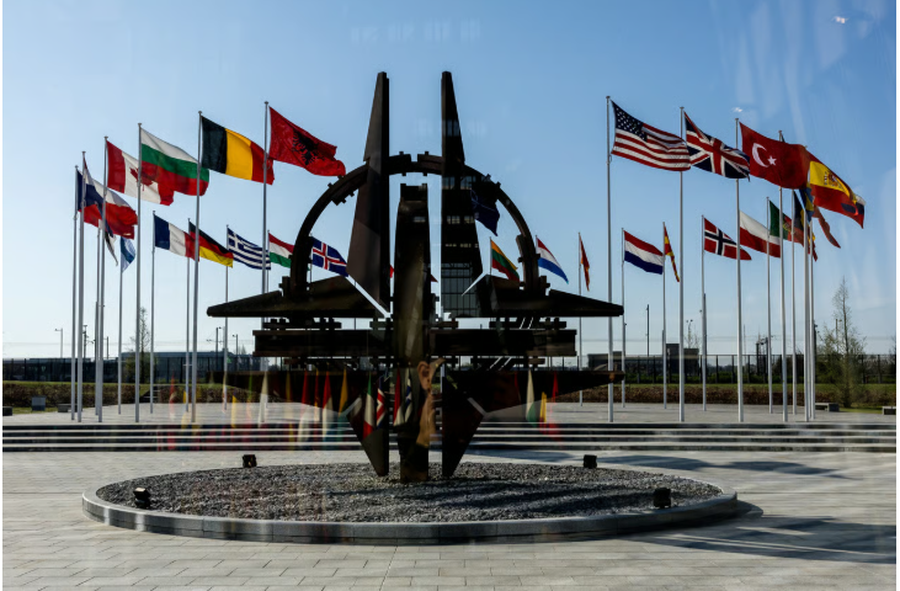
Closed meetings with screenwriters, directors and producers, while another is planned in June
NATO is holding closed-door meetings with screenwriters, directors and film and television producers in Europe and the US, The Guardian reveals , fueling accusations that the alliance is seeking to use art to create “propaganda” in its favor.
The alliance has held three meetings with film and television professionals in Los Angeles, Brussels and Paris, and is expected to continue this "series of intimate conversations" next month in London, where it will meet screenwriting members of the Writers' Guild of Great Britain (WGGB), which represents professional writers in the United Kingdom.
The planned meeting in London has caused concern among some of the guests, who feel they are being asked to "contribute to propaganda for NATO."
The topic of discussion at the meeting, which will be held under the Chatham House rules, where participants can use the information but without revealing their identities, will be “the evolving security situation in Europe and beyond.” Former NATO spokesman James Appathurai, currently deputy assistant secretary general for hybrid, cyber and emerging technologies, is expected to attend along with other alliance officials.
A WGGB email, seen by The Guardian, says these meetings have already led to “three separate projects” in development, which have been “inspired, at least in part, by these conversations.”
The email adds that NATO is "built on the belief that cooperation and compromise, as well as the cultivation of friendships and alliances, are the way forward," emphasizing that "even if such a simple message finds a place in a future story, this will be enough," according to the event's organizers.
Alan O'Gorman, screenwriter of the film Christy, which won the award for best film at the 2026 Irish Film & Television Awards, called the planned meeting "unacceptable" and "clearly propaganda".
"I found it insensitive and strange that it was presented as a positive possibility. Many people, including myself, have friends and family or come from countries that are not in NATO and have suffered from wars that NATO has participated in and instigated," he said.
He thinks these meetings are an attempt by NATO to "spread its messages through film and television."
“There is a climate of fear in Europe at the moment that our defences have been weakened,” he said, adding “I see this in the Irish context, where there has been a push by some of the media and the government to present NATO in a positive light and to get closer to it. I think most Irish people don’t want to get involved in wars abroad.”
O'Gorman added that other invited screenwriters also felt "offended that art could be used to support war" and that they were asked to "contribute to propaganda for NATO."
Faisal A Qureshi, a screenwriter and producer with over 20 years of experience, applied to attend the meeting "to see firsthand what it would be like," but withdrew due to other commitments.
He said there is a risk that creators who enter this inner world of military or intelligence information “are seduced into thinking they now possess secret knowledge,” where “morality expands and human rights violations can be justified for the greater good.”
Qureshi questions whether a creator would be able to “challenge or critically analyze” the information received in these meetings.
“They are given something that has the appearance of truth because it comes from an authority who rarely communicates with the public, and that creates a sense of privilege for access,” he said.
NATO supporters have called for more collaboration with the arts sector. A report published this year by the think tank Centre for European Reform calls on governments to engage with cultural leaders, including screenwriters and producers, to increase public support for defence spending and to “better tell the story of why these investments are necessary”.
In 2024, eight screenwriters, including a writer and executive producer of the series Friends, were invited to NATO headquarters in Brussels by the Center for Strategic and International Studies to learn about security policies.
The group, which also included a screenwriter from the series Law and Order and a producer from the drama High Potential, met with then-NATO Secretary General Jens Stoltenberg.
A NATO official stated: “This initiative is the fourth in a series of sessions for fiction writers in the entertainment industry (including screenwriters, production managers and authors).”
He added that the initiative comes in response to the interest expressed by the industry itself to better understand NATO and its functioning, and that these activities include dialogue with representatives of NATO, civil society and the think-tank community.
A WGGB spokesperson said that “as a union representing screenwriters, we receive invitations from third-party organizations to activities that may be useful or of professional interest to our members. These interactions do not necessarily constitute endorsement of these organizations.”
He added that the invitation extended by NATO aims for a two-way discussion, where the screenwriters can ask questions and take what they find useful. “Our members are independent thinkers – a valuable skill they bring to their profession,” he concluded. / Pamphlet /



Lini një Përgjigje