


 Shkruar nga Pamfleti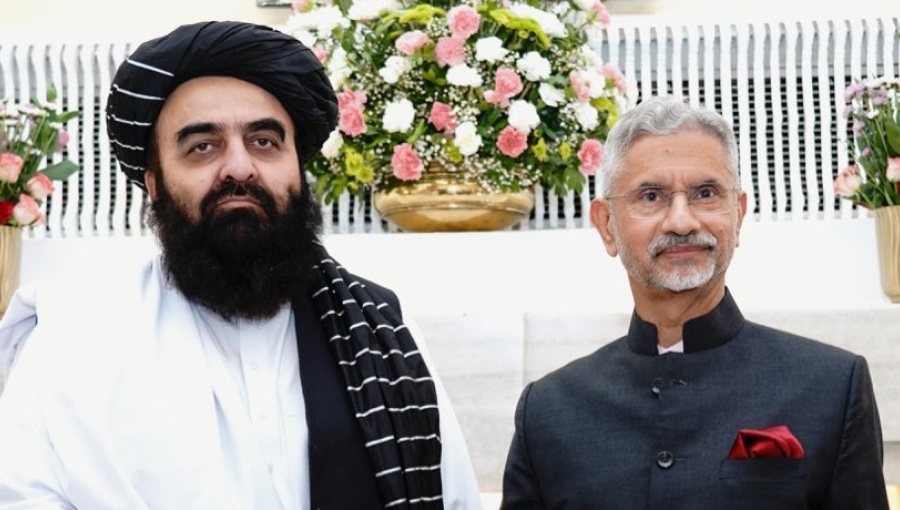
India and Afghanistan closer than ever...
India and Afghanistan are poised for a rapprochement that was unexpected just a few years ago and unforeseeable based on purely ideological factors. Strategic and geopolitical interests, at this stage, override all caution, and this could create a rapprochement between a government inspired by Hindu nationalism and the Islamic fundamentalists who govern Afghanistan.
Afghanistan and the new race for Central Asia
The motivation lies in the new competition for Central Asia, a strategic terrain where China, India, Russia and the United States are competing to secure economic deals, capture productive resources and advance ambitious trade linkage policies. For India, this also means trying to break Pakistan’s grip and send a signal to Islamabad at a critical juncture for South Asian security. In just a few months, Islamabad first clashed with India in April-May and then saw a brief conflict with its former Afghan ally erupt in October in response to the Taliban’s presence across the border with their Pakistani affiliate. With this in mind, India has quietly strengthened its ties with Kabul.
Geopolitical analysts Vlad Paddack and Eldaniz Gusseinov write about this in the National Interest. “Both sides are valuing the Iranian port of Chabahar, developed by India, as a means to bypass Pakistan. India also plans to reopen its embassy in Kabul and expand direct flights,” the two analysts add, highlighting an increasingly multifaceted relationship in which New Delhi is seeking a critical objective in the race for regional connectivity and the development of networks that do not entangle it in the subcontinent.
Pakistan-India and Afghanistan: A reversal of perspectives
At this stage, India feels potentially constrained by Pakistani pressure on its borders and the complementary shadow of China hanging over it, by the installation of major geopolitical projects of the New Silk Road in Central Asia, and by the brakes blocking the adoption of projects such as the Indo-Mediterranean corridor through the Arabian Peninsula, the Gulf, and the Eastern Mediterranean Sea, and does not want to remain inactive.
This creates an undoubtedly unprecedented context in which India, after years of accusing Pakistan of acting as a state sponsor of terrorism, also citing its unclear agenda towards the Taliban, is choosing the path of realpolitik and trying to understand how to benefit from a concrete relationship with the masters of Afghanistan. Meanwhile, Islamabad, as Geopolitical Monitor recalls, has invited anti-Taliban activists from the opposition to the Kabul government to the "Towards Unity and Trust" event organized in the Pakistani capital by the South Asia Strategic Stability Institute (Sassi). Also, in mid-October, Afghan Foreign Minister Amit Khan Muttaqi visited India, the highest-ranking official of the country to visit since August 2021.
The scenario is constantly evolving, and this brings the Taliban government back into the spotlight, far from being isolated on the global stage. Afghanistan remains a crossroads of connectivity and a strategic location rich in resources. And perhaps its very role in connectivity could potentially create a new geopolitical laboratory in Central Asia. According to the Geopolitical Monitor, in particular, the development of Afghanistan could be a source of appeasement between China and India on behalf of their shared interest in opening new routes:
If the two countries cooperated more closely, the strategic importance of Iran's Chabahar port would increase, providing Afghanistan with an alternative trade corridor for Indian goods to Central Asia. Afghanistan's geography also offers China the shortest route to the Middle East; with the expansion of Iran's railway network and China's possible construction of the Wakhan Highway in Badakhshan, Chinese goods could transit through Afghanistan to Iran and on to Middle Eastern markets.
For India, the risk is strategic and potentially disruptive to its global vision. For Afghanistan, it is a crucial test of the Taliban’s willingness to open up, and reconcile, with the world. A further layer of complexity in the overall scheme of things in an area that continues to be strategic for global balances. / Adapted from “Pamphlet” by “Inside Over”




Lini një Përgjigje