


 Shkruar nga Pamfleti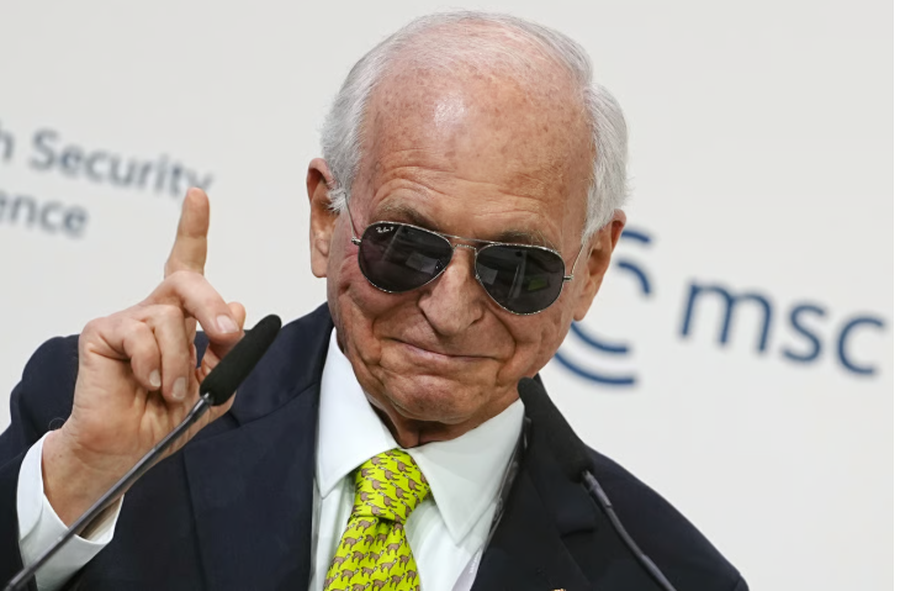
From unforgettable moments to those that became memes, here are nine moments to remember from the world's leading security and defense summit.
After three days of intense discussions on global security, transatlantic relations, and the war in Ukraine, the American media outlet Politico has selected 9 moments that, beyond their political weight, attracted attention for the way their protagonists appeared at the Munich Security Conference 2026.
The 2026 Munich Security Conference highlighted Europeans being forced to admit that the relationship with Washington is in crisis and that World War III is closer than ever.
According to Politico, the summit took place in a climate of tension, with many European leaders acknowledging that relations with Washington are facing serious difficulties.
The bravest moment, Wolfgang Ischinger
The chairman of the Munich Security Conference, Wolfgang Ischinger, began his speech by putting on sunglasses, a gesture described as an homage to French President Emmanuel Macron, who wore dark glasses at the World Economic Forum last month for health reasons. In the same category, Republican Senator Thom Tillis appeared in socks with the image of Abraham Lincoln, declaring that the choice had been unconscious.
The most direct language, Lindsey Graham
U.S. Senator Lindsey Graham used unusual language for diplomatic standards during a discussion on Politico Pub. Speaking about the Greenland debate, he said: “Who cares who owns Greenland? I don’t.”
Graham also commented on European concerns over Donald Trump's rhetoric on NATO and Greenland, suggesting that those feeling worried "should have a beer or go to the doctor." He described Iranian Supreme Leader Ali Khamenei as an "unpredictable" figure.
The most commented reaction, Kaja Kallas
The EU's top diplomat, Kaja Kallas, could not hide her skepticism when the US ambassador to the UN, Mike Waltz, began to boast about Washington's claim to have ended several wars. Her facial expression was widely shared on social media and interpreted as a sign of European discontent.
Biggest clash no. 1, Kaja Kallas vs. Mike Waltz
The tense panel saw Kallas confront Waltz directly on issues ranging from the controversial Gaza Peace Board to Washington's stance towards its allies.
She also criticized Trump's Peace Council for its unequal power structure, arguing that it does not treat countries as equals.
Në një tjetër moment që ngriti vetulla, Waltz i dhuroi panelit një kapele blu me mbishkrimin “Make the UN Great Again,” të cilën Kallas e mori dhe e vendosi mënjanë pa asnjë fjalë falënderimi.
Kallas theksoi se SHBA-ja, ndryshe nga Rusia, zhvillon luftëra me mbështetjen e aleatëve dhe se kjo krijon një marrëdhënie reciproke përgjegjësish. Ajo kritikoi gjithashtu strukturën e bordit të propozuar, duke argumentuar se nuk i trajton vendet si të barabarta.
Përplasja më e madhe nr. 2, Radosław Sikorski kundër Petr Macinka
Ministri i Jashtëm i Polonisë, Radosław Sikorski, i dha një leksion zëvendëskryeministrit çek Petr Macinka mbi funksionimin e Bashkimit Evropian.
Macinka, që përfaqëson Partinë populiste Motorists’, sulmoi BE-në duke thënë se nuk është demokratike dhe duke pretenduar se nuk ka lidhje mes votuesve dhe institucioneve të Brukselit. Sikorski u kundërpërgjigj se Parlamenti Evropian zgjidhet në mënyrë demokratike dhe se komisionerët emërohen nga “democratically elected governments.”
Goditja vendimtare erdhi kur Sikorski i kujtoi Macinka-s se, ashtu si komisionerët e BE-së, edhe ministrat çekë nuk zgjidhen drejtpërdrejt.
Episodet më të çuditshme, Mark Rutte
Sekretari i Përgjithshëm i NATO-s, Mark Rutte, sqaroi një deklaratë të mëparshme ku kishte përdorur termin “daddy” për Donald Trump, duke thënë se bëhej fjalë për një gabim gjuhësor pasi anglishtja nuk është gjuha e tij amtare.
Në një tjetër moment të pazakontë, Rutte tregoi se kishte takuar një qen në Ukrainë dhe përshkroi me detaje se si kafsha, që ndihmonte shërbimet e emergjencës të nxirrnin trupa nga rrënojat, e kishte parë në sy dhe i kishte thënë se nuk do të dorëzohej kurrë. Historia synonte të lavdëronte qëndrueshmërinë e ukrainasve përballë luftës së Rusisë, por telepatia e Rutte-s me kafshën (pavarësisht nëse ishte serioz apo jo) tingëlloi e çuditshme.
Promovimi më i dukshëm, Alexander Stubb
Konferenca ka librarinë e saj të vogël, të vendosur pranë “korridorit të duhanit”, një shteg mes hoteleve të samitit që lidh Bayerischer Hof dhe Rosewood.
Libri që po shitej më shumë ishte “Triangle of Power” i presidentit finlandez Alexander Stubb. (Në mënyrë ogurzezë, i vetmi klasik në shitje ishte “1984” i George Orwell.)
Stubb, një partner i rastësishëm golfi i presidentit amerikan dhe një nga “pëshpëritësit e Trump” në Evropë, ishte i prirur të theksonte nga skena se politika e jashtme amerikane ka ndryshuar.
Stubb deklaroi se politika e jashtme amerikane ka ndryshuar dhe se prioritetet e Uashingtonit renditen si më poshtë: hemisfera perëndimore, rajoni Indo-Paqësor dhe më pas Evropa. Ai shtoi se dialogu me Sekretarin amerikan të Shtetit, Marco Rubio, kishte ndihmuar në uljen e tensioneve.
Por Stubb i tha Politico-s se evropianët duhet ta kuptojnë qartë ndryshimin amerikan nën udhëheqjen e Trump, përfshirë hierarkinë e re të prioriteteve të Uashingtonit.
Mungesa më e dukshme, Giorgia Meloni
The Italian prime minister was not present at this weekend's conference, having embarked on a diplomatic tour of Africa, a notable absence given her efforts to secure a role on the global diplomatic stage.
However, she was forced to admit that she disagreed with some European leaders present, telling Italian media that she disagreed with German Chancellor Friedrich Merz's statement that the "culture war of the MAGA movement" is not European.
Meloni's absence was also a reminder of where the real power lies in European defense. While Polish Prime Minister Donald Tusk and Czech Foreign Minister Petr Macinka took the stage, most of the attention was focused on the old military powers: the United Kingdom, France, and Germany.
Biggest ovation, Marco Rubio
US Secretary of State Marco Rubio used his keynote speech in Munich to extol the shared history between America and Europe, while declaring that "we belong together."
The fact that his tone was more conciliatory than last year's speech by US Vice President JD Vance at the same venue secured him a standing ovation.
This enthusiasm began to look somewhat awkward less than 24 hours later, when European leaders carefully analyzed his words, Rubio had repeated some MAGA criticisms of globalization and migration.
In a sign of the worsening transatlantic relationship, European Commission President Ursula von der Leyen insisted the speech had "reassured her greatly," calling Rubio a "good friend" and "strong ally." /Adapted from Politico /


Lini një Përgjigje