


 Shkruar nga Pamfleti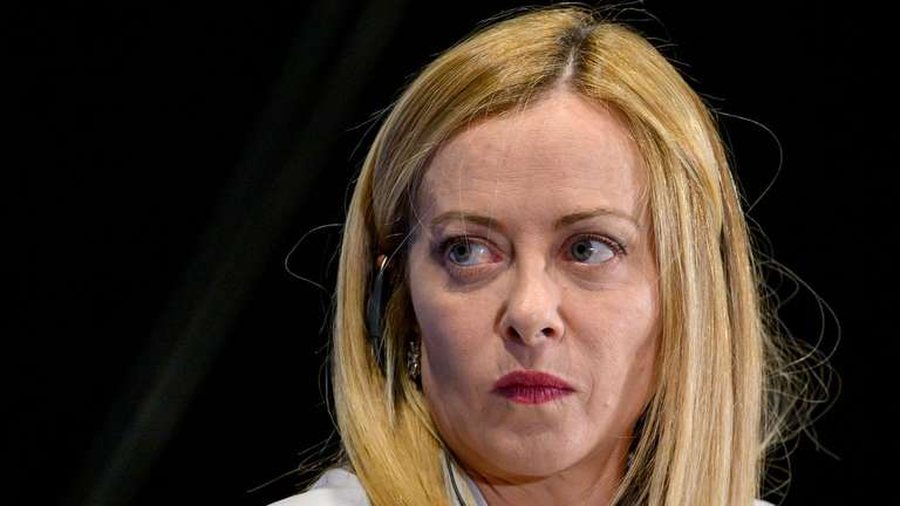
A documentary presents the Italian prime minister as a leader who fails to keep her electoral promises, portrays herself as a victim, and displays authoritarian tendencies...
As of 2022, Giorgia Meloni is the most powerful woman in Italy. An Arte documentary now portrays the prime minister as a leader who breaks election promises, presents herself as a victim, and seems not to be against authoritarianism.
She is a woman, a mother, an Italian, a Christian. No one can take that away from her, declared Giorgia Meloni in a speech in 2019. Meloni is also, as the Arte documentary about the Italian prime minister reveals, “a woman who knows what she wants, even if she has to step over corpses to do so.” This is how journalist Luca Telese describes the woman who, in her youth, had called Mussolini “a good politician” in an interview.
At the age of 15, Meloni joined the youth organization of the neo-fascist party MSI. As the two-part documentary shows, many of her political companions from the so-called “Seagulls” clan, linked to the then-founded MSI, continue to stand by the 49-year-old. “The entire leadership structure had little experience in governing,” recalls State Secretary Giovanbattista Fazzolari of Meloni’s electoral victory in 2022. He believes that this is what made the prime minister and her cabinet “strong.”
The documentary claims that Giorgia Meloni is the Italian prime minister who has allowed the largest number of foreign workers to enter the country. This does not match her electoral promises. “European countries need immigrants. This is a demographic fact, based on numbers,” Fazzolari tries to explain the contradiction. The government is making “the difficult effort to say: no to illegal immigration, but there are opportunities for legal immigration and we will expand them.”
“They determine what information is published”
There are many contradictions in today's Italy, including in Meloni's relationship with the media. "They have on their side the only public broadcaster, as well as the largest private channels and a large part of the daily newspapers," journalist Francesco Cancellato says of the government. "They determine what information is published." Given Meloni's political and media power, her repeated claims of "attacks by the so-called left-wing press" are absurd, Cancellato stresses: "This is an ideological stance that, in my opinion, is artificially created and fueled by them."
Luca Telese also speaks of the “myth of the victim” created by Meloni herself. One example is the agreement for the construction of reception centers for immigrants, which the prime minister signed with Albania in 2023. “A billion euros is spent to house 50 people,” criticizes Telese. The centers are “one of the biggest failures in history,” but for Meloni also an “extraordinary blow.” Telese explains: “It is a failure, but there is such a convincing narrative that she appears once again as a victim.” At least she is trying, is the attitude of her supporters: “Stop criticizing.”
Through these centers, Meloni guarantees a safe Italy, many of her voters believe. The prime minister considers internal security to be the highest value: her government acts with strict security decrees against organizers of illegal parties, property invaders, juvenile delinquents and climate activists.
Does Giorgia Meloni want to become "a second Mussolini"?
Critics are particularly concerned about the restrictions on the right to protest. Massimo Milani, a deputy from Meloni's Fratelli d'Italia party, claims in the film that some protesters "clearly disregard the rights of fellow citizens who are not protesting. For example, the right to move freely or to go to work."
The government rejects accusations that it is restricting the freedoms of the population. Former anti-mafia prosecutor Giancarlo Caselli warns of an “authoritarian turn within the entire system.” Meanwhile, Meloni declared in an interview that “the greatest freedom of citizens is the security” that the state guarantees by distinguishing between those who behave correctly and those who do not, and by being harsh on the latter.
“I don’t believe that Giorgia Meloni wants to become a second Mussolini,” Francesco Cancellato concludes at the end of the documentary. “But her story and that of her party, the story of her political mentors, begins with her. And in a way they want to rehabilitate her.” /Adapted from Pamphlet /


Lini një Përgjigje