


 Shkruar nga Anatol Lieven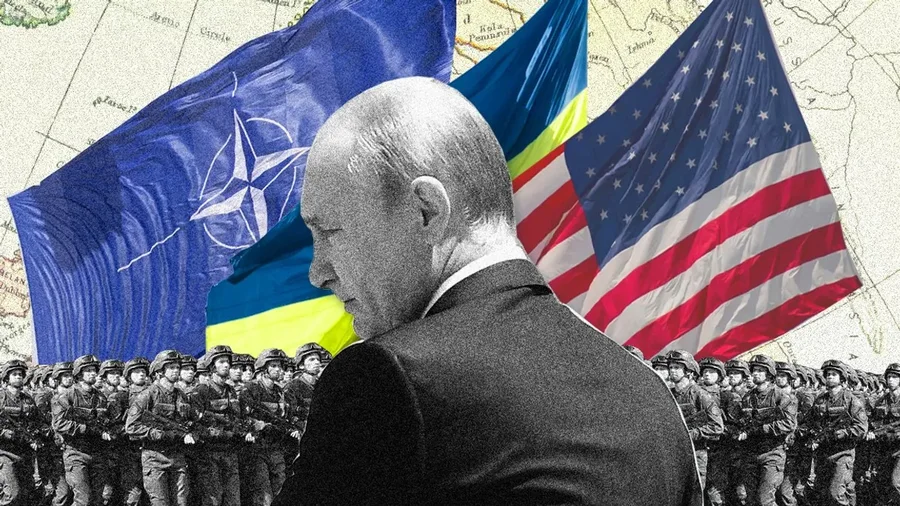
The idea of Western troops in Ukraine is as unacceptable to the Russian government and establishment as Ukraine's NATO membership.
US President-elect Donald Trump is reportedly pushing the idea that a large, heavily armed peacekeeping force from European countries (but including NATO members) could be sent into Ukraine as part of a peaceful solution.
It is important that this extremely foolish idea is shot down before it seriously damages the prospects for an early peace, and causes Ukraine further human, economic and territorial losses. According to the US newspaper Wall Street Journal and the French newspaper Le Monde, the idea first appeared in private talks between French and British officials in November.
It was discussed on Thursday of last week by the Foreign Ministers of the NATO countries in Brussels. While Trump himself made this suggestion to French President Emmanuel Macron and Ukrainian Volodymyr Zelensky in the meeting they held together in Paris on December 7.
Macron then went to the Polish capital, Warsaw, to discuss a plan to send 40,000 heavily armed European "peacekeepers" to Ukraine. But so far Polish government officials have shown no enthusiasm for the initiative.
The Polish Prime Minister Donald Tusk himself said: "To put an end to speculations about the possible presence of this or that country in the peacekeeping mission in Ukraine after reaching the ceasefire... I am telling you that the decisions regarding Poland will be made only in Warsaw. For now, we are not planning such a move."
Friedrich Merz, head of the German Christian Democrats (CDU), who will almost certainly be chancellor after the elections in February next year, has also distanced himself from this idea. At first glance, this idea may seem like a middle ground of compromise regarding several conflicting points on the Ukraine peace process: Russia's demand for a treaty that will permanently block Ukraine's entry into NATO; Ukraine's demand for a guarantee to the West against future Russian aggression; Trump's determination not to send US troops to Ukraine or undertake additional and permanent commitments to Ukraine; and the real need for a significant international force to guarantee the ceasefire.
But there's just one problem: According to every Russian official and expert my colleagues and I have spoken to (most recently on Thursday), the idea of Western troops in Ukraine is as unacceptable to the Russian government and establishment as Ukraine's NATO membership.
In fact, the Russians themselves see no essential difference between the two. From Moscow's perspective, a Western "peacekeeping force" would simply be a NATO vanguard military unit that would provide cover for the gradual introduction of other alliance forces.
In fact, while President Zelensky has stated that Ukraine "may consider" the idea of peacekeepers, it will only do so if at the same time it is given a clear deadline for future NATO membership. If this proposal is presented by General Kellogg, chosen by Trump as his envoy to Ukraine, in the peace negotiations, the Russian side will reject it unequivocally.
And if he insists on this point, then it is certain that the talks will fail. But it is likely that once European institutions - and populations - have had time to reflect on the idea, they will allow it to fall. Because the soldiers in this peacekeeping force would be putting themselves in considerable danger, which their fellow citizens are unlikely to tolerate.
When Macron first mentioned the possibility of sending French troops to Ukraine earlier this year, polls showed that most French citizens were against the idea. The dangers of this initiative are more than obvious.
On the one hand, determined to regain lost territories by provoking a direct war between NATO and Russia, the Ukrainians would have every incentive to provoke armed clashes, in which the Western "peacekeepers" would also be drawn. .
On the other hand, if Moscow really wants to test NATO and take advantage of divisions within the West, it could very well do so by threatening NATO "peacekeepers" in Ukraine rather than on NATO territory, avoid referring to Article 5 of collective protection.
Among Western officials and experts with a radical approach to Moscow and who constantly warn of an alleged future Russian threat to "test NATO's resolve" in the Baltic states, there is either a gross misunderstanding of the situation or an equally dishonest big.
They propose giving Russia a much greater and more credible opportunity to do so in Ukraine. Under these circumstances, for European governments and their military chiefs to agree to such a proposal, even in principle, would require strong and public assurances from the Trump administration that the US military would intervene with full force to save the "peacekeepers", if they were to fall prey to Russian attacks.
That would mean the kind of commitment to Ukraine and potential war with Russia that Trump and key members of his team are determined to avoid. As the WSJ article points out, "French officials have made it clear that the idea would have to include some sort of US support, and it's not clear whether that will be considered by the new Trump administration."
These factors are hardly vague or difficult to understand. Even if this idea is just to test the waters, it's still troubling. Because the emergence of this idea shows that Trump and the European governments have received very inaccurate information from their advisers on the basic positions of Russia.
This suggests either a poor job of the secret services, or that the advisers in question are deliberately aiming to sabotage the achievement of peace. If so, then they are not friends with Ukraine; because every indication suggests that the longer this war continues, the worse Ukraine's position will become./ Adapted "Pamphlet" from "Responsible Statecraft".



Lini një Përgjigje