


 Shkruar nga Pamfleti
Astronauts travel farther than ever before as they face complete isolation during the lunar transit
Astronauts on the Artemis II mission are expected to reach the far side of the Moon in the early hours of Tuesday, penetrating deeper into space than any human in history.
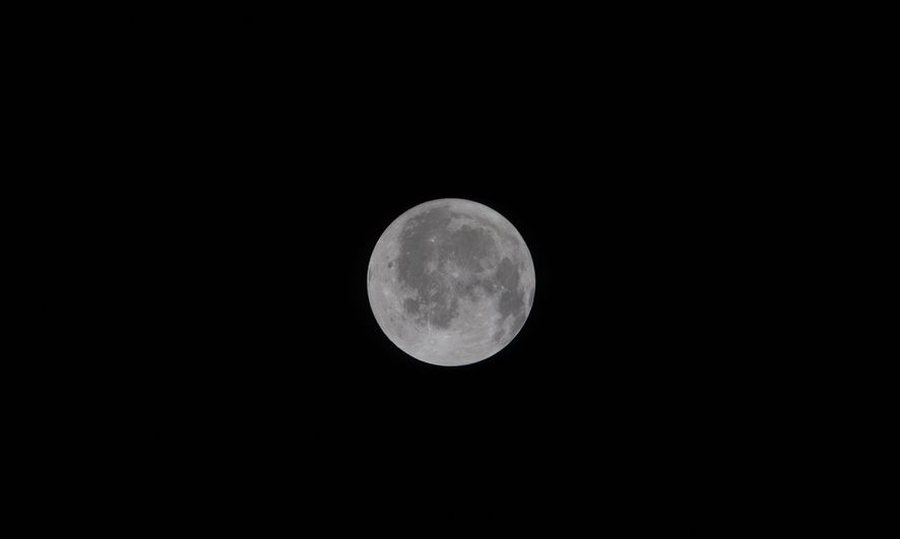
At around 00:47, the Orion spacecraft will pass behind the Moon. At that moment, the radio and laser signals that enable communication with Earth will be blocked by the Moon itself. For about 40 minutes, the four astronauts will remain completely without contact with Earth, in a situation of complete isolation in the darkness of space, writes the BBC.
Mission pilot Victor Glover noted that as we left Earth's orbit, our planet seemed smaller and smaller as the Moon loomed large on the horizon. He also said that this period of no communication could be used as a moment of reflection and unity for people on Earth.
This is the first manned mission to the Moon in more than 50 years, continuing the path of the Apollo program that ended in 1972. The experience of isolation is not unknown: Apollo astronauts experienced similar communication breakdowns. In 1969, Michael Collins of Apollo 11 was left alone in lunar orbit for 48 minutes while his colleagues descended to the surface. He described that moment as complete isolation from all life, but without fear.
On Earth, this period is considered delicate for control teams. The Goonhilly ground station in Cornwall, Britain, tracks the Orion capsule's signals and transmits data to NASA. According to technical officials, this is the first time a manned mission has been monitored from this station.
Experts say that a sustainable presence on the Moon will require uninterrupted communication, even on the far side. Programs like the European Space Agency's Moonlight program aim to create a network of satellites to ensure continuous coverage in the future.
During the time without contact, the astronauts will focus on observing the Moon, taking photographs and studying geological structures. One of the main targets is the Orientale Basin, known as the "Grand Canyon" of the Moon, a rare formation that has caught the crew's attention.
The mission has also faced technical challenges. The crew has reported ongoing problems with the Orion capsule's toilet, which is only partially functional. Engineers suspect ice may have blocked the exhaust system. Until the problem is resolved, the astronauts are using backup equipment.
The astronauts on NASA's Artemis 2 mission are preparing to enter the Moon's "sphere of influence," having already taken in sights of the lunar surface never before seen by human eyes https://t.co/T16awupC86
— AFP News Agency (@AFP) April 6, 2026
???? Images of the Earth taken through the window of the Orion... pic.twitter.com/ADwVmOuEoW
Despite these difficulties, crew morale remains high. Commander Reid Wiseman said that contacting family from space was a special personal moment during the mission.
Another key moment of the mission is entering the Moon's "sphere of influence," where its gravity becomes more dominant than Earth's. During the flight around the Moon, the astronauts will achieve the greatest distance ever traveled by humans.
Unlike the Apollo missions, which flew about 112 km above the lunar surface, Artemis II will reach a distance of about 6,437 km at its closest point. This will allow astronauts to observe the entire surface of the Moon, including areas near the poles.
The Artemis II mission is part of NASA's long-term plan to return humans to the Moon and establish a permanent base that will serve as a platform for further space exploration. The agency aims to land a new lunar surface by 2028.
This mission represents an important step towards expanding human presence beyond Earth and developing sustainable space exploration.






Lini një Përgjigje