


 Shkruar nga Angelo Panebianco
Europe knows it must move forward even without a compass or guarantee of a safe haven...
The imposition of truth occurs when history accelerates, when everything changes and old certainties disappear, so that the existence of a gap between reality and its public representations can be more easily discerned. On the one hand, everything becomes uncertain and ambiguous; on the other hand, governments are forced, due to the role they play, to reassure citizens, to pretend to know what needs to be done, what they will do and with what consequences. For their part, also for reasons of role, opponents of incumbent governments must pretend to know what is wrong with the actions of the governments and what should be done in their place.
The truly important aspect of Canadian Prime Minister Mark Carney's justly famous speech is that he spoke the truth: the only certainty is that the old world is over and, from this moment on, we must try to do something to face the new one. No pretense, no certainty about the future, in Carney's speech. It is difficult to deny that Europe today finds itself in a state of maximum uncertainty and uncertainty. And that Europeans, some of whom are finally aware that they cannot stand still, must act, walking through trials (and certainly many mistakes), more or less in the dark.
In order not to be excluded from the great game in which the great powers of the planet are engaged. Since exclusion means, in the long run, likely economic decline and political subjugation, it means remaining defenseless in the face of the appetites of others.
Let's try to list some facts, which contribute to the current state of uncertainty in Europe.
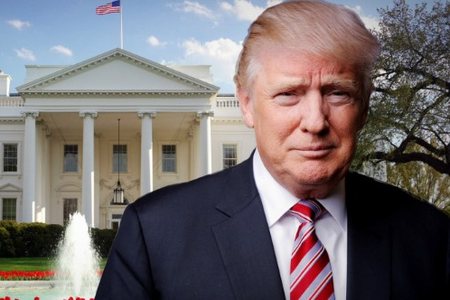
The first fact is that the Europeans, given the choices of the Trump Administration, are now the only real allies that Kiev has. Supporting Kiev, contributing to preventing Putin from triumphing in Ukraine, is an imperative for European security. But it also means that the Europeans are now navigating uncharted waters: for the first time since World War II, they are involved in a conflict whose fate will be decisive for Europe, without American protection, without being able to rely on the political and military leadership of the United States.
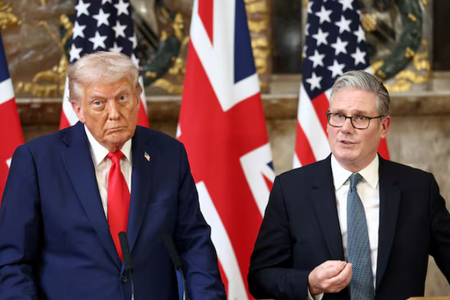
The second fact concerns relations between Europe and the United States. In Europe, only masochists or those who see in Trump's policy an opportunity to deal a blow to our liberal democracies can approve of the current Administration. At the same time, Europe cannot afford, regardless of what Trump and his ilk think of Europe, to sever relations with the United States. Europe does not have, and probably will not have for some time to come, the ability to autonomously guarantee its own security.
Just ask the Poles or the Baltic states to understand how unwilling the European countries that most fear Russian imperialism are to break ties with the United States. The truth is that the Europeans have to wait, hoping that American voters will cut off the arms of an already quite unpopular president. This does not mean that the Euro-Atlantic relations of old can be revived (it probably could not be restored even with a democratic president, at least with those characteristics). But at least it would give the Europeans more breathing space and more time to give themselves that strategic autonomy that French President Macron has long insisted on.
Another fact concerns the unsuitability of the European Union, as it stands today, to face the new world. Born in the Cold War era, it has grown up in the shadow of American leadership and thanks to its protection. It is impossible that without profound changes (all of which have yet to be determined) it can face the new conditions.
Brexit was a shock to those Europeans who believed in the “irreversibility” of European integration. But Brexit also made it clear that Europe and the European Union are not synonymous and that, for example, if there is to be a European defense in the future, it will arise from the joint contribution of the European countries that are part of the Union (not all: see Hungary) and of the European countries that are not part of it. Specifically, if it does arise, it will only happen within the framework of NATO and thanks to the joint efforts of the European Union and NATO.
A Europe with variable geometry certainly cannot satisfy the traditional Europeanism that has always dreamed of a United States of Europe. As far as one can hypothesize or imagine, there is nothing of the sort on the horizon. Perhaps, who knows?, from the European Council next March we will get some general indications on the next steps of the Europeans.
However, we must never forget that the future is in the hands of the electorate. In Great Britain, the Labour government is tottering and the polls are not looking good: the “destructor” Nigel Farage has the wind at his back. Anti-European movements are also strong in France and Germany. Or consider the Italian case. There is currently a stable government. But “legislative governments” are not part of our tradition. Is it really so impossible to imagine that sooner or later in Italy we will return to order, that is, to the instability of governments? The Europe of the future will be forged by the choices of the voters of European countries.
The factors of uncertainty, therefore, are numerous. Europeans know that they must move. But it is better to do so while being aware of the fact that there is no compass and no guarantee of future arrivals./ Adapted from “Pamphlet” by “ Corriere della Sera ”



Rrospia jeton me kurverira e kur plaket nuk vides ne shtrat por ngordh rrugeve.