


 Shkruar nga Pamfleti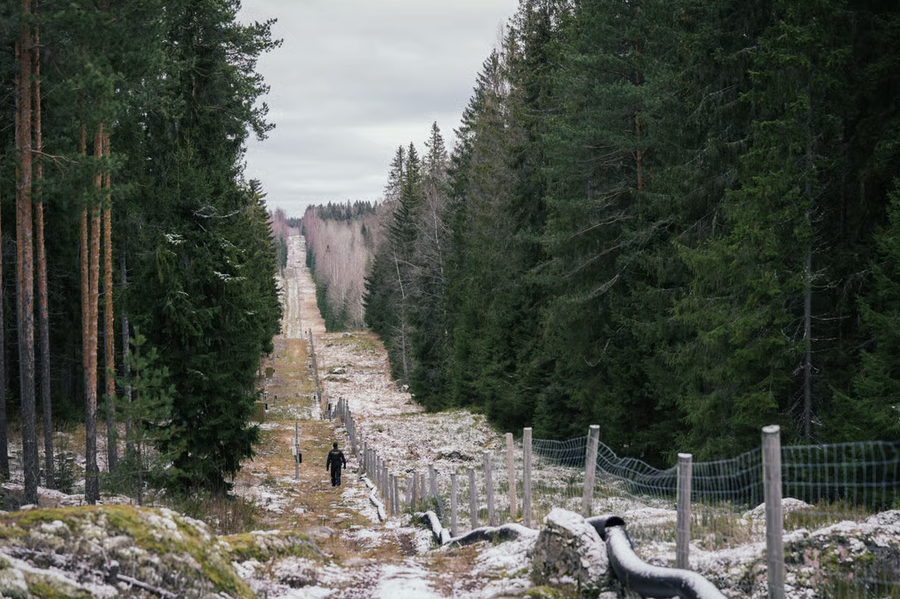
One priority of the plan is the revitalization of border areas that are economically weak...
The European Commission announced plans on Wednesday to invest in EU regions bordering Russia, Belarus and Ukraine, which are suffering economically due to the war.
Falling investment, reduced freight traffic and a decline in tourism have caused an economic blow to the easternmost regions of the EU, mainly affecting the Baltic countries, Finland and Poland. The Commission's strategy tries to give an incentive to international financial institutions to provide funds for these areas, but fails to secure new funds.
“ Secure borders are not only controlled, they are also alive. Investing in jobs, clean energy and education in the EU’s border regions lays the foundations for real security ,” said Niina Ratilainen, member of the Finnish city council of Turku and of the European Committee of the Regions’ Working Group on Ukraine.
The EU is concerned that if these easternmost regions are depopulated, Europe's ability to protect its border is compromised, said a Commission official who declined to speak freely. Brussels is also concerned that the economic problems suffered by those living in the regions could drive them back to fringe parties in elections and make them vulnerable to Russian propaganda.
Władysław Ortyl, governor of the Polish region of Podkarpackie, noted that his area has been directly affected by the consequences of the ongoing war, including migratory pressure, transport disruptions and increased pressure on public services and the regional economy. He added that rising geopolitical tensions mean the EU must reallocate resources towards strengthening the resilience of its border areas.
One priority of the plan is to revitalize border areas that are economically weak as a result of the Russian occupation, whether due to a lack of tourism or the risks associated with living near the Ukrainian border.
"Since the start of Russia's war of aggression, places that were once built for normal daily life, for cross-border shopping and tourism, are now used for security, dual-use activities, logistics, drones and emergency support ," said European Commission Executive Vice-President for Cohesion, Raffaele Fitto, during the presentation of the plan on Wednesday morning.
However, the strategy does not contain new funds, as the current EU budget, which expires in 2028, is overstretched, two Commission officials said.
“What we need is direct access to EU funds and a strategy that reflects today’s realities on the ground. In eastern Slovakia, we feel the economic, social and security impacts of Russia’s war every day. Our GDP per capita is just over 54 percent of the EU average, and the war has deepened long-term structural gaps,” said Milan Majerský, governor of the self-governing Prešov region in Slovakia. He added that he met with Fitton in Bratislava last week before the plan was unveiled.
The Baltic states have already set their sights on the next EU budget, which is currently being negotiated by member states. They argue that the Commission's plan will strengthen their demands to allocate money to the easternmost regions from 2028.
“ We expect our specifics to be reflected in the negotiations. This communication [on the eastern border regions] will be a living document ,” on the EU’s next long-term budget, Lithuania’s Europe Minister Sigitas Mitkus told POLITICO.
Under Fitto's plan, global financial institutions will be part of the "EastInvest platform," which will take effect immediately to address investment needs and provide financial assistance to those regions, according to the document.
Brussels will allow countries bordering Russia, Belarus and Ukraine, Romania, Hungary, Slovakia, Bulgaria, Finland, Poland, Estonia, Latvia and Lithuania, to use part of their EU regional development funds to provide guarantees to the European Investment Bank, the European Bank for Reconstruction and Development, the Nordic Investment Bank, the Council of Europe Development Bank and national promotional banks to invest in their easternmost regions, according to the document. The ultimate aim is to provide cheap loans to businesses from border regions that would otherwise have difficulty accessing funds.
In a partial concession to the Baltic states, the Commission pledged to examine how eastern border regions can best benefit from the opportunities offered by the future European Competitiveness Fund, a €410 billion fund to support innovative EU businesses from 2028 onwards. Such a change would be significant as the Commission had previously rejected calls to attach geographical criteria to the new fund./ Adapted from “Pamphlet” by “ Politico ”







Lini një Përgjigje