


 Shkruar nga Pamfleti
Washington's accusations against China for secret nuclear tests are opening a new front of strategic confrontation, calling into question the existing nuclear moratorium regime and creating possible escalation scenarios at the international level.
The United States accuses China of conducting a secret nuclear test in 2020. According to a report by the Washington Post, both Beijing and Moscow are suspected of violating the informal moratorium. Washington claims that China has also interfered with international seismic monitoring systems to hide the tests. In this context, American authorities say they have reason to follow “parallel steps” as the decades-long moratorium on nuclear tests between the major powers is collapsing.
US Undersecretary of State for Arms Control, Thomas DiNano, stated at the Conference on Disarmament in Geneva that China is preparing tests "with specified yields of hundreds of tons" and has interfered with international seismic monitoring systems to hide previous explosions.
“Today I can reveal that the US government is aware that China has conducted nuclear tests… China conducted such a test with a yield on June 22, 2020 ,” DiNano said. He added that Russia is helping Beijing develop military-grade fissile material needed to supply China’s nuclear arsenal.
Renewal of the New START Agreement
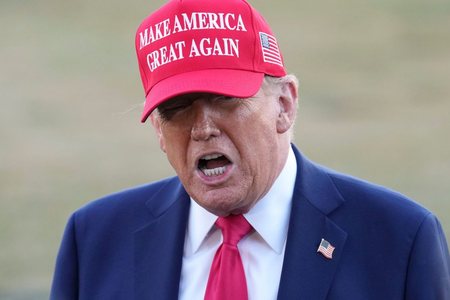
DiNano's remarks gave new context to President Donald Trump's announcement a day earlier that he would not seek a renewal of the New START treaty, the last major bilateral nuclear arms control agreement between Washington and Moscow. In a post on Truth Social, Trump said the US would instead seek a "new, improved and modernized" agreement.
In December, Trump announced that he had ordered the immediate resumption of American nuclear testing, which the US has not conducted since 1992, citing the need to respond to what he described as secret testing by Russia and China.
"Continued Russian violations, growing global stockpiles, and flaws in the design and implementation of New START give the United States a clear mandate to pursue a new architecture that addresses today's threats, not those of a bygone era," DiNano said.
He stressed that the restrictions imposed on the US through the unilateral moratorium with Russia have contributed to the rapid build-up of China's nuclear arsenal.
DiNano also stated that Russia has successfully tested the Burevestnik (Skyfall) nuclear missile and the Poseidon (Doomsday) nuclear-armed unmanned underwater vehicle in recent months, but did not provide details on the evidence supporting these US assessments.
The Chinese embassy in Washington did not directly respond to the allegations about the 2020 test, but said China adheres to a moratorium on nuclear tests and a policy of “no first use” of nuclear weapons. Spokesperson Liu Pengyu said Beijing hopes the US will respect its commitment to the moratorium and take concrete measures to uphold the international regime of nuclear disarmament and non-proliferation. The Russian embassy did not respond to a request for comment.
What will the White House ask for?
DiNano said the White House will push for a broader agreement that goes beyond the bilateral framework with Russia, aiming to include China and other nuclear states. He acknowledged that such a process would be difficult. “We can’t promise that this process will be quick or easy,” he said.
China has historically refused to join such agreements, arguing that its nuclear arsenal is much smaller than that of the United States and Russia. However, it states that it adheres to a voluntary moratorium under the Comprehensive Nuclear-Test-Ban Treaty (CTBT), which it signed in 1996 but has not ratified.
Complete freeze of Washington-Beijing nuclear dialogue
A Pentagon report, released in December, estimates that China has just over 600 nuclear warheads and remains on track to reach about 1,000 by 2030. By comparison, Russia possesses about 4,300 nuclear warheads and the United States about 3,700, according to the Stockholm International Peace Research Institute.
Efforts to include China in a new deal have been complicated by a near-total freeze in nuclear dialogue between Washington and Beijing in recent years, which deepened in 2024 when China suspended talks in reaction to US arms sales to Taiwan.
Analysts note that the American accusations are also based on satellite images and government documents, which show a rapid expansion of key facilities of the Chinese nuclear program, including the secret Lop Nur complex, where low-yield tests are suspected to have been conducted.


Lini një Përgjigje