


 Shkruar nga Pamfleti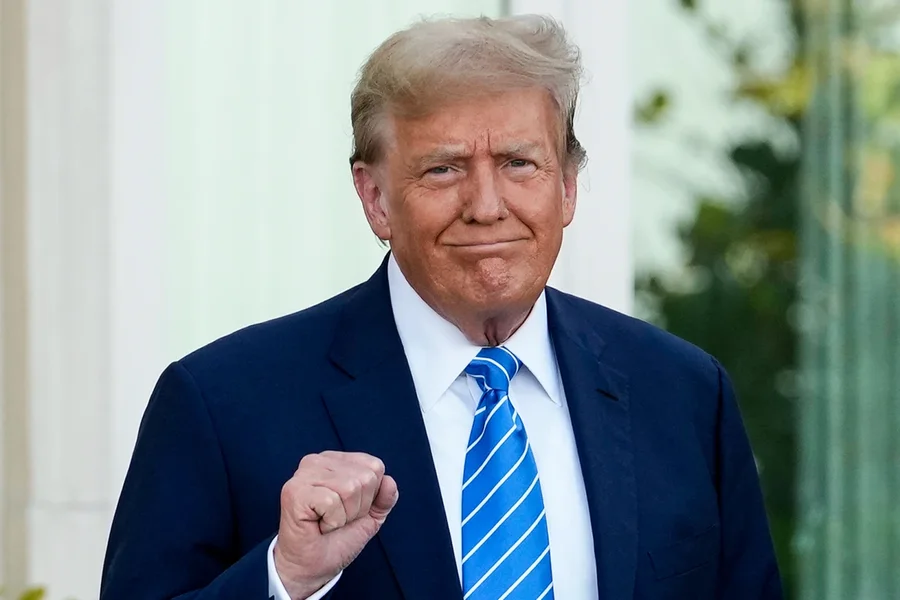
The wide range of tariff exemptions is a welcome departure from the infamous day Trump announced the tariffs.
US President Donald Trump's administration has exempted smartphones, computers and some other electronic devices from "reciprocal" tariffs, including the 125% taxes imposed on Chinese imports.
U.S. Customs and Border Patrol announced that goods would be exempt from Trump's 10% global tariff for most countries.
The announcement said a number of numbers were listed as exempt from the 125% tariff on goods entering the country from China. The code "8517.13.00.00" means very little to most of the world, but on the US customs list it represents smartphones.
US Commerce Secretary Howard Lutnick, a few days ago, announced that part of the escalation of tariffs on China was to bring iPhone production back to the US.
The US has now banned the single largest Chinese export. The effect of the 125% tariff on Apple's manufacturing plant in Zhengzhou in eastern China would have started to show within weeks across all US Apple stores.
According to Counterpoint, a global technology market research firm, about 80% of Apple's iPhones destined for sale in the US are manufactured in China.
The tech giant's manufacturing profit margins are estimated to be between 40-60%. Typical iPhone prices may have moved closer to $2,000 than $1,000. The other option for Apple could have been to spread the cost across all of its global prices, but would the rest of the world agree to pay Trump's tariff tax?
A very public iPhone repricing has been avoided, but it could still happen if, as the White House has said, the previously imposed 20% tariffs on China remain in place.
Tim Cook, Apple's chief executive, plays a key role. He could meet with both US President Donald Trump and Chinese President Xi Jinping. It's no surprise that any peace in the US-China trade war could be brokered by Cook.
This is based on its fundamental role in connecting the two economies. He was selected by Apple co-founder Steve Jobs for his expertise in the giant company's logistics.
"The Art of Abolition"
Reports in the US media claim that White House trade hawk Pete Navarro is also siding with US Treasury Secretary Scott Bessent.
Navarro was the author of the infamous equation that set so-called reciprocal tariff rates proportional to the size of a country's trade surplus with the US.
Bessent has a key role in negotiations with trading partners seeking to avoid reimposing those tariffs after the 90-day pause.
There's a big question after 10 days of chaos. What is the incentive for other nations to offer so much?
The Trump administration is spooked by the bond market's reaction to the president's trade plans and questions about the safe haven status of U.S. debt for investors.
In an effort to avoid effective bond interest rates rising to 5%, the US needs deals beyond just those in surplus countries.
The wide range of tariff exemptions is a welcome departure from the infamous day Trump announced the tariffs.
Less than a quarter of China's total exports are now exempt from the 125% tariff, according to Capital Economics.
Taiwan also benefited from the exemptions, accounting for 64% of exports to the US, Malaysia for 44%, and Vietnam and Thailand for just under 30%.
The key to the tariff exemption is to give an effective 10% discount to those with the largest surpluses. For example, Taiwan has a $74 billion surplus with the US and Vietnam a $124 billion surplus.
This is the exact opposite of Navarro's infamous calculation from last week. In the 10 days since we've moved from "the looters and plunderers" to those with large surpluses (except China) we'll be hit hardest.
Meanwhile, an ally like the UK, which according to US figures has a $12 billion deficit, meaning the US sells more to the UK than vice versa, has a 25% tariff on cars, its biggest goods export.
This is much more than a "step back." Some have called it "The Art of Repeal." The US is now negotiating with the bond markets and with itself. The rest of the world will see how that plays out now./ Adapted from "Pamphlet" by "BBC."



Lini një Përgjigje