


 Shkruar nga Ferdinando Nelli Feroci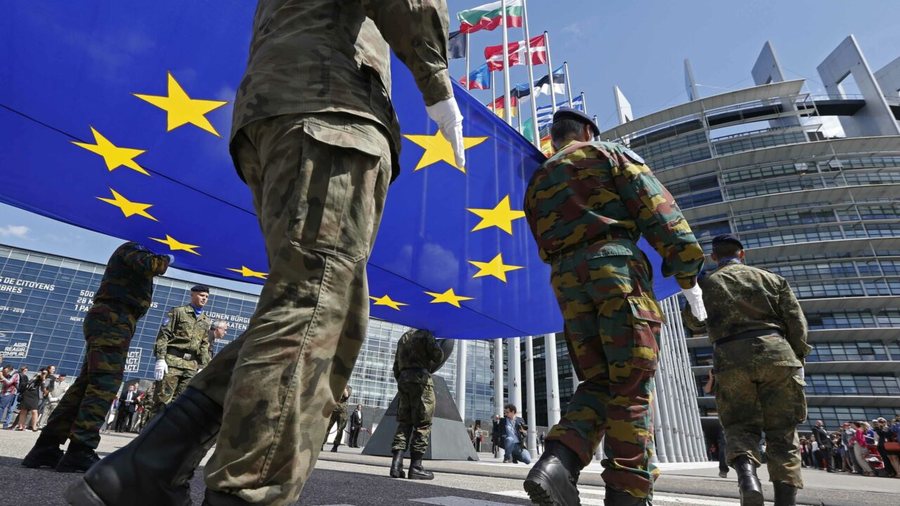
Europeans have realized that the world is changing very quickly. But many important details about the rearmament plan need to be clarified...
The plan proposed by the European Commission to strengthen the military capabilities of the EU and its members was approved by a large majority of votes by the European Council and then by the European Parliament. This is undoubtedly excellent news and a sign that Europeans have understood that the world is changing, and very quickly.
That Putin's Russia is a real and concrete threat to this part of Europe as well, and that the US of Trump and Musk are no longer the reliable allies to whom Europe had delegated its defense for about 80 years. The plan approved on March 6 is only an indication of a medium-term path, while quite a few important details still remain to be clarified.
1. The issue of national rearmament
In a first phase, it will be inevitable to strengthen the military capabilities of individual European countries. At least until the EU has a unified command and a single purchasing center, it will be the member states that will have to invest more and better so that their armed forces participate in joint projects and initiatives set up within the bloc.
But on the condition that new spending authorized or financed by the EU targets projects at European level. And to start implementing joint programs to fill the most obvious shortcomings of the Europeans (missile defense systems, satellite systems, drones and anti-drone systems, the use of artificial intelligence, etc.).
2. Relations with NATO
The EU was born as an economic integration project, and over the years it has developed its own political dimension. But it did not have and does not have the vocation to become
in a military alliance. Therefore, strengthening European defense, at least in the initial phase, should be seen above all as a strengthening of European defense capabilities, which will be used in a framework of cooperation and coordination with NATO.
And this is even more true in a situation in which the United States' intentions regarding its involvement in the Atlantic Alliance are unclear, and when NATO may be destined to become more European.
3. European Army
At the moment, it is not about creating a joint army, but about improving national capabilities, which will be used in the service of joint missions and operations.
This is also because a joint army would presuppose the existence of a single political referent from whom it would receive orders, a single political authority to which it would depend, a single person responsible for the chain of command and control, and objectives on which rapid progress should be made, but which are currently not yet a reality.
Even NATO, which is still a military alliance, does not have joint armed forces, but national armed forces that are at the disposal of a unified command for joint operations.
4. Decision-making processes
As is evident from the debate about the European contribution to ending the conflict in Ukraine, the idea that Europe should use flexibility mechanisms in the implementation of European initiatives in the field of defense is being consolidated.
It will therefore be necessary to spend more and better on defence, to improve interoperability and synergies between national armies, to create an internal market for the defence industry, and a common European defence industry base. But it will also be necessary to accept, when necessary, the use of small groups and coalitions of the willing.
5. European defense as a single priority
Before the “Trump cyclone” hit Europe, the EU had adopted a work program that remains relevant today. It was a program structured around the 3 pillars of the development of innovation, enabling technologies and the use of artificial intelligence applications, of the decarbonization process compatible with an industrial policy aimed at strengthening competitiveness, and of a strategy aimed at achieving greater security also through the reduction of strategic dependencies. European defense is part of this program. But it would be a mistake to consider it as the only topic being discussed./ Adapted from “Pamphlet” by “Huffington Post Italia”.


Lini një Përgjigje