


 Shkruar nga Paul Wood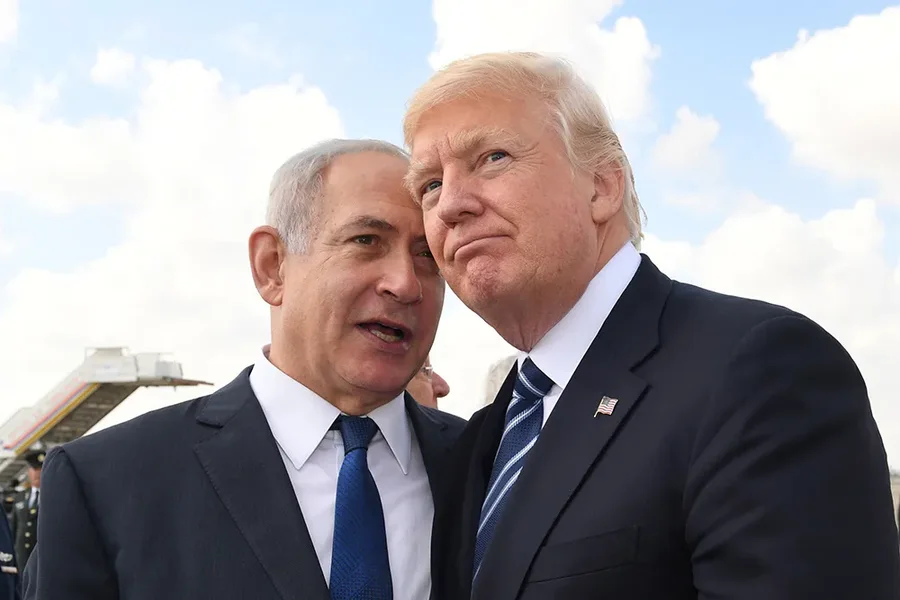
Meanwhile, his trial on corruption charges will resume. Critics accuse him of wanting another war to stay in office and get out of prison. The next target is Iran. Netanyahu's gamble on destroying Hezbollah in Lebanon had its difficulties, but it left Tehran without its "strategic deterrent."
Former US President Jimmy Carter has died at the age of 100, shortly before news of an imminent deal to free the last Israeli hostages in Gaza emerged. Carter's presidency was badly damaged by the crisis over the US diplomats held hostage in Tehran.
Their release became the top priority of his administration, and he worked for it every day of the 444 days of the crisis, often to the exclusion of everything else. In contrast, Israeli Prime Minister Benjamin Netanyahu resisted great domestic pressure to reach a deal for his hostages in order to pursue the goal of destroying Hamas.
Call it statesmanship or something else, but this is a victory of sorts for Netanyahu. The deal is apparently the same, brokered by the US in May 2024. So what changed? The Trump factor. The president-elect publicly threatened Hamas with annihilation if the Israeli hostages are not released before his inauguration ceremony next week.
However, it may have been private threats - or promises - to Netanyahu that ended the impasse. Although he is not yet president, Trump sent his new envoy
for the Middle East, Steve Witkoff, on the hostage talks in Qatar and Israel.
Witkoff has succeeded where the Biden administration has failed for the past 15 months. Like Trump, he is a New York real estate billionaire. He is also one of Trump's golf buddies, and the president trusts him so much that he helped him launch his new cryptocurrency venture.
Witkoff has no experience as a diplomat, but like Trump, he is a deal-maker who knows when to speak up. As a young man, he is said to have carried a pistol with him to collect rent from residents, while keeping on his desk the book “The Tough Jews,” about the Jewish mobsters of Murder, Inc. in Brooklyn. (Witkoff himself is Jewish and from Brooklyn).
As the Israeli newspaper Haaretz reports, Witkoff called Netanyahu's aides on Friday, January 10, to tell them he would be arriving in Israel the following afternoon. The aides politely explained that it would be the middle of Shabbat, and the prime minister would be happy to meet him on Saturday evening.
Witkoff's harsh reaction surprised them. He flatly stated that he didn't care about Shabbat at all. So,
In “an unusual departure from official practice,” the Israeli prime minister went to his office on Saturday afternoon, and, personally receiving Witkoff’s “loud and clear” message, agreed to the same deal he had rejected for the past 8 months.
The deal reportedly calls for the hostages to be released in stages, with the ceasefire coming into effect and Israeli forces withdrawing. Aid and reconstruction of Gaza will begin. When the rubble is cleared, we may have a more accurate idea of how many thousands of Gazans have died in the Israeli campaign.
Hungry and homeless, the people there are desperate for a ceasefire. Perhaps Netanyahu agreed to such a deal because Witkoff promised that he would be able to return Israeli forces to Gaza if necessary. A similar clause exists in the ceasefire with Hezbollah in Lebanon.
But even though Hamas has been badly damaged and its leader Yahya Sinwar — the architect of the October 7 massacre — has been killed — Netanyahu has yet to fulfill his promise to “uproot” it and continue the fight “until complete victory.” Hamas remains strong enough to be the party with which Israel must negotiate the release of the hostages.
It is still unclear who should rule Gaza after Israel leaves. Without this political solution, Hamas or a more radical successor will have no problem finding young people determined to take revenge on Israel. Because Gaza has many orphans. For now, Netanyahu can tell the right-wingers in his cabinet that Trump is to blame for stopping the campaign.
But Security Minister Itamar Ben-Gvir has threatened to resign, calling the pact “Israel’s capitulation to Hamas.” Perhaps Netanyahu can survive Ben-Gvir’s departure. But Bibi will also have to face an investigation into all the failures that led to the massacre of October 7, 2023.
Meanwhile, his trial on corruption charges will resume. Critics accuse him of wanting another war to stay in office and get out of prison. The next target is Iran. Netanyahu's gamble on destroying Hezbollah in Lebanon had its difficulties, but it left Tehran without its "strategic deterrent."
Now some fear that Iran could now rush to produce a nuclear bomb, and put it on one of its hypersonic missiles. Benjamin Netanyahu has spent decades saying that a “flying holocaust” must be stopped.
After years of covert warfare through assassinations and sabotage, this could mean bombing Iran's oil industry, its nuclear facilities, or both.
To achieve this, Netanyahu will need Trump's support.
The new US president is a very different man from Jimmy Carter, who was cautious and devoted to principles. How far would Donald Trump go in a war against Iran alongside Israel? Or does he imagine winning the Nobel Peace Prize for finding a solution to the conflicts in the Middle East, and for reaching a new nuclear agreement with Iran? A bit like Obama!
His envoy, Witkoff, is said to see geopolitics in the region as “a giant real estate deal,” and Trump likely thinks the same way. However, the agreement on the release of hostages and prisoners does not mean that peace is secure in the Middle East.
Note: Paul Wood was a BBC correspondent for 25 years, in Belgrade, Athens, Cairo, Jerusalem, Kabul and Washington. /Adapted from Pamphlet by “The Spectator” /






Lini një Përgjigje