


 Shkruar nga Nga redaksia Pamfleti – Shkodër | Podgoricë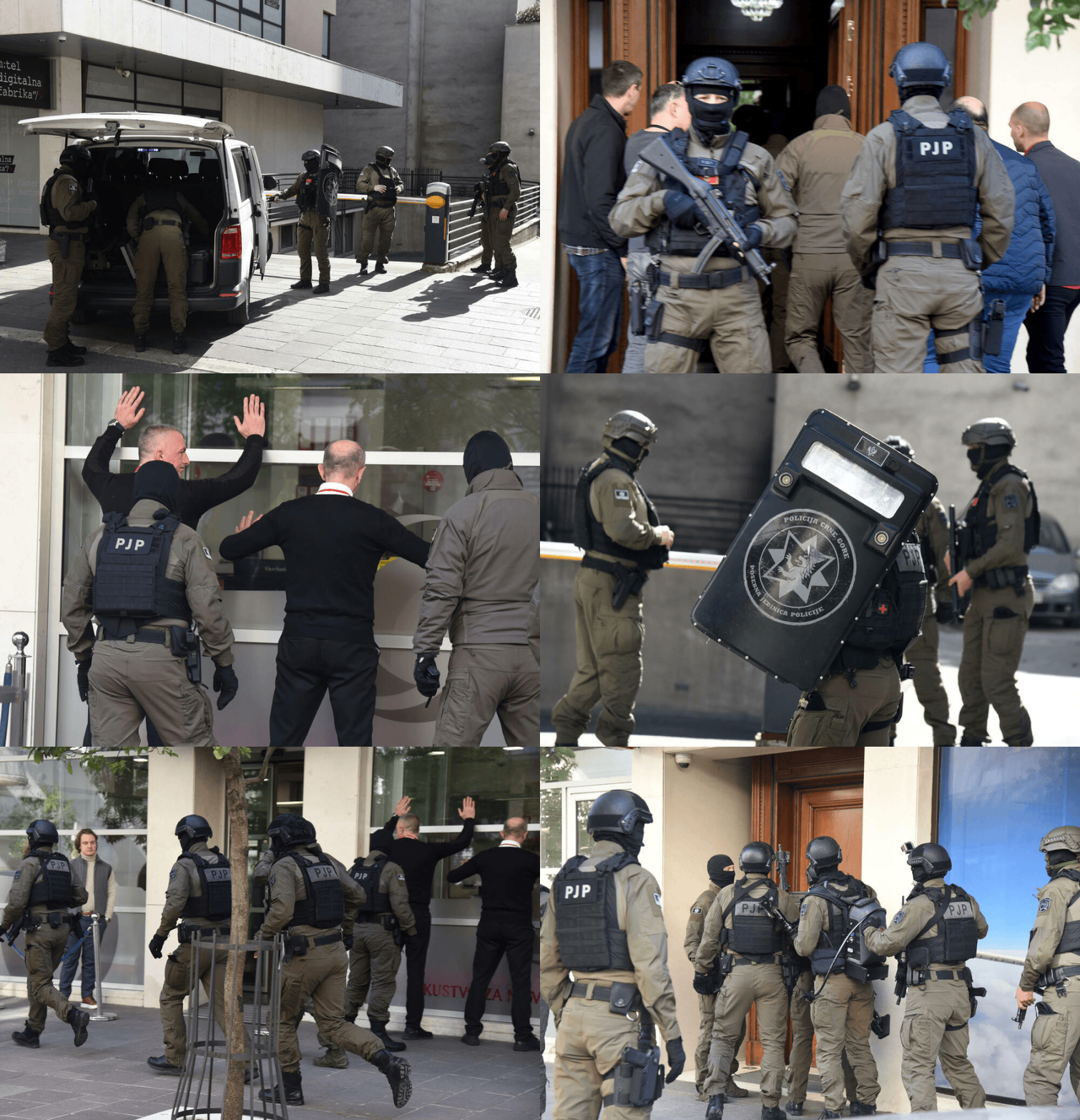
Justice knocks on the door of the family that ruled Montenegro: a signal of an era that is closing in the neighboring country
The police operation against Ago Djukanovic brings back to the center of the debate the connection between political power and the economic empire of an era that is being tested.
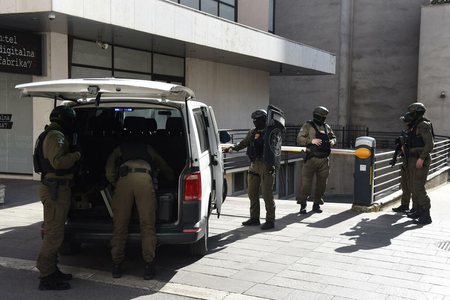
Montenegrin police have surrounded the building in the center of Podgorica where businessman Ago Djukanovic lives, in an operation that has shocked public opinion and brought the links between politics and capital in Montenegro back into focus. According to reports from Vijesti, law enforcement agencies have conducted searches in the premises of the building, which also houses a branch of Prva Banka, a financial institution that has been linked to the family's interests for years.
There has been no detailed official communication on the concrete reasons for the action so far, but the political symbolism is strong. Aco Đukanović is not just an ordinary businessman; he is the brother of Milo Đukanović, the figure who dominated the Montenegrin political scene for more than three decades as prime minister and president. Any move by the justice system towards his family circle is interpreted as part of a broader process of institutional reform in the country.
This development comes at a delicate moment for Montenegro, which has been trying to build a new political narrative, more detached from the long shadow of the Đukanović era since the change of power in 2020. The European Union's pressure to strengthen the rule of law and fight corruption has been continuous, while the negotiating chapters on justice remain essential for progress towards membership.
In this context, the siege of the building where Aco Đukanović lives is not just a police chronicle; it is a political message. It signals that the new governing structures are trying to prove independence from the old elites and that no one should be above the law. However, it remains to be seen whether this operation will produce concrete legal consequences or will remain a symbolic episode in Montenegro's difficult transition.
For Albania and the region, any development in Podgorica has strategic weight. Montenegro's institutional stability is key to the Euro-Atlantic architecture in the Western Balkans. If the investigation process is transparent and evidence-based, it could serve as a model for strengthening the rule of law in the region. Otherwise, any perception of selectivity or political revenge would risk deepening internal divisions and damaging the country's international image.
In essence, today's operation is more than a police action: it is a test for Montenegrin justice and the democratic maturity of a state that seeks to close the chapters of the past without destabilizing the future./ Pamphlet




Lini një Përgjigje