


 Shkruar nga Anders Fogh Rasmussen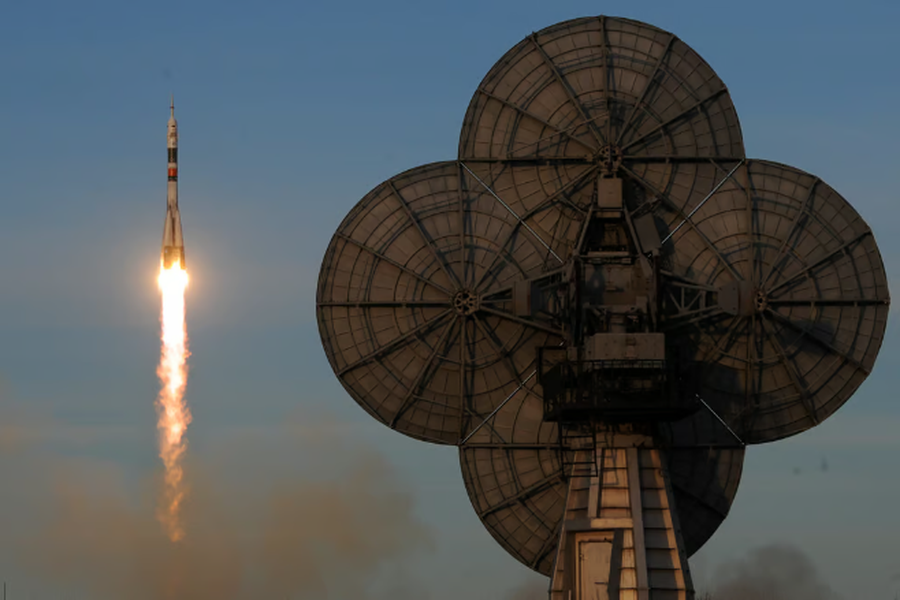
Russia is known to have ground-based laser weapons designed to blind satellite sensors. Moscow has even been clear in stating that it sees Western commercial satellites as legitimate targets in any future conflict.
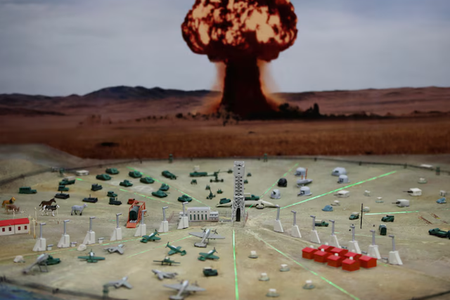
The news that the US had data on Russia's efforts to put its nuclear capabilities into Earth orbit shocked Washington last month. And although leaders in Congress and President Joe Biden's administration were quick to play down the ensuing panic, making it clear that there was no imminent danger to the US or its allies, the revelation itself highlights some important facts. .
The military threat in space is real and growing. Furthermore, as the conflict in Ukraine demonstrates, modern warfare is almost entirely dependent on space-based capabilities, with forces on both sides relying on satellites for communications, situational awareness, and targeting of enemy positions.
But this increased military reliance on space brings new threats and challenges along with it. It's no secret that Russia and China are investing heavily in space-based capabilities. Both countries have conducted well-publicized tests of anti-satellite missiles, and Russia is known to have ground-based laser weapons designed to blind satellite sensors. Moscow has even been clear in stating that it sees Western commercial satellites as legitimate targets in any future conflict.
However, the development of anti-satellite nuclear weapons in outer space would mark a significant escalation of the situation. Also, it would be in direct conflict with the Outer Space Treaty of 1967, which prohibits "the placing into orbit of any object carrying nuclear weapons or any other type of weapon of mass destruction."
Moreover, as space becomes increasingly important to warfare, there is an increased risk that countries that lack sophisticated space-based capabilities, such as Iran, may try to level the playing field in a future conflict, through the launch of land-based missiles to hit targets in space.
In such a scenario, satellites in orbits closer to the earth would be particularly vulnerable. And not only that. A hostile country might also try to destroy a small number of satellites in low earth orbit to create a dangerous debris cloud. Such an action would then bring down other satellites, damaging not only military capabilities, but threatening all global services that rely on satellite communications. Therefore, Western policy-makers must urgently adapt their measures to these new threats.
First, we must make clear to Russia the consequences of escalating the situation in space. If we leave the space as a gray area, it will only encourage our opponents to test us, risking miscalculations. NATO took an important step in this direction in 2021, when leaders agreed that the collective defense clause of Article 5 could be used by "attacks in or within space".
The next step should be to take defensive measures, as in other areas, signaling our determination to maintain stability in space. Second, space must be treated as a vital infrastructure. Activities and capabilities in space are essential to our national security, but also to our economies and daily lives.
Our military strategists must therefore work more closely with regulatory bodies and space agencies. Space is a delicate ecosystem, so any military escalation would have serious consequences for all other activities that rely on satellite communications.
Finally, we must understand that threats to human activity in space do not only stem from malicious conditions, but also from any action that unduly increases the risk of space debris. NASA recognizes this fact, calling orbital debris "the #1 threat to spacecraft, satellites and astronauts."
And that danger was highlighted again last month, when a US research satellite narrowly collided with a Russian Electronic Intelligence and Signals satellite in low Earth orbit. Over the next few years, as the number of objects we send into space increases at an exponential rate, the risk of such collisions will also increase.
In 2018, there were about 2,000 active satellites in space. That number has tripled, and by the end of the decade, there could be 100,000 or more active satellites. This growth has been fueled by the launch of commercial satellites by companies such as SpaceX or Amazon.
And the rush to populate space with so many satellites in such a short period of time brings serious risks that have not yet been properly addressed. To date, we lack a clear understanding of the maximum number of satellites that should orbit the Earth.
When making an overall threat assessment, policymakers need to understand the consequences and management of what is being sent into orbit, not just the potential threat of new anti-satellite weaponry. We should not assume that deploying more satellites necessarily makes it more resilient to attack.
On the contrary, thinking this way can make his security even more fragile, leaving him vulnerable to a series of back-to-back collisions that can be triggered by an attack. It is often said that space is the new geopolitical frontier.
However, the reality is that it is already a key area for strategic competition between countries. The immediate furor in Washington over possible new Russian capabilities may have passed, but not the focus on the threats this new development has created.
For too long, space has existed on the outer fringes of our political consciousness. And given the central role that activities in our orbits play for our economies, societies and security, this approach must change as soon as possible./ Adapted Pamphlet from "Politico.eu"
Note: Anders Fogh Rasmussen, founder and head of "Rasmussen Global", currently external adviser to the president of Ukraine on security issues. He was the former Secretary General of NATO (2009-2014) and the former Prime Minister of Denmark (2001-2009).





Lini një Përgjigje