


 Shkruar nga Pamfleti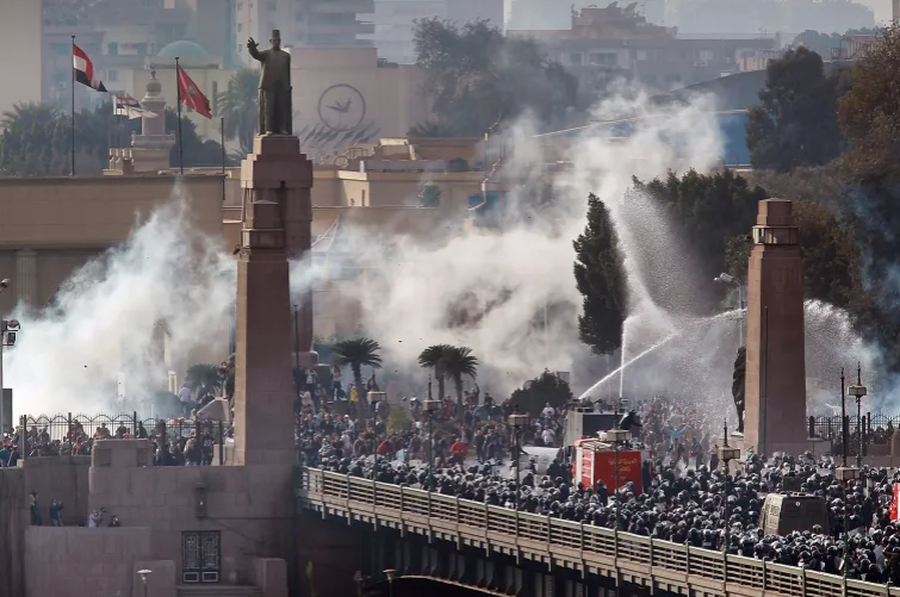
In a short period of time, four long-term dictators, in Tunisia, Egypt, Libya and Yemen, were ousted from power...
Fifteen years ago, the self-immolation of Mohammed Bouazizi in Tunisia sparked a wave of pan-Arab protests that shook the foundations of authoritarian regimes in the Middle East and North Africa. Millions of citizens took to the streets demanding dignity, social justice, and democratic governance, challenging systems built on corruption, repression, and political exclusion.
In a short period of time, four long-term dictators, in Tunisia, Egypt, Libya and Yemen, were overthrown. The Arab Spring was widely perceived as a historic moment, showing that authoritarianism was not an inevitable fate for the Arab world. However, the response of the regimes was harsh: mass violence, arrests and systematic suppression of protests.
In some countries, such as Bahrain and Algeria, the protests were quickly suppressed. In others, such as Syria, Libya and Yemen, they degenerated into violent conflicts and civil wars. In this dark landscape, Egypt and Tunisia initially stood out as rare examples of relatively successful democratic transitions.
Egypt and Tunisia: hope and disappointment
In both countries, important steps towards democracy were taken: new constitutions were drafted, pluralistic elections were held, and new political institutions were established. The high turnout of citizens in the elections clearly demonstrated the thirst for democratic change.
However, these processes proved more fragile than expected. In Egypt, although political forces emerging from the Muslim Brotherhood won elections and referendums, real power remained in the hands of the “deep state”: the army, security services, judiciary and media apparatus. In 2013, the army overthrew elected president Mohamed Morsi, ending the democratic process.
Abdel Fattah el-Sisi consolidated power through mass repression, a crackdown on the opposition, media control, and elections without real competition. Many analysts consider his system more repressive than that of Hosni Mubarak.
Tunisia, on the other hand, managed to maintain democracy for a longer period. However, the election of President Kais Saied in 2019 marked the beginning of the end of this experiment. In 2021, Saied concentrated power in his own hands, suspended parliament, and significantly weakened the separation of powers. Today, Tunisia is widely considered to have returned to levels of authoritarianism similar to the period before the Arab Spring.
Lessons learned from authoritarian regimes
One of the main lessons that Arab regimes learned from the 2010–2011 protests was that their control had not been strong enough. In both Egypt and Tunisia, the legal and political frameworks were redesigned to prevent any form of popular mobilization.
Anti-protest laws, criminalization of the opposition, rigged elections, and constitutional changes have become standard tools for maintaining power. Any form of dissent is treated as a threat to national security.
Structural problems remain
Despite the political repression, the underlying causes that led to the Arab Spring persist – and in many cases have worsened. Corruption remains widespread, social inequality has increased, and economic conditions have deteriorated across much of the region.
Most Arab countries rank poorly on corruption perceptions indexes and international assessments of the rule of law. Poverty, inflation, and a lack of economic prospects, especially for young people, have become a constant source of dissatisfaction.
Democracy remains a popular aspiration
One essential element that regimes have failed to extinguish is the citizens' desire for democracy. Polls show that the vast majority of Arab citizens continue to support democracy and associate it with freedom, justice, and equality. The Arab Spring, despite its failures, is still viewed positively by a large part of public opinion.
The Arab Spring is not over
The overthrow of Bashar al-Assad in late 2024, after more than a decade of conflict, showed that authoritarianism is not invincible and that change can come even after a long time. Recent protests, especially among young people in several Arab countries, suggest that a new wave of discontent is possible.
Arab regimes are aware of this danger and react with fear and repression. However, history shows that popular movements do not warn of their arrival. The Arab Spring may have been suppressed, but it is not extinguished. The people, sooner or later, tend to have the last word. / Adapted from "Pamphlet" by "Aljazeera"








Lini një Përgjigje