


 Shkruar nga Stephen Mihm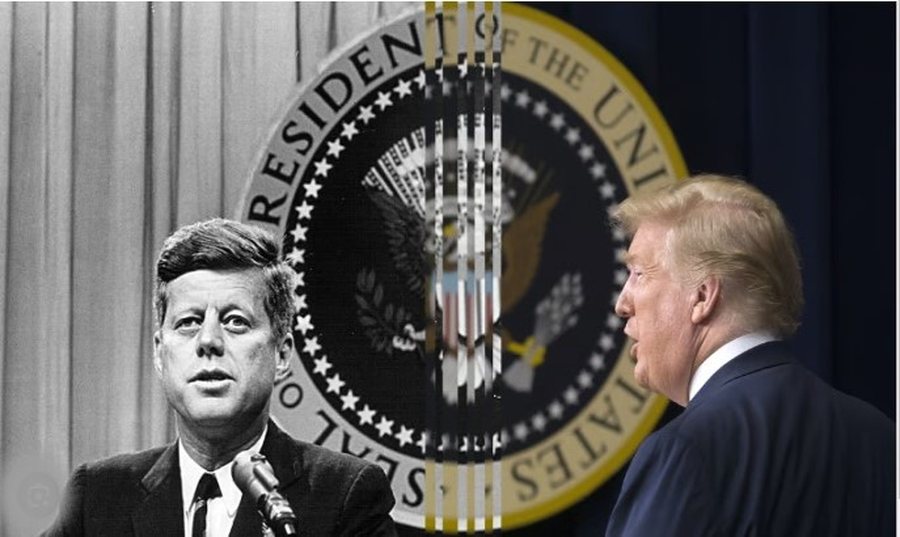
The US presidency remains an extremely dangerous job. Thomas Jefferson pioneered the idea that presidents should stand by the people they govern, regardless of the danger...
The assassination of Donald Trump a few days ago has placed the US Secret Service under the eye of criticism. The investigation is looking increasingly likely that lax security measures left Trump vulnerable to an assassin's bullet.
This may have been due to complacency, poor communication, incompetence or a combination of all three. However, not all blame can be placed on the Secret Service. Because the work to protect the president of the USA has long been an extraordinary challenge.
For more than 200 years, they have insisted on putting themselves at risk, mingling with ordinary citizens during public activities. And this has produced frightening statistics: almost a quarter of all presidents have been victims of serious assassination attempts, 4 of which ended in the death of the head of state.
They behaved carelessly because, like the rest of us, they believed that the president should not be a king in a castle, but a man (or woman) of the people, accessible to the voters. Over time, etiquette towards crowd interactions has become more formal and ritualistic, but no less dangerous.
As a result, the US presidency remains an extremely dangerous job. Thomas Jefferson pioneered the idea that presidents should stand by the people they govern, no matter the danger.
So unlike George Washington and John Adams, Jefferson consciously removed the aristocratic air around the president, cultivated by his predecessors. For example, instead of riding a safe carriage to Capitol Hill for his inauguration, he preferred to walk unprotected and through the crowd.
Given his trust in "the people", it is not surprising why he avoided official protection from bodyguards. His descendants followed this example. Andrew Jackson, elected president in 1828, was especially willing to mingle with the public, even inviting strangers to the White House.
Therefore, not by chance, he was also the first victim of an attempted murder. Author Richard Lawrence, a painter suffering from mental illness, was convinced that the government owed him some money, and that Jackson had blocked the funds. When the president went to a funeral at the Capitol, Lawrence happened to be there pointing two Derringer pistols at Jackson.
Për mrekulli, që të dyja nuk arritën të shtien, dhe në atë moment Jackson e goditi disa herë Laërence në kokë me bastunin e tij. Mbetet i vetmi president që ka goditur vetë një atentator. Dikush do të mendonte se pas kësaj ngjarje, presidentët e mëvonshëm do të mbanin rreth vetes një grup truprojash.
Në fakt nuk pati ndonjë ndryshim të madh. Edhe pasi Abraham Lincoln u bë president
në fillim të Luftës Civile, siguria ndaj tyre do të mbetej shumë e dobët. Dhe kjo ishte më pak çështje paaftësie sesa një zgjedhje e vetëdijshme. Lincoln e urrente ndërhyrjen e një falange rojesh mes tij dhe publikut.
Refuzimi i tij për të marrë masa sigurie paraprake, e bëri atë një udhëheqës shumë të dukshëm në sytë e publikut dhe frymëzues në një kohë krize. Por kjo e nxiti të shkonte në Teatrin Ford pak javë para fundit të Luftës Civile me vetëm një truproje, që ishte i paaftë për ta mbrojtur. Të gjithë e dimë se si shkuan ngjarjet atë natë.
Sërish, dikush mund të imagjinojë se pasardhësi i tij, Andrew Johnson, do të kishte nxjerrë mësim. Megjithatë, ai e habiti opinionin kur njoftoi se nuk do të pranonte asnjë mbrojtje, pasi nuk ishte “i gatshëm të shfaqte ndonjë mosbesim te njerëzit”, siç raportoi Neë York Times.
Edhe Kongresi ishte kryesisht dakord me Johnson.
Në fakt, Shërbimi Sekret, i cili u krijua gjatë Luftës Civile për të mbrojtur monedhën e re kombëtare nga falsifikuesit, nuk do të merrte rolin e mbrojtësit të presidentit deri në vitin 1894. Madje edhe atëherë, vetëm me kohë të pjesshme, dhe jo zyrtare.
Dhe kjo gjë ndodhi pasi presidenti James Garfield u vra nga një tjetër i sëmurë mendor, një predikues i çmendur i quajtur Charles Guiteau, i cili besonte se Garfield i detyrohej atij postin e ambasadorit. Guiteau vizitoi Shtëpinë e Bardhë, duke arritur deri në zyrën e Garfield. Kur presidenti e kundërshtoi, Guiteau vendosi ta vriste.
Garfield, që dilte zakonisht në publik mes turmave të qytetit, ishte një objektiv i lehtë. Ndaj Guiteau e plagosi për vdekje Garfield në stacionin hekurudhor të qytetit më 2 korrik 1881. Kur Ëilliam McKinley u bë president, ai ndoqi shembullin e Garfield, madje duke hequr vend-rojat që mbronin Shtëpinë e Bardhë.
Ai hoqi dorë edhe nga ato pak mbrojtje që i ofronte Shërbimi Sekret. Ndaj nuk është çudi që anarkisti Leon Czolgosz arriti t’i afrohej mjaftueshëm për të qëlluar McKinley kur ai vizitoi Buffalon në Nju Jork në vitin 1901.
Vrasja e tretë në më pak se 50 vjet, e nxiti përfundimisht Kongresin të zyrtarizonte detyrimin e Shërbimit Sekret për të mbrojtur presidentin. Megjithatë, as ky ndryshim nuk i dha fund dhunës, por jo për shkak të dështimit të sigurisë.
Deri në fillim të shekullit XX-të, kandidatët presidencialë nuk bënin fushatë si sot. Sozi të tyre mbajtën fjalime në podiume të improvizuara para votuesve. Por duke filluar me McKinley, kandidatët morën një rol më aktiv në fushatë, duke mbajtur vetë fjalime para turmave.
McKinley's successor, Teddy Roosevelt, understood what we seem to have forgotten: that a president who attends countless rallies and other public events is difficult to defend. In fact, when Roosevelt ran for a third term under the 'Bull Moose' party, a man shot him on his way to a rally.
He was wounded in the chest but insisted on giving a long speech before going to get help at the hospital. His courage was a harbinger of things to come. Although the Secret Service gradually tightened security measures, presidents and presidential candidates became increasingly present at public events organized on and off the campaign trail.
This inevitably led to more assassination attempts. One gunman came very close to assassinating President-elect Franklin Delano Roosevelt in 1933. Another succeeded with candidate Huey Long two years later. FDR's successor survived two more assassination attempts in 1953.
John F. Kennedy was not so lucky. A charismatic figure, Kennedy appealed to crowds, and the winding route his motorcade followed on November 22, 1963, was designed to maximize his visibility to well-wishers who lined up to greet him along the way.
Unfortunately, this gave the assassin Lee Harvey Oswald the space he needed. Each of these incidents prompted increasingly heightened levels of security for presidents and candidates. However, despite the precautions the Secret Service is now taking—stopping movement for entire city blocks, and placing snipers on rooftops and nearby buildings—agents face a very difficult task, as long as current presidents and candidates, insist on participating in all kinds of public events. /Adapted "Pamphlet" from "Bloomberg"
Note: Stephen Mihm, professor of history at the University of Georgia, and co-author of Crisis Economics: A Lecture on the Future of Finance.


Lini një Përgjigje