


 Shkruar nga Pamfleti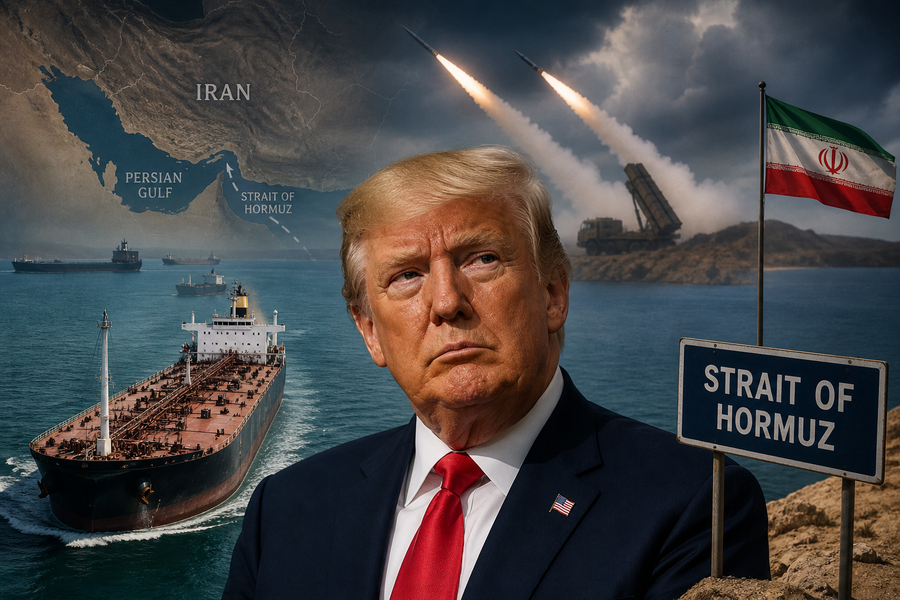
From threats of war to turns toward peace, Trump's strategy increases uncertainty in Hormuz...
Operation "Project Freedom" is emerging as another episode of what analysts describe as the "Trump Show," a mix of strong rhetoric, unexpected twists and decisions that directly impact the global crisis in the Persian Gulf.
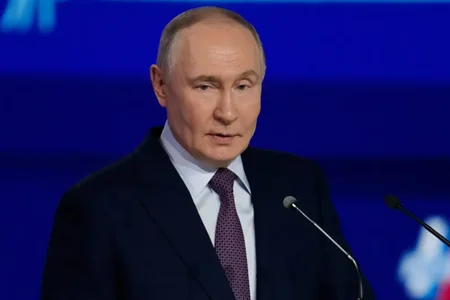
Over the weekend, Donald Trump shifted from a harsh war tone to a more conciliatory message in the space of a few hours. He initially declared that Iran had not “paid a sufficient price” for its actions, fueling a climate of escalation. But then, in a new tweet, he promised a move he presented as humanitarian: opening the way for ships blocked in the Strait of Hormuz through Operation Project Freedom.
In this new version of the situation, Trump claimed that "very positive talks" were taking place between the US and Iran, an immediate change compared to Tehran's earlier rejection of any proposal.
These fluctuations were immediately reflected in global markets. Oil prices temporarily fell after his statements, showing the direct impact that presidential communication has on the international economy. Analysts note that this volatility has created significant profit opportunities for investors who anticipate market reactions.
Essentially, Project Freedom is not a new military operation, but an expansion and rebranding of an existing initiative to coordinate ship movement in the Strait of Hormuz. Unlike a direct military escort, the operation provides guidance for safer passage, avoiding direct confrontation.
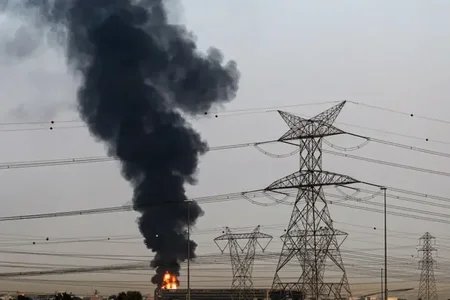
However, by elevating the initiative to the presidential level, Trump has significantly raised expectations and risks. Iran sees this as a challenge to its control of the strait, a key strategic point. Within hours of the announcement, incidents against commercial shipping were reported, including an explosion on a South Korean-operated vessel. Iran also attacked the United Arab Emirates.
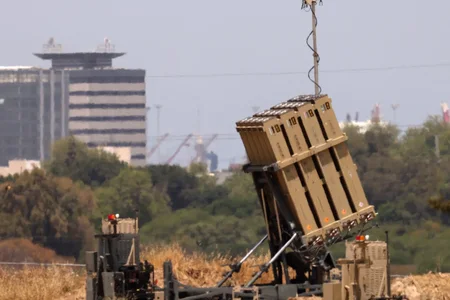
In the background, the US has significantly strengthened its military presence in the region, with several aircraft carriers and support assets, keeping open both the option of direct intervention to open the strait and that of returning to negotiations.
The other alternative remains a return to the negotiating table on the Iranian nuclear program, but the main obstacle is mutual distrust. Both sides seem to be waiting for the other to make the first concession.
Iran faces severe economic pressure, with rising inflation and job losses, but appears determined to resist. On the other hand, Trump faces political and economic pressure at home, being sensitive to the impact of the crisis on markets and in the upcoming elections.
For now, the American strategy remains ambiguous between war and peace. "Project Freedom" may serve as a step towards stabilizing the situation, but at the same time it risks becoming a cause for the resumption of clashes.
In such a climate, every statement and every incident in Hormuz has the potential to change the course of the crisis, keeping the region in a fragile and unpredictable balance. /Adapted from “The Guardian”


Ky qeka tip katunari matrapaz qe do me e shit qingjin sa me shtrenjt, ose ka rrjedh nga trute.