


 Shkruar nga Pamfleti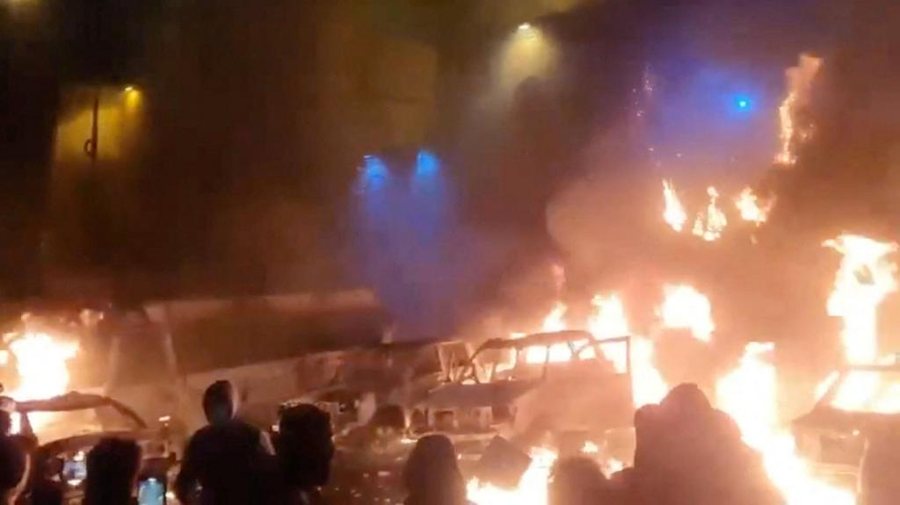
Anti-government protests in Iran have entered their 13th day, as the country's supreme leader attacks people demonstrating in the streets.
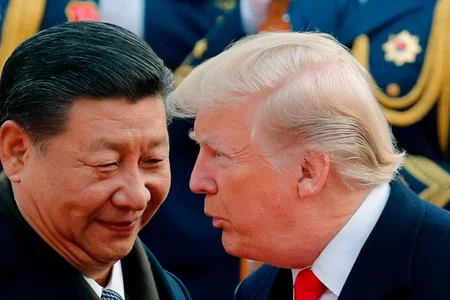
Ayatollah Ali Khamenei, who holds absolute power in Iran, calls the protesters "a bunch of vandals" trying to "please" US President Donald Trump, who threatened to "hit" Iran "very hard" if government forces kill protesters.
The protests, which began in Tehran on December 28, were sparked by the collapse of the Iranian currency.
Large crowds of Iranians have taken to the streets of the capital Tehran and several other cities to demand the end of the Islamic Republic.
Young and old, rich and poor, Iranians across the country and from all walks of life are now demonstrating their fury against the clerical establishment that has ruled them for nearly half a century.
A young woman in Tehran told the BBC she was protesting because her dreams had been "stolen" and she wanted the regime to know that "we still have a voice to shout, a fist to punch them in the face".
Another spoke of the despair and hopelessness that is fueling the protests.
"We are living in oblivion," she said.
Day after day since late December, protests in Iran have spread and gained momentum, fueled by deep economic and political frustration.
It is difficult to get the full picture of what is happening because independent media is not allowed to operate freely in Iran, many people are afraid to speak out publicly and the internet is now severely restricted. The BBC spoke to people before the near-total shutdown.
"People are getting bolder now," a 29-year-old tells the BBC, adding, "I went to buy some food and people were speaking loudly against the regime in broad daylight!"
These are the longest protests in Iran since the Islamic Republic took power in the country. The last wave of protests on this scale was after the death of Mahsa Amini in 2022. At the time, Iran increased surveillance following nationwide anti-establishment protests led by women, reportedly using digital tactics such as wiretapping to spy on civilians, as well as shutting down the internet.
The Halvash news website, which focuses on human rights issues in Sistan-Baluchestan, said security forces fired tear gas and so-called "bullet rounds" during the action.
On September 30, 2022, a day that later became known as “Bloody Friday,” at least 60 people were killed and dozens more injured during widespread protests following the death of Mahsa Amini, according to human rights groups. They said security forces opened fire on demonstrators from inside a police station in the city.
The government cuts off the internet
Meanwhile, a nationwide internet blackout appears to still be in effect, with some Iranians abroad saying they have been unable to contact their families.
The Iranian government has cut off the ability of millions of Iranians to communicate with their families, both inside and outside the country, and to organize on the ground.
Internet outages are not uncommon in Iran.
Amir Rashidi, director of internet security and digital rights at the NGO Miaan Group, who has been tracking internet outages and cybersecurity problems in Iran for more than 20 years, tells the BBC he has never seen such conditions.
“No means of communication are working and the Islamic Republic is even disrupting Starlink using electronic warfare tools,” Rashidi tells me, adding, “phones are not working, domestic services have been severely disrupted and payment systems have been severely affected.”
Some protesters see Pahlavi as 'the only way out of this situation'
New to these latest protests is the chant: "Pahlavi will return," a reference to Reza Pahlavi, the son of the late Shah of Iran, who was overthrown from power in 1979. It was he who called for people to take to the streets on Thursday evening.
Protests in recent days have seen increasing calls for the return of the monarchy.
"Personally I think he is the only way out of this situation," Sara, 26, from Tehran, told the BBC.
Other Iranians say they see expressions of support for the monarchy as a sign of desperation to break free from the current regime and a lack of alternatives.
"I'm not the biggest fan of Reza Pahlavi. But, to be honest, my personal opinion is not important right now," 27-year-old Maryam from Tehran told the BBC.


Lini një Përgjigje