


 Shkruar nga Pamfleti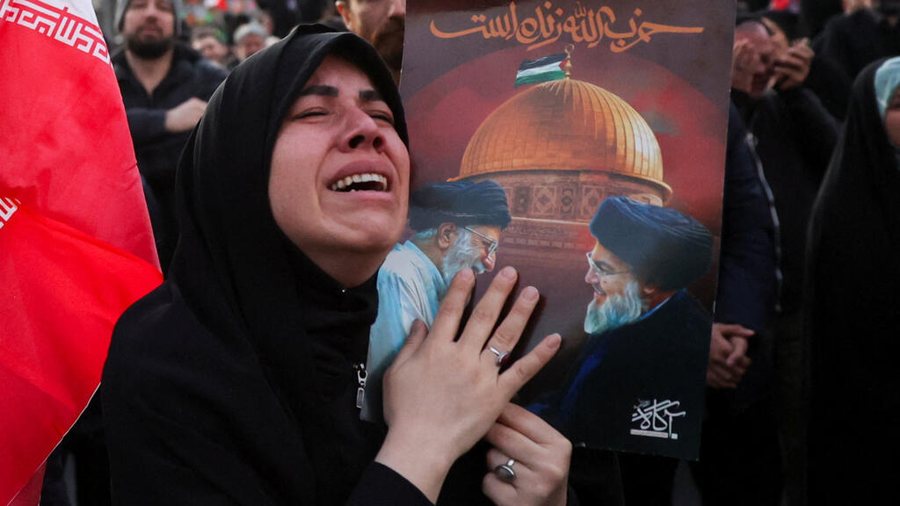
“The Islamic Republic has turned Iran into a prison where the executioner and the prisoner are both victims of the same ideology.” - Mehdi Bazargan (former Prime Minister of Iran)
In any Middle East debate, there is a point where the conversation stalls: someone mentions “US and Israeli policies” and immediately any criticism of Iran is labeled as biased. But being balanced does not mean equating the sides when one of them has built decades of destabilization, oppression, and existential threats.
Let’s be clear: neither the US nor Israel are perfect actors. There is much to criticize about American policy in Iraq, about the Israeli occupation of the West Bank, about Western support for authoritarian regimes when it suits their interests. But mentioning these truths does not automatically make Iran a victim. And when we talk about the “evils” of the Iranian state, we are not making war propaganda; we are making a cold assessment of the realities that pose the most serious threat to regional peace.
Iran has a right to feel threatened by the US military encirclement and by Israel’s open hostility. But its response; enriching uranium to near-weapons levels, obstructing IAEA inspections, and rhetoric about “extinguishing” a UN member state; is not defense, but calculated provocation. If a regime that funds Hezbollah and Hamas obtains a nuclear bomb, it would not be simply a regional “balancer,” but a state that would have the capacity to hold the entire Persian Gulf and beyond hostage. This is not a conspiracy theory; it is a strategy proclaimed by the Revolutionary Guard itself.
What makes Iran special on the international stage is not its conventional military power, but its ability to spread conflict through proxies. From Baghdad to Damascus, from Beirut to Sanaa, Tehran has built a chain of militias that take orders, money, and missiles. This policy is not aimed at “protecting” Iran; it has made Iran more insecure, drawing it into conflicts it should not have; but it is aimed at creating a reality where no one in the region can breathe without Tehran’s approval. The US and Israel are reacting to this, not in a vacuum.
No one who speaks of “Iran’s right to self-defense” can ignore the way this country treats its own people. The ayatollah regime has suppressed every movement for reform, from 2009 to the “Women, Life, Freedom” protests. Hunger strikers, human rights lawyers, and relatives of those executed in mass executions continue to be imprisoned without trial. A country that uses terror at home cannot claim to be unjustly attacked abroad.
If anyone thinks the Iranian threat is distant or limited to the Middle East, let them remember what happened in Albania.
Since 2022, hacker groups linked to Iran's Ministry of Intelligence, known as "Homeland Justice", have carried out repeated cyberattacks on Albanian institutions. They have penetrated the systems of the Parliament, the Albanian Post Office and the government portal e-Albania, stealing and deleting sensitive data.
But what's worse is that these hackers didn't just steal the data, they sold it. US authorities have purchased a data set believed to contain personal information of Albanian citizens, extracted from these attacks.
In response to these actions, the US seized the domains used by this Iranian cyber militia and offered a $10 million reward for information leading to their identification.
This is not just a distant conflict. It is a regime that uses every means, including cybercrime, to target opponents and spread fear, no matter who the victim is.
Often, when someone criticizes Iran, the expected response is: “What about the US? What about Israel?” This is a form of evasion. Questioning Iran’s behavior does not mean justifying every action by Washington or Jerusalem. But in public debate, this false equivalence has made it difficult to speak openly about the fact that Iran is the actor that has launched the most proxy wars, that has most openly threatened to destroy a UN member state, and that has most frequently ignored the international community’s demands for nuclear transparency.
Talking about Iran’s “evils” is not a call for war. It is a call to stop treating Tehran as a rational actor simply “responding” to Western aggression. Of course, Iran has reason to feel besieged; the history of Western interventions in the region is not glorious. But the answer to these historical injustices cannot be the creation of an unstable, nuclear-armed, conflict-hungry empire. If we truly want a more stable Middle East, we must have the courage to tell Iran the truth without covering it up with excuses. Because peace is not built by turning a blind eye to the region’s greatest danger. /Pamphlet




Pse ne Shqiptaret historikisht e kemi kruajtur prapanicen me gozhde e jo me gisht duke e ditur shume mire qe gozhda te cjerr. Pse ne do zgjidhim hallet e botes e hapim kampe afganesh, iranianesh e tyrli lloj plehre kur vete kemi dy pellembe vend me shkrepa e gerxhe? Pse nuk ka nje cope toke gjitha ajo Itali por na hap kamp izolimi ne Shqiperi, Amerikanet kane nje kontinent toke e te ne varfanjaket pa busull e gjeten te na rrasin pisllek? Apo qeveritaret e burokratet tane bejne allishverishe me ta e mbushin xhepat, pa ne te s'emes te veje populli.
Po izraleshi a ka TRANSPARENCE BERTHAMORE,eahh..!!?? Ulu ne toke or taj ,qe e ke qendi-dhjesur kete shkrim.Irani ben zgjedhje,dhe cfare ndodhe brenda kufijve te tij nuk ka cka i duhet as SHBA-se dhe as Izraleshit.AI,IRANI,e njeh ne MOLEKUL ideollogjine izraelite dhe SYNIMET E SAJ. Ai,Irani pra,ka shume vite qe ndjek nga afer aktivitetin PERQARES ne Lindjen e Mesme nga CIFUTET.Ai,Irani,asht deshmitar i zgjerimit pa kufij i shtetit hebre per shume DEKADA.Ai,Irani, asht deshmitar i GENOCIDIT te cifuteve ndaj PALESTINEZEVE,Ai etj..... Pra GJARPERI Izrael asht ndezesi i ZJARRIT NE Li.Me.