


 Shkruar nga Pamfleti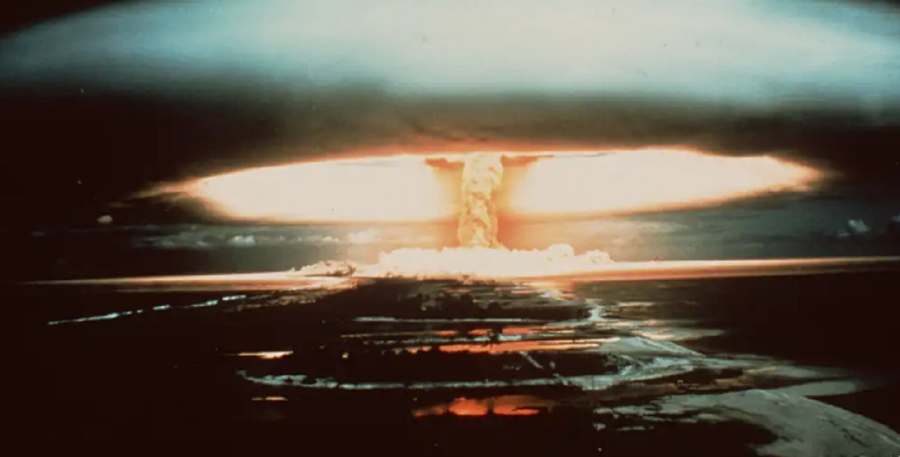
Fear of a competing Nazi project spurred the American government. Thanks to massive financial support, it took just three years for Oppenheimer and his team to successfully complete the first nuclear weapon test.
Harness this force, the physicists said, and you could develop a powerful bomb capable of leveling entire cities.
German scientists immediately began working on the atomic bomb project. Backed by powerful industry and military interests, the purpose-built uranium club secured contracts with some of the world's top nuclear researchers.
Although the project was kept secret, scientists who fled Nazi Germany leaked information. Among them was Albert Einstein, who in 1939 warned the then US president, Franklin D. Roosevelt. Around the world, concern was growing that the Nazis were developing a secret weapon.
The US response was the Manhattan Project. Right in the middle of World War II, this program, led by J. Robert Oppenheimer, began to examine in the summer of 1942 how to build an atomic bomb using the elements uranium and plutonium.
Fear of a competing Nazi project spurred the American government. Thanks to massive financial support, it took just three years for Oppenheimer and his team to successfully complete the first nuclear weapon test. The first atomic bomb actually used hit the Japanese city of Hiroshima three weeks later.
Farm Hall tape recordings
"I don't believe a word of this whole story," said Werner Heisenberg, director of the German uranium project, when he heard the news from Hiroshima.
At the time, Heisenberg and nine other leading nuclear physicists who had conducted research in Germany were being held prisoner at the English mansion of Farm Hall. The British secretly recorded their conversations to learn more about the Nazis' nuclear plans.
Other physicists supported Heisenberg's disbelief. Most of them suspected a bluff intended to get Japan to capitulate. Otto Hahn had stated that he did not think the construction of such a bomb would be possible in the next 20 years. The reaction of Heisenberg and Hahn shows that the German program was in fact a long way from developing a nuclear weapon.
The United States had greatly overestimated the state of progress of the German uranium project, and it was only thanks to the Farm Hall records that they realized this, German-Japanese historian Takuma Melber from the University of Heidelberg explains to DW.
When the Manhattan Project was in full swing, Germany's nuclear weapons program was already dead. German researchers knew they wouldn't be able to separate the isotopes to make an atomic bomb for several years. They had failed to initiate a nuclear fission chain reaction and knew of no method of enriching uranium. The nuclear weapons program was canceled in July 1942 and its research was divided into nine different institutes in Germany.
Deri në vitin 1942, programi ishte një projekt ushtarak, shpjegon historiani Melber, por më pas u kthye në një projekt civil. Qëllimi i ri ishte të ndërtohej një reaktor bërthamor i aftë për të trajtuar ndarjen bërthamore në një shkallë më të vogël. Heisenbergu dhe ekipi i tij eksperimentuan me një reaktor kërkimor në një bodrum të gdhendur në shkëmb poshtë kishës së kështjellës në Haigerloch, Baden-Württemberg. Kubat e uraniumit u ngjitën në tela dhe u ulën në një rezervuar me ujë të rëndë, përbërjen kimike oksid deuterium.
Programi bërthamor gjerman nuk shkoi më tej – reaktori nuk funksionoi kurrë. Nuk kishte uranium të mjaftueshëm në bërthamën e reaktorit për të shkaktuar një reaksion zinxhir.
Por studiuesit nuk ishin larg. Shkencëtarët tani besojnë se po të kishte pasur 50 për qind më shumë uranium në reaktor, Heisenbergu mund të kishte zhvilluar reaktorin e parë bërthamor.
Rrëmuja gjermane dhe studiuesit e arratisur
Pse dështoi programi bërthamor gjerman, pavarësisht përparimeve të tij dhe shkencëtarëve të tij të shkëlqyer?
Nga njëra anë, sepse Gjermanisë i mbaruan shkencëtarët. Shumë shkencëtarë hebrenj dhe polakë u larguan nga persekutimi, si fizikania hebreje Lise Meitner, e cila ishte e rëndësishme në zbulimin e ndarjes bërthamore nga Hahn dhe Strassmann. Disa nga këta refugjatë shkuan në Britaninë e Madhe ose Shtetet e Bashkuara, ku ata bashkëpunuan në projektin Manhattan. Shkencëtarë të tjerë u rekrutuan si ushtarë.
Lufta gjithashtu bëri që disa nga lëndët e para të nevojshme për kërkime të pakësohen, thotë Takuma Melber. Këto përfshinin uraniumin e pasuruar dhe ujë për të ftohur reaktorët. Uji i rëndë prodhohej në Norvegjinë e pushtuar, por trupat aleate dhe norvegjeze sulmuan vendet e prodhimit.
Por në fund, ishte mungesa e mbështetjes politike ajo që ndaloi përparimin. Adolf Hitleri nuk e kuptoi të gjithën dhe e ndaloi mbështetjen në vitin 1942, raporton historiani Melber. Atëherë praktikisht nuk kishte asnjë mbështetje financiare, veçanërisht në krahasim me Projektin Manhattan. Në të u punësuan 500.000 vetë, rreth një për qind të fuqisë punëtore të SHBA, dhe i kushtoi qeverisë rreth dy miliardë dollarë amerikanë. Sot, kjo do të korrespondonte me 24 miliardë dollarë amerikanë. Në të kundërt, Shoqata Gjermane e Uraniumit dhe projektet pasardhëse të saj kishin më pak se një mijë shkencëtarë që punonin për një buxhet prej tetë milionë Reichsmarks, që sot do të arrinte në rreth 24 milionë dollarë amerikanë.
Ndërtoni reaktorë në vend të bombave!
The Farm Hall records provide another reason for the German failure: the scientists themselves opposed the atomic bomb on moral grounds and secretly sabotaged its development. Physicist and future peace researcher Carl Friedrich von Weizsäcker said: “I think we didn't succeed because not all physicists really wanted it to succeed. If we all wanted Germany to win the war, we could have done it." /DW








Lini një Përgjigje