


 Shkruar nga Paolo Rossetti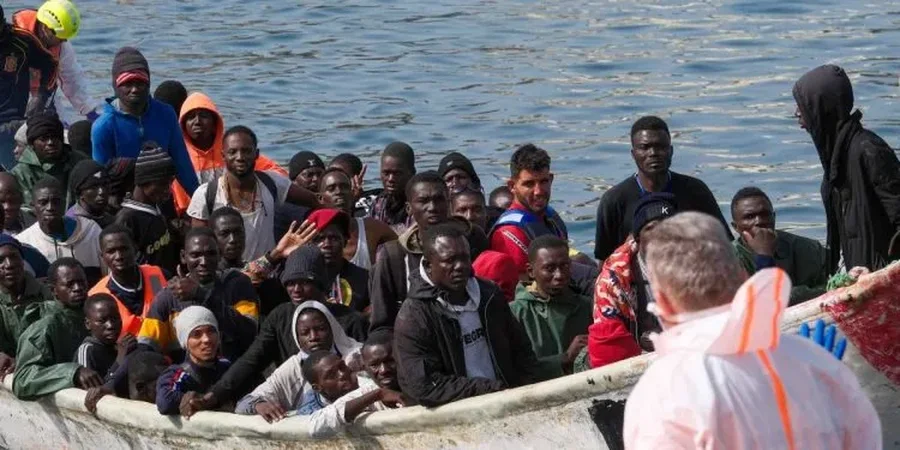
So how will the detention of immigrants in these centers be legislated by the judges, which must happen within 48 hours. And it is expected that in the following days the first legal complaints will come.
The centers are preparing to receive the first migrants. In Gjadër and Shengjin, the structures for the implementation of the memorandum of understanding between Italy and Albania are already ready. So the plan is starting to be tested to send the asylum seekers outside the Italian territory, and to evaluate from there whether or not they meet the criteria to build a future in Europe.
This initiative has faced a lot of criticism, but it has been welcomed by the EU's top management levels. While now it will be possible to verify concretely whether it is a working model or not. But Alessia Di Pascale, professor of European Union law at the University of Milan and an expert on migration issues, has many questions about the issue.
One of them was recently raised by the European Court of Justice, which, during a decision on a lawsuit against the Czech Republic, also gave the definition of what is
a safe place. This decision may put the Italian-Albanian project in quite a bit of difficulty.
Let's start with Italian law. What does he say about the use of new centers in Albania?
The new law accompanying the Italy-Albania agreement does not specify how the selection of persons who are discovered traveling by sea to our country is made. It is said in the media that they should only be men over 18 years old. But this category of persons is not defined in the law.
So what do the new rules specifically say?
The law dated February 21, refers to Article 1 of the agreement, which defines the sending to Albania of "citizens of third countries and stateless persons, for whom the existence or 'absence of criteria' for entering or staying in the territory of Italy".
There is no specific indication of how the assessment will be made for the transfer of migrants found at sea to Albania or Italy. But the filter can be based on the rules that define who are the persons subject to accelerated procedures.
They will be implemented in Albania and require taking into account the specific situation of the most needy cases, a concept that includes, among others, the elderly, minors, persons with disabilities, victims of trafficking, violence or torture, persons affected by serious illness or mental disorders.
What problems can the creation of this filter cause, when it is decided which immigrants will be sent to the centers set up in Albania?
Identification of minors, when they are 16-17 years old, involves a very complex procedure. How will it be realized? In doubtful cases will they be sent to Italy or Albania, and will the evaluations be carried out there? The same problem also applies to the most vulnerable categories, such as victims of torture, violence or trafficking, or people who have hidden physical and mental health problems. The first important element is how this filter will be created. In theory, the selection should happen on the ship.
So for teenagers it is difficult to determine whether a person is a minor or not?
Yes. And the same can be said for other situations that require a more detailed assessment. It remains to be seen what will happen in practice. Even if only men from safe countries will be sent to Albania, it must be understood how their origin will be ascertained from the ship. I think that almost all adult males who do not present any obvious critical problem will be sent to Albania and the screening will be done there.
Assuming that the filter works, and that only adult men from safe countries arrive in Albania, what else can be questioned?
On October 4, the Court of Justice interpreted a regulation, which was part of a 2013 directive. It allows member states to identify safe countries of origin. On this basis, Italy adopts decrees identifying safe third countries. The court clarified that a country that is not completely safe cannot be considered safe.
The condition of insecurity, even if it refers to only a part of the country, ie a region, can mean that that country cannot be classified as safe. The concept is based on criteria that include respect for rights, avoidance of torture or other forms of punishment or inhuman and degrading treatment, respect for the principle of non-refoulement, etc.
Does Italy determine which countries are safe, even if this can then be challenged in court?
The court says that the judge must take into account the general situation of the country in question. The specific case concerns a Moldovan citizen. The Czech Republic had refused him asylum, identifying Moldova as a safe third country. In fact, this country is not completely safe, since one of its regions, Transnistria, is not considered as such.
Only men from safe countries should arrive in Albania. What about others who come from unsafe places?
The others after a complete procedure will come here to Italy. The protocol has many problems with the filter: if you ask a person where they are from while they are still on the ship, it is not guaranteed that they will answer correctly. So we have to see how the selection of asylum seekers will be done. But even if this is implemented quickly, the decision of the Court of Justice risks having a major impact.
In what way?
In this year's Italian decree, 22 safe countries are mentioned: Albania, Algeria, Bangladesh, Bosnia-Herzegovina, Cameroon, Cape Verde, Colombia, Ivory Coast, Egypt, Gambia, Georgia, Ghana, Kosovo, North Macedonia, Morocco, Montenegro, Nigeria, Peru, Senegal, Serbia, Sri Lanka and Tunisia. The decision of the European Court of Justice also questions these 22 countries. They may not be considered safe.
If immigrants come from safe countries, does this mean that they do not have the right to apply for asylum?
Circumstances when a person comes from a safe place, presents first a guarantee of safety in relation to that place, which is nevertheless insurmountable. Therefore, to win the protection of a state, serious individual reasons must be presented.
The model of the Italy-Albania agreement is evaluated in Brussels. Could he be a landmark?
This model has really sparked interest at the European level. In a letter addressed to heads of state before her reconfirmation in office, EC President Ursula von der Leyen underlined the importance of the EU Pact on Migration and Asylum. She emphasized that it does not exclude reflection on other strategies to prevent irregular migration, without openly mentioning the Italian case.
So it will be expected to see how the Italian plan will be implemented?
Beyond its effectiveness, which remains to be verified, the model is likely to influence European policies. Many member states are interested, and the president of the European Commission has mentioned it. So it can become a reference model.
Can there be too many complaints about this arrangement?
I think so. Because there are many aspects that need to be clarified. The leaked text of the agreement still has many aspects of this operation undefined. Its practical implementation is not defined in detail. So we have to wait and see what will happen in the coming weeks and months. So how will the detention of immigrants in these centers be legislated by the judges, which must happen within 48 hours. And it is expected that in the coming days the first legal complaints will come./ Adapted "Pamphlet" from " Il Sussidiario "




Lini një Përgjigje