


 Shkruar nga Pamfleti
Developments in the Persian Gulf and Iran's resistance indicate that the crisis could turn into a protracted conflict.
When the US administration launched its first military operations against Iranian targets and networks linked to Tehran in the region, President Donald Trump declared that the mission would be limited and that the situation could stabilize within 2 weeks.
Initially, official rhetoric suggested a quick and controlled operation, aimed at curbing Iranian activities in the region and ensuring the security of energy corridors in the Persian Gulf.
However, developments in recent days show a more complex reality. Naval clashes in the Strait of Hormuz area, reports of mine laying, and incidents with merchant ships show that the tension has not only not decreased, but is entering a more dangerous phase.
One of the main factors making the situation difficult for Washington is the fact that Iran, despite military pressure, is not backing down. On the contrary, Tehran appears to be pursuing a strategy of prolonged resistance. Through asymmetric means, from naval operations in the Persian Gulf to the activities of allied groups in the region, Iran continues to create constant pressure on American interests and their allies.
In Israel, tensions have risen sharply due to attacks linked to Iranian-backed networks. At the same time, actors linked to Tehran in various Middle Eastern countries continue to keep several fronts of tension open. This strategy of spreading pressure in several directions makes the conflict more difficult to manage.
For the US, this creates a strategic dilemma. A rapid withdrawal could be interpreted as weakness and increase Iran's influence in the region. But further escalation risks widening the conflict and involving more regional actors.
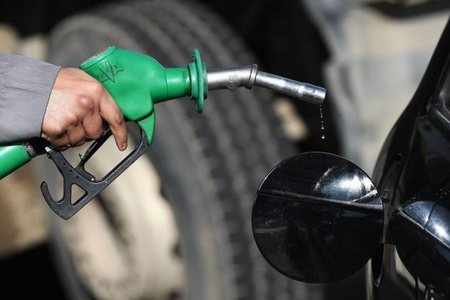
Meanwhile, the energy dimension of the crisis is becoming increasingly apparent. The Strait of Hormuz remains one of the most important arteries of global oil trade. Any increase in tension in this corridor has a direct impact on international energy markets. The fluctuations in oil prices that are being seen in global markets reflect precisely this uncertainty.
This means that the clash between the US and Iran is not just a military issue. It has direct implications for the global economy and the stability of energy markets.
In this context, the initial statements about a short operation are looking increasingly optimistic. The history of the Middle East shows that conflicts in this region rarely develop according to initial plans. They often turn into long confrontations, characterized by constant tension and repeated incidents.
Current developments suggest that the US may be entering a much more complicated confrontation than initially anticipated. With Iran continuing to resist and tensions escalating on several fronts in the region, the prospect of a quick resolution seems increasingly remote.
In this sense, the crisis in the Persian Gulf may be just the first stage of a longer strategic clash. And for Washington, the main challenge now is not just how to respond to Iran's actions, but how to manage a conflict that is showing signs that it could last longer than initially anticipated. / Pamphlet



Lini një Përgjigje