


 Shkruar nga Samuel Charap & Sergey Radchenko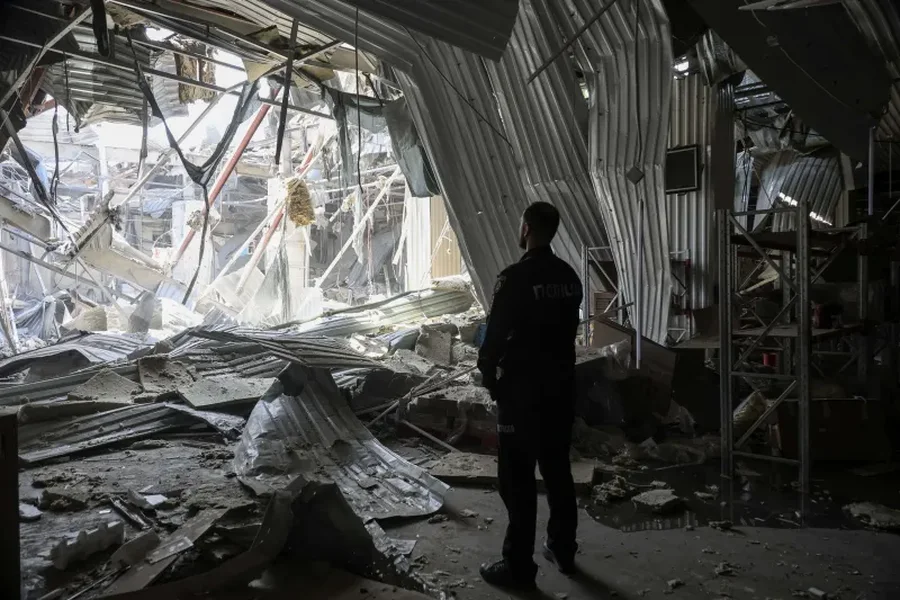
The 2022 negotiations remind us that Putin and Zelensky are capable of making significant concessions. But a peace agreement may be very difficult to achieve.
It's been nearly three months since US President Donald Trump launched a major push to end the war in Ukraine. The diplomatic contacts that followed have yet to produce any meaningful results.
This is because Trump faces a cunning and experienced opponent in Russian President Putin, who hopes to take advantage of the American president's impatience with war to force Ukraine to sign what the Russians have failed to win by force on the battlefield.
There is no reason to think that Trump will accept Putin's list of demands. In fact, he has repeatedly expressed his frustration at the lack of progress in the talks, and has threatened to abandon them, while Russia continues to advance, albeit very slowly, on the battlefield, at great cost in a long war with no end in sight.
The main agreement discussed in the 2022 talks envisaged Ukraine's permanent neutrality, excluding NATO membership, in exchange for strong security guarantees. The sides failed to finalize it in the following months, and the conflict has now entered its fourth year.
In fact, no lasting peace agreement will be possible unless it addresses Ukraine and Russia’s long-term fears of each other. As they did in Istanbul in 2022, both sides still prioritize these national security concerns.
Other issues — such as the status of disputed territory, easing sanctions on Russia, and financing Ukraine's post-war economic reconstruction — are important but essentially secondary. In Istanbul, both countries prioritized addressing post-war security.
The Kremlin insisted that Ukraine give up NATO membership, never host foreign forces or exercises involving foreign forces on its territory, and accept some limitations on the size and structure of its military.
Kiev, meanwhile, wanted no limits on its forces, and was focused on obtaining security guarantees from its Western partners, as well as an implicit acknowledgement from the Kremlin that these powers would come to Ukraine's defense if Moscow launched another attack.
Concerns about future security remain a major issue for Kiev today. Ukrainians fear that without the ability to defend themselves or guarantees from Western powers, any peace agreement will inevitably lead to another Russian invasion.
Meanwhile, the Russians fear that a well-armed Ukraine might try to retake any Ukrainian territory Moscow still holds. The Kremlin also worries about the prospect - however unlikely it may now seem - of Ukraine joining NATO and the long-term security consequences of such a development.
Although the Trump administration is ruling out Ukraine joining NATO, that offers little comfort to Moscow. Because a future administration could change course. The main goal for Russia and Ukraine is to secure long-term guarantees.
This focus dictates both the military behavior on the front and the negotiating positions of both sides. The current talks must address these perceptions to maximize the chances of success. For now, other issues have come to the fore, notably the question of territorial control and the recognition of Russia's illegal annexations.
For example, some versions of the US peace proposals show Washington offering “de jure recognition” of Crimea as part of Russia, and “de facto recognition” of other territories occupied by Russia. But the focus on territories distracts from the main security agenda.
Because neither Russia nor Ukraine is likely to surrender the territory they currently hold. And it is the realities of war, not the negotiating table, that will determine territorial control. The Istanbul negotiations three years ago showed that the status of Russian-occupied territories in Ukraine will not be as important an element as it is made out to be.
In fact, the talks deliberately sidestepped the issue of borders and territory. While important, the issue was and remains secondary to core security concerns. Moreover, successful negotiations must involve all relevant parties.
If a country's fate is at stake in a given negotiation, that country should be at the table from the very beginning of the process. Kiev's supporters insist that it cannot be left out of any diplomatic solution to the conflict. They repeat the slogan "Nothing for Ukraine without Ukraine."
But Istanbul showed that this slogan is not exclusive to Ukraine. In fact, the discussions in Istanbul excluded the major Western powers - the United States, Britain, Germany and others - even though Russia and Ukraine negotiated issues related to these countries and their obligations.
Western officials told us that Ukraine did not consult with the United States and other Western countries until after the Istanbul Communiqué was published. That exception was largely due to the state of emergency: Russian forces were on the outskirts of Kiev, so negotiators had no time for multilateral diplomacy.
However, the lack of Western involvement in the talks led Western officials to reject the communiqué, despite its merits. They might have said: “Nothing for the West without the West.” In short: written agreements, without the presence of all those affected in their creation, are unlikely to succeed.
Today, mediators will find it much easier to steer the war toward negotiations if all parties—including Ukrainians and Europeans—are involved from day one. There are several practical reasons for pursuing an inclusive approach.
If the US and Europe had worked together, rather than engaging in opposing goals as they appear to be doing today, to achieve a lasting peace, Putin would have had less room to force Trump to accept the drag on the talks.
Likewise, the Europeans would be less inclined to obstruct the peace process, as they have done, for example by refusing to discuss easing sanctions, or by pushing ahead with their plans to send ground troops to Ukraine. Istanbul showed that when pressed, Ukraine’s Western backers were unwilling to give Kiev the assurances it believed were essential to its security.
In fact, Western governments distanced themselves from the Istanbul Communiqué, not only because they were not involved in the underlying negotiations, but also because the security guarantee described in the document went far beyond what Washington and the capitals of allied countries were willing to offer.
The Istanbul talks, as well as Trump's current difficulties, suggest that parallel discussions on both the mechanisms of the ceasefire and the elements of a political solution will be needed to reach a conclusion on each.
The 2022 negotiations remind us that Putin and Zelensky are capable of making significant concessions. But a peace deal may be very difficult to achieve. And as the 2022 talks showed, failed negotiations could herald many more years of war. / Adapted from "Pamphlet", from "Foreign Affairs"
Note: Samuel Charap, Russia expert at the RAND Corporation. Sergey Radchenko, professor of international studies at Johns Hopkins University.


Lini një Përgjigje