


 Shkruar nga Pamfleti
Two messages are coming from the Gulf: Iran has kept its military promises and adjusted its deployment. These are not surprises, but rather confirmation of what was expected. This is the current assessment of a conflict whose outcome is unclear.
In the weeks leading up to Epic Fury, Tehran had explained what its response would be to a possible enemy attack. Attacks on US bases in the region. Obstructions to navigation in the Strait of Hormuz. Retaliation on multiple levels. Economic consequences. This is what happened. It is strange that comments from Washington about a possible underestimation of the risks are leaking out. Moreover, the Iranians had always insisted on one point: Donald Trump should not delude himself into thinking that this is a limited confrontation from which, at a certain point, he decides to emerge by declaring victory. This time, the challenge will be global and widespread.
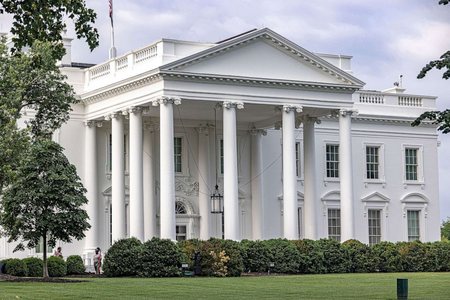
A principle repeated in recent hours, as the American president reiterated it by saying that this will end soon because there is nothing left to bomb. Tehran's plan aims for an exhausting conflict, a continuous war that aims to intimidate the White House, the markets and the electorate.
The defenders may not win, but they do not lose either. But the challenge also hides a bluff, since Iran is suffering significant damage and was not exactly in good shape before the hostilities. Repression, inflation, water shortages and all the negative consequences that come from both the embargo and the mistakes of those who ruled, ignoring social demands. However, for the time being, Tehran is trying to hold its own by involving as many countries as possible. This is achieved by launching drones and missiles against Sunni monarchies, Azerbaijan, Turkey and even the more distant Cyprus.
Tehran's strategy is the result of experiences spread over time. In fact, it has two distinct military apparatuses, with the Revolutionary Guard and regular units. It has a security system that does not prevent infiltration, but is determined to suppress internal threats. It relies on a tradition of resistance born of years of complex trials. It operates in a familiar theater of combat and has had time to prepare.
The arsenal of missiles and low-cost suicide drones allowed the battle to continue. The 12-day clash in June served to refine tactics. The guards targeted airports and refineries to influence the civilian side, with consequences that extend beyond the borders. They hit key installations with precision: at least 17 US military sites were hit, disabling valuable anti-missile radars and communications centers.
The swarms of missiles have forced the US, Israel and their allies to deploy large numbers of interceptors. Sources cited by the New York Times gave some figures: 100-250 THAADs, or between 20 and 50 percent of the US stockpile; 80 SM3 missiles; and many other munitions. The Pentagon had been stockpiling supplies, but in recent hours it has been forced to urgently transfer batteries and “firearms” from South Korea. These are indirect signs of an ongoing adjustment.
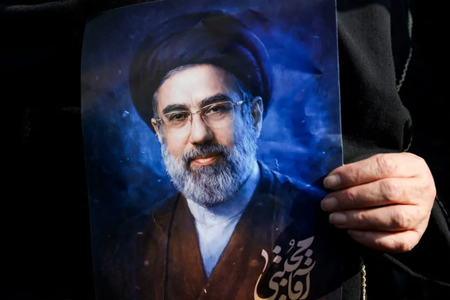
In addition to retaliation, the government, as a "good regime," focused on the survival of the chain of command by relying on "decentralization" and greater autonomy granted to officers. Counter-offensive measures did not prevent the assassination of Leader Ali Khamenei and the generals, but no divisions emerged that would suggest drastic changes.
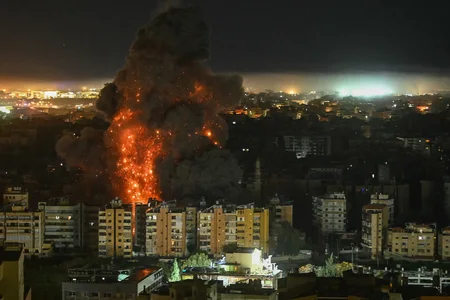
On the other hand, the joint offensive by the IDF and the Pentagon has further weakened the military industry, missile factories, the network of barracks, strategic facilities and most of the equipment. Nearly 3,000 members of the Revolutionary Guard were killed, Haaretz wrote, citing Israeli sources. Half of the launchers were disabled, missile bunkers were sealed by bombing, dozens of ships were destroyed, thousands of targets were hit, the air force was non-existent and the effectiveness of the air defense system was reduced, although it nevertheless shot down at least eleven (expensive) Reaper attack drones and several similar Israeli vehicles. The effects of the attacks, which caused the deaths of hundreds of civilians, could be seen later, as the days passed. The element of surprise always remains.
The FBI has raised the drone alert for the California coast after reports of a possible plan to launch drones from a ship. Perhaps this is an overreaction, but the news risks playing into Tehran’s hands. Finally, there is an unresolved issue, one involving a crucial geographical passage, the Red Sea. The Houthis, the Yemeni Shiite movement allied with Iran, could resume attacks on shipping. Commentators suggest that this is perhaps a backup strategy in case Saudi Arabia decides to go to war. Or perhaps it is an action that will be implemented as part of a series of escalating steps. One observer, considering the risks to Hormuz and other routes, rightly pointed out that it is not necessary to hit the target. To disrupt traffic, it is enough to create an atmosphere of danger with occasional attacks or by dropping a few mines, as is happening now.




Lini një Përgjigje