


 Shkruar nga Pamfleti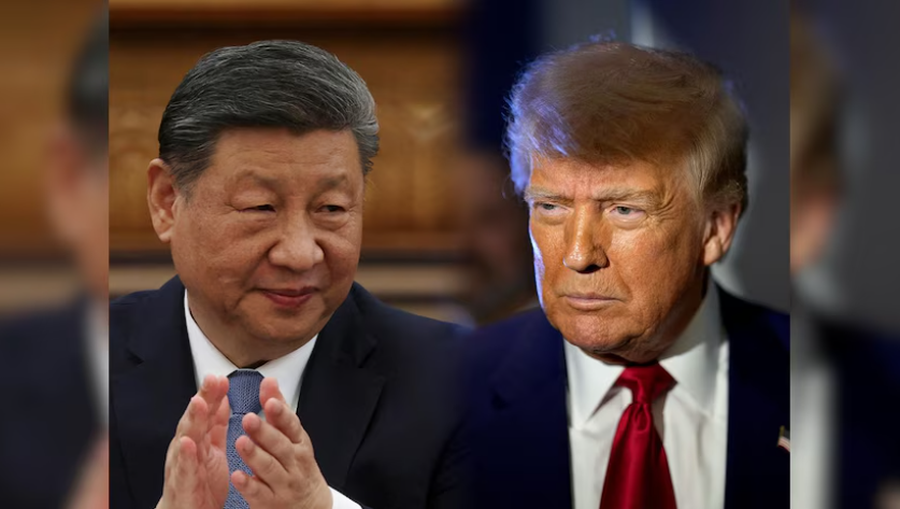
The goal is nothing less than the overthrow of an established global trade system centered on China as the factory of the world...
Suddenly, Donald Trump's trade war is in much sharper focus.
Instead of a war on all fronts against the World, this now looks much more like a war on familiar Trumpian territory: America against China.
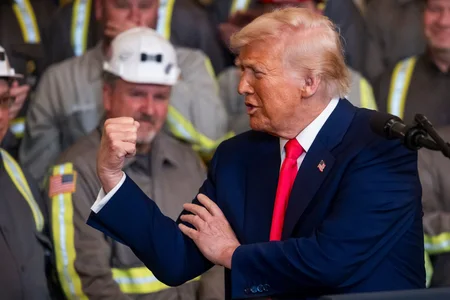
Trump announced a 90-day suspension of the highest tariffs imposed on dozens of countries, while a universal tariff of 10% remains in effect.
But China – which ships everything from iPhones to children's toys and accounts for about 14% of all US imports – is given much harsher treatment at a rate of 125%.
Trump said the increase was due to Beijing's willingness to retaliate with its own 84% tariff on American goods, a move the president described as a "disrespectful" move.
For Trump, this is about the unfinished business of his first term in office.
"We didn't have time to do the right thing, which we are doing now," he told reporters.
The goal is nothing more than the overthrow of an established global trade system centered on China as the factory of the world.
China now produces 60% of the world's electric cars – a large proportion of them produced by its domestic brands.
China had surpassed the US to become the world's largest market for Rolls Royce, General Motors and Volkswagen.
As China became wealthier, so the theory went, the Chinese would begin to demand political reform.
Their spending habits would also help China's transition to a consumer society.
But the first of these aspirations never happened, with China's ruling Communist Party only tightening its grip on power.
And the second didn't happen fast enough, with China not only still dependent on exports but openly planning to become increasingly dominant.
Its infamous policy plan - published in 2015 and titled Made in China 2025 - lays out a grand state-backed vision to become a global leader in a number of key manufacturing sectors, from aerospace to shipbuilding to electric vehicles.
The trade war of Trump's first term broke the mold and shattered the consensus. His successor, President Joe Biden, kept many of his tariffs on China in place.
And yet, while they have undoubtedly caused some pain to China, they have not done much to change the economic model.
China now produces 60% of the world's electric cars – a large proportion of them made by its domestic brands – and 80% of the batteries that power them.
So now Trump is back, with this tax escalation.
It would, without a doubt, be the biggest shock ever dealt to the established global trading system, were it not for all the other tariff measures that the US president has implemented in recent days.
First, if China accepts that offer to negotiate.
And second, assuming it eventually happens, whether China is willing to make the kinds of major concessions that America is demanding, including a complete overhaul of its export-driven economic model.
In responding to them, the first thing to say is that we are in completely uncharted territory, so we should be wary of anyone who claims to know how Beijing is likely to react.
But there are certainly reasons to be cautious.
China's vision of its economic power, based on strong exports and a strongly protected domestic market, is now closely tied to its idea of national rejuvenation and the supremacy of its one-party system.
Its tight control over the information sphere means it is unlikely to lift barriers to American technology companies, for example.
But there is a third question, and it must be answered by America.
Does the US still believe in free trade? Donald Trump often suggests that tariffs are a good thing, not simply as a means to an end, but as an end in themselves.
He talks about the benefit of a protectionist barrier for America in order to stimulate domestic investment, encourage American companies to bring those foreign supply chains back home, and increase tax revenues.
And if Beijing believes that this is truly the main purpose of the tariffs, it may decide that there is nothing to negotiate.
Instead of promoting the idea of economic cooperation, the world's two largest superpowers could find themselves locked in a struggle for economic supremacy.
If so, this would truly mark a breakdown of the old consensus and a very different, perhaps very dangerous, future. / Adapted Pamphlet from BBC /


Lini një Përgjigje